
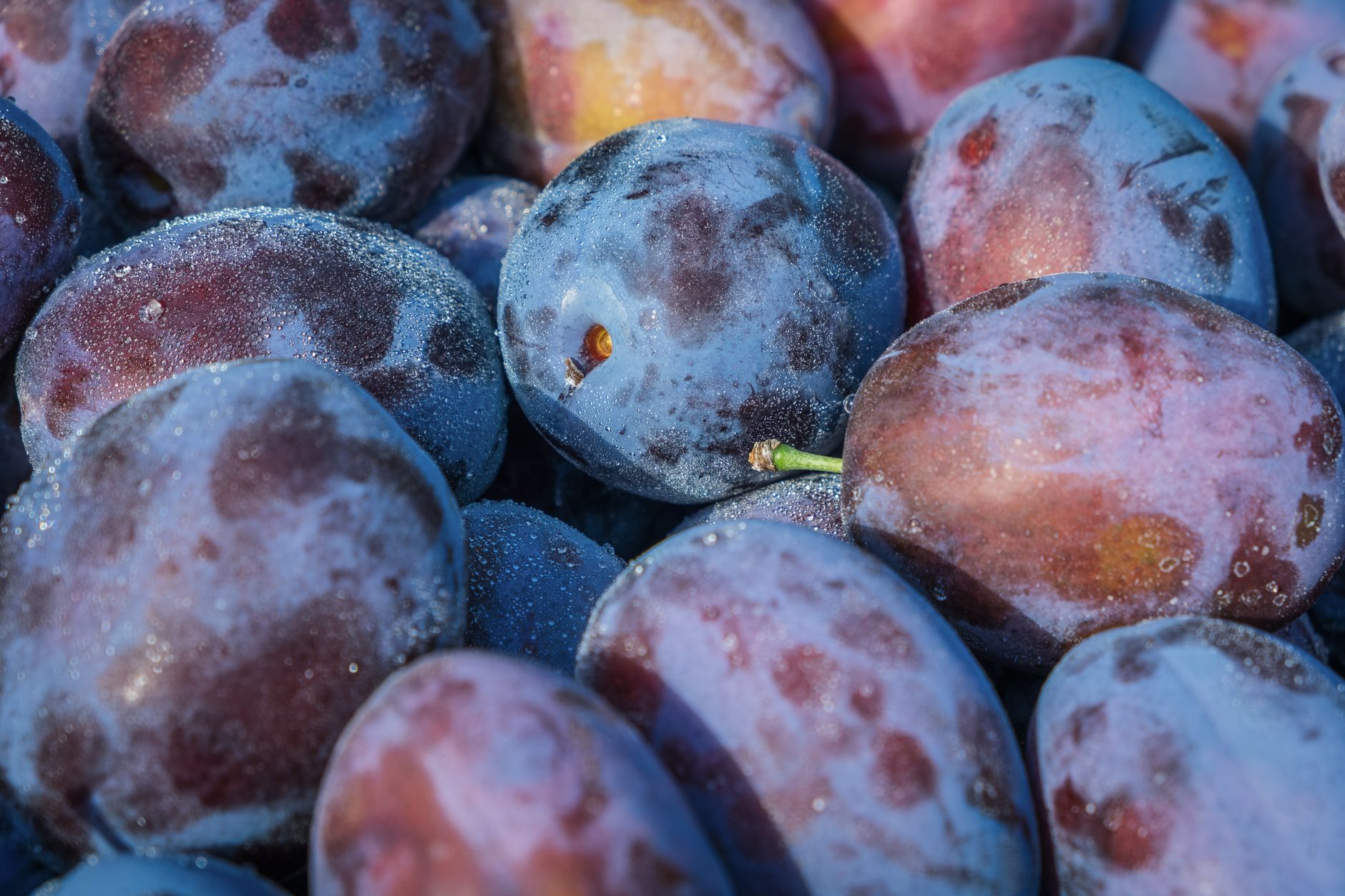

A single medium plum weighing roughly 65 grams delivers only about 30 calories, nearly 11% of the daily value for vitamin C, around 1 gram of fiber, and a meaningful dose of anthocyanins, the same pigment family behind blueberries’ deep color. That low-calorie, fiber-plus-antioxidant mix is what makes fresh plums work as an everyday fruit rather than a sweet afterthought.
Fresh plums pack a surprising nutritional punch, and this guide covers the vitamins, fiber, and anthocyanins they offer alongside the research-backed benefits, the prune comparison, and who should watch their portions.
What a Single Plum Actually Delivers
Most nutrition labels default to 100-gram amounts, yet a single medium fresh plum weighs closer to 65 grams. That single fruit is the portion you actually pick up, so the numbers below are anchored to real eating, not lab math. USDA FoodData Central values are rounded for everyday use.
| Portion | Calories | Total Sugar | Fiber | Vitamin C |
|---|---|---|---|---|
| 1 medium plum (~65 g) | ~30 | ~6 g | ~1 g | ~6 mg (about 7% DV) |
| 1 cup sliced plums (~165 g) | ~76 | ~16 g | ~2.5 g | ~17 mg (about 19% DV) |
| 1 oz dried plums / prunes (~28 g, about 4 prunes) | ~67 | ~16 g | ~2 g | ~0.3 mg |
| 100 g fresh plums (reference) | ~46 | ~9 g | ~1.4 g | ~9.5 mg (about 11% DV) |
Beyond Vitamin C: The Micronutrient Lineup
Vitamin C gets the headlines, yet the rest of the matrix does quiet work for your bones, blood pressure, and immune system. A single fresh plum contributes small but useful amounts of vitamin K, potassium, vitamin A as beta-carotene in deeper-colored varieties, and a trace of iron. The potassium load is mild, around 105 mg per medium fruit, but it stacks across a day of mixed fruit servings. The vitamin K content is worth flagging for anyone on blood thinners, a topic the side-effect section handles in detail.
Why a Low Glycemic Index Matters More Than the Sugar Gram Count
Plums sit around 35 on the glycemic index, well under the 55 threshold that separates low from medium. That means the same 6 grams of sugar in a fresh plum release more slowly than the same grams in a cracker, because the fructose, sorbitol, and soluble fiber inside the fruit slow gastric emptying. For anyone tracking post-meal glucose, this is the single most useful number on the label. The glycemic load of one medium plum is roughly 2, which most dietitians treat as negligible.
The Compounds Behind the Health Halo
The benefits trace back to a small group of plant compounds working in parallel. Knowing which compound does what makes it easier to pick the right plum at the store and the right form for the goal you’re chasing.
Anthocyanins and Phenolic Acids
Deep-purple plums owe their color to anthocyanins, the same antioxidant class that gives blackberries and red cabbage their pigment punch. The darker the skin, the higher the anthocyanin concentration. Phenolic acids sit alongside them and contribute to the fruit’s total antioxidant capacity, often measured in ORAC scores. These compounds neutralize free radicals in cell models, which is the basis for the cardiovascular and anti-inflammatory claims later in the piece.
Sorbitol, Fructose, and Soluble Fiber
This trio runs plum digestion. Sorbitol is a sugar alcohol that pulls water into the colon, softening stool. Fructose absorbs more slowly than glucose and feeds gut bacteria. Soluble fiber, mostly pectin, ferments in the large intestine and feeds the same bacteria. The combined effect is the gentle laxative action prunes are famous for, and it shows up in fresh plums at a milder dose.
Polyphenols and Bone Metabolism
Several human trials, including work out of Florida State University and San Diego State University, have linked daily dried-plum intake to improved bone mineral density in postmenopausal women. The proposed mechanism involves polyphenols suppressing bone resorption while leaving bone formation intact. Fresh plums carry the same polyphenol family, so the effect is plausible at a higher fresh-fruit dose, though the clinical trials to date have used dried fruit for portion control.
Variety and Ripeness Change the Math
Black plums, including the common Friar and Black Beauty cultivars, run highest in anthocyanins. Red plums, like Santa Rosa, sit in the middle. Yellow and green plums, such as Shiro, carry almost no anthocyanin and lean on carotenoids instead. Ripening matters too: a fully tree-ripened plum delivers roughly 20% more anthocyanin than one picked early and ripened on the counter. Overripe fruit trades vitamin C for sugar concentration, so a soft, bruised plum tastes sweeter but loses some of the vitamin C punch.
The nutrient tally only matters once you understand which of these compounds actually drive the documented effects.
Evidence-Based Benefits Worth Claiming
The research on plums clusters around four areas where the evidence is real, not wishful. Anything beyond these four is loose inference.
Digestive Regularity and Constipation Relief
Two medium plums, about 130 grams total, provide roughly 2 grams of mixed soluble and insoluble fiber plus 1 to 2 grams of sorbitol. In trials on adults with mild constipation, that dose softened stool and shortened transit time within three to five days. The dose-response curve is gentle: more plums work faster, but the side-effect curve climbs too. For chronic constipation, the sweet spot for most people lands between two and three fresh plums a day, or four to five prunes.
Blood Sugar Management
Eating a fresh plum after a high-carbohydrate meal blunts the post-meal glucose spike in several small human studies. The mechanism combines the low glycemic index with polyphenol-driven slowing of carbohydrate absorption in the gut. Plums do not lower fasting blood sugar on their own, and they are not a substitute for diabetes care, but as a replacement for higher-glycemic desserts they pull real weight. The American Heart Association counts fresh plums among the fruits that fit a heart-healthy plate for this reason.
Bone Density Support
The strongest human data comes from a pair of randomized trials using about 100 grams of dried plums daily, roughly 10 to 12 prunes. After 6 to 12 months, participants in the prune group showed measurable improvements in bone mineral density at the hip and spine compared with the control group eating dried apples. Translating that dose to fresh plums gets tricky because of water content, but three to four fresh plums a day is a reasonable equivalence for general eating purposes.
Antioxidant and Cardiovascular Signals
Blood antioxidant capacity climbs measurably in the hours after eating stone fruit, and population studies link regular plum intake to lower cardiovascular risk markers. The honest framing is that plums probably support cardiovascular health as part of a fruit-rich diet, and they probably do not fix a poor diet on their own. The polyphenols, potassium, and fiber all contribute, which is why plums appear in WHO dietary guidelines as part of the recommended 400 grams of daily fruit and vegetables.
Plums Versus Prunes, Portion by Portion
Plums and prunes come from the same tree, Prunus domestica, but drying concentrates everything except water. That single change reshapes the calorie, sugar, and sorbitol math, and it determines which form fits which goal.
| Factor | 1 Fresh Plum (65 g) | 1 Prune (8.5 g, about 4 per oz) |
|---|---|---|
| Calories | ~30 | ~21 |
| Sugar | ~6 g | ~5 g |
| Fiber | ~1 g | ~0.6 g |
| Sorbitol | ~0.5 g | ~1.5 g |
| Water | ~85% | ~32% |
| Anthocyanins | Moderate to high | High (concentrated) |
When Prunes Win
Constipation relief is the clearest case. Prunes deliver roughly three times the sorbitol per gram of fresh fruit, so a small portion goes further. Travel days, post-surgery recovery, and brief constipation flare-ups are prune territory. Athletes chasing a portable, calorie-dense snack also do well with prunes, since the water loss concentrates sugars and minerals into a pocketable form.
When Fresh Plums Win
Daily eating for weight management, blood sugar control, or general antioxidant support is fresh-fruit territory. The water content fills the stomach, slows eating, and stretches the calorie load over a larger volume. For someone targeting 100 grams of dried-plum equivalent in a bone-health protocol, that translates to roughly 5 to 6 fresh plums a day, an easier lift when the fruit has weight and crunch to it.
Practical Substitution Rules
One medium plum is roughly equivalent to one and a half prunes in nutrient load, but a poor swap in water and sorbitol. Use prunes for short-term, high-impact goals and fresh plums for long-term, lower-intensity eating. Skip both when the meal already centers on another high-FODMAP fruit, since the sorbitol stacks.
Side Effects, Sensitivities, and Who Should Moderate Intake
Plums are safe for most people, but the same compounds that drive the benefits can over-deliver in sensitive digestions. The list below covers the reactions that actually show up in clinical reports, not the theoretical ones.
The Sorbitol and FODMAP Connection
Sorbitol content places plums squarely in the moderate-FODMAP category, which can unsettle sensitive digestive systems. People with irritable bowel syndrome often notice bloating, gas, or loose stools within a few hours of eating more than one or two fresh plums, especially on an empty stomach. The simplest test is a two-day trial: eat one plum with breakfast on day one, two on day two, and stop at the first sign of discomfort. The European Food Safety Authority has flagged sorbitol at doses above roughly 20 grams per day as a likely cause of laxative effects, well above what a few plums deliver, but individual sensitivity varies.
Blood Thinner and Diabetes Medication Interactions
Plums contain vitamin K, the same nutrient that interacts with warfarin and similar anticoagulants. A single plum contributes only a small amount, but consistent daily intake can shift the dose-response curve enough to matter. Talk with your prescribing clinician before adding a daily plum habit if you’re on warfarin. Polyphenols in plums can also influence how some diabetes medications work, mainly by enhancing their glucose-lowering effect. Public-health guidance from the Harvard T.H. Chan School of Public Health recommends flagging any new high-polyphenol food to your care team if you’re on glucose-lowering drugs.
Excess Fiber and the Built-In Ceiling
More is not better past a certain point. Eating five or six large plums in one sitting pushes fiber and sorbitol into cramping-and-diarrhea territory for most adults. A reasonable ceiling sits at three medium fresh plums or five to six prunes per day for someone without specific digestive sensitivity. Spread the dose across the day rather than loading it into one sitting, and drink water alongside the fiber to keep things moving.
Pesticide Residue and Sugar Concerns
Plums land on the Environmental Working Group’s dirty-dozen list in some years, meaning conventional fruit carries measurable pesticide residue on the skin. Washing under running water for 20 seconds reduces surface residue meaningfully; peeling removes more but also strips anthocyanins. For pregnant people, young children, or anyone eating plums daily, organic or low-spray fruit is the lower-risk choice. The natural sugar in plums is not a concern for most adults, but people with insulin resistance should still keep portions modest, around one to two fruits at a time, and pair them with a protein or fat source.
Those tolerance thresholds naturally shape how many plums fit into a goal-driven serving plan.
Serving Sizes Tied to Specific Health Goals
The right number of plums depends entirely on the outcome you’re chasing. The same fruit that helps constipation can stall weight loss if you eat it in a six-plum pile.
Quick rule: Two fresh plums a day covers the digestion and antioxidant goals for most healthy adults. Push higher only with a specific reason, and only if your digestion tolerates it.
Constipation Relief
Two to three fresh plums or four to five prunes, taken with a full glass of water, works for mild constipation within three to five days. Eat them at the same meal each day to keep the fiber dose consistent. If stools become loose, drop to one plum and add a starchy side, since excess sorbitol is the usual culprit.
Weight Management
One to two medium plums fits a calorie-controlled day better than most packaged snacks. A single plum with a small handful of nuts or a piece of cheese makes a satisfying between-meal bite that lands around 100 to 120 calories with protein, fat, and fiber on board. Skip the dried form during a weight-loss phase unless the recipe specifically calls for it.
Blood Sugar Control
Eat the plum after the carb-heavy portion of the meal, not before. A plum consumed 15 minutes after a bowl of white rice produces a flatter glucose curve than the same fruit eaten alone on an empty stomach. Pair with a protein or fat source when you can, since that combination further slows carbohydrate absorption.
Selection, Storage, and Ripening Cues
Pick plums that yield slightly to gentle pressure at the stem end and smell faintly sweet. Hard plums will ripen on the counter in two to four days; once soft, move them to the fridge to slow further ripening. Whole plums keep their vitamin C better than sliced fruit, so cut only what you’ll eat. To maximize anthocyanin content, choose the darkest fruit you can find, since pigment concentration tracks with antioxidant load.
A Practical Framework for Adding Plums to a Balanced Diet
Aim to add plums where they fill a specific gap, not as a default snack. The framework below distills the rest of the piece into a weekly template you can actually follow.
- Default daily habit: One to two fresh plums with breakfast or as an afternoon snack, four to five days a week.
- Constipation weeks: Swap to four to five prunes daily for one to two weeks, then return to fresh fruit.
- Travel or post-surgery: Pack prunes rather than fresh fruit for the concentrated sorbitol and shelf stability.
- Skip plums when: You’re on a strict low-FODMAP plan, mid-flare of diverticulitis, or actively managing late-stage kidney disease where potassium load matters.
- Stop and reassess if: You notice bloating, gas, or loose stools within the first two weeks of regular intake. Drop the portion by half for a week before deciding to keep going.
- Store-bought rule: Pick the darkest plum in the bin, skip any with broken skin, and eat within five days of purchase for peak vitamin C.
When Plums Stop Making Sense
Low-FODMAP protocols for IBS treatment, set by most gastroenterology dietitians, restrict plums during the elimination phase because of their sorbitol and polyol content. Reintroduction happens later, one fruit at a time. Late-stage kidney disease calls for careful tracking of potassium, and a plum habit adds up. Active diverticulitis flare-ups benefit from a low-fiber approach until inflammation settles, then a gradual return to whole fruit.
Red Flags Versus Normal Adaptation
Mild gas for the first three to four days of regular plum intake is normal, since the soluble fiber is shifting the gut microbiome. Persistent cramping, diarrhea lasting more than 24 hours, or new rashes are not normal adaptation. Cut the fruit out, return to your usual diet, and bring it up with a qualified healthcare professional if the symptoms don’t resolve within a couple of days.
The One-Sentence Rule for Choosing a Plum
Pick the darkest, softest, most aromatic plum in the bin, because pigment tracks anthocyanins, softness tracks ripeness, and aroma tracks sugar. Skip anything with broken skin or wrinkles around the stem, since those plums have already lost moisture and vitamin C.
The Big Picture
Plums earn their place in a balanced diet by stacking three advantages few other fruits match: a low calorie load, real fiber and sorbitol for digestion, and concentrated anthocyanins for antioxidant support. The side effects are real but limited to sorbitol-sensitive digestions, vitamin K interactions with blood thinners, and portions above three to four fruits a day. Treat plums as a specific tool, constipation relief, post-meal glucose smoothing, polyphenol-driven bone support, rather than a generic health food, and the rest of the math tends to take care of itself.
FAQ
What are the nutritional benefits of eating plums?
Plums deliver about 30 calories per medium fruit, roughly 1 gram of fiber, and a meaningful dose of vitamin C, potassium, and anthocyanins. These compounds together support digestion, antioxidant defenses, and bone metabolism, which is why plums appear in most national fruit-and-vegetable guidelines.
How many calories are in a plum?
One medium fresh plum carries about 30 calories, a cup of sliced fruit lands near 76, and a single prune weighs in at roughly 21. The difference comes from water content, since drying concentrates sugars and calories into a smaller package.
Do plums help with digestion and constipation?
Yes, though the effect is mild. Two to three fresh plums or four to five prunes a day, taken with water, soften stool and shorten transit time within three to five days for most adults. The mechanism is sorbitol plus soluble fiber, not a stimulant laxative effect.
Can eating plums help lower blood pressure?
Plums contribute potassium and polyphenols that, as part of a fruit-rich diet, support healthy blood pressure. They are not a treatment for hypertension on their own, and anyone with diagnosed high blood pressure should follow the plan their clinician recommends rather than relying on individual foods.
Are there any risks or side effects from eating too many plums?
Eating more than three or four large plums in one sitting can cause bloating, gas, or diarrhea because of the sorbitol and fiber load. People on blood thinners should keep portions consistent and discuss daily intake with their prescribing clinician, since plum vitamin K can shift anticoagulant dosing.
Is it healthier to eat plums fresh or dried as prunes?
Both forms carry the same compounds, but prunes concentrate sugar, calories, and sorbitol into a smaller package. Fresh plums work better for daily eating, weight management, and blood sugar control, while prunes work better for targeted constipation relief and portable snacks.