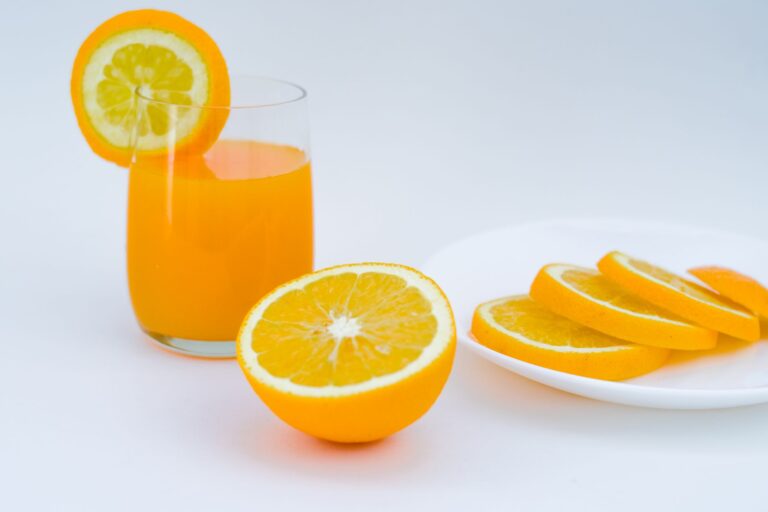

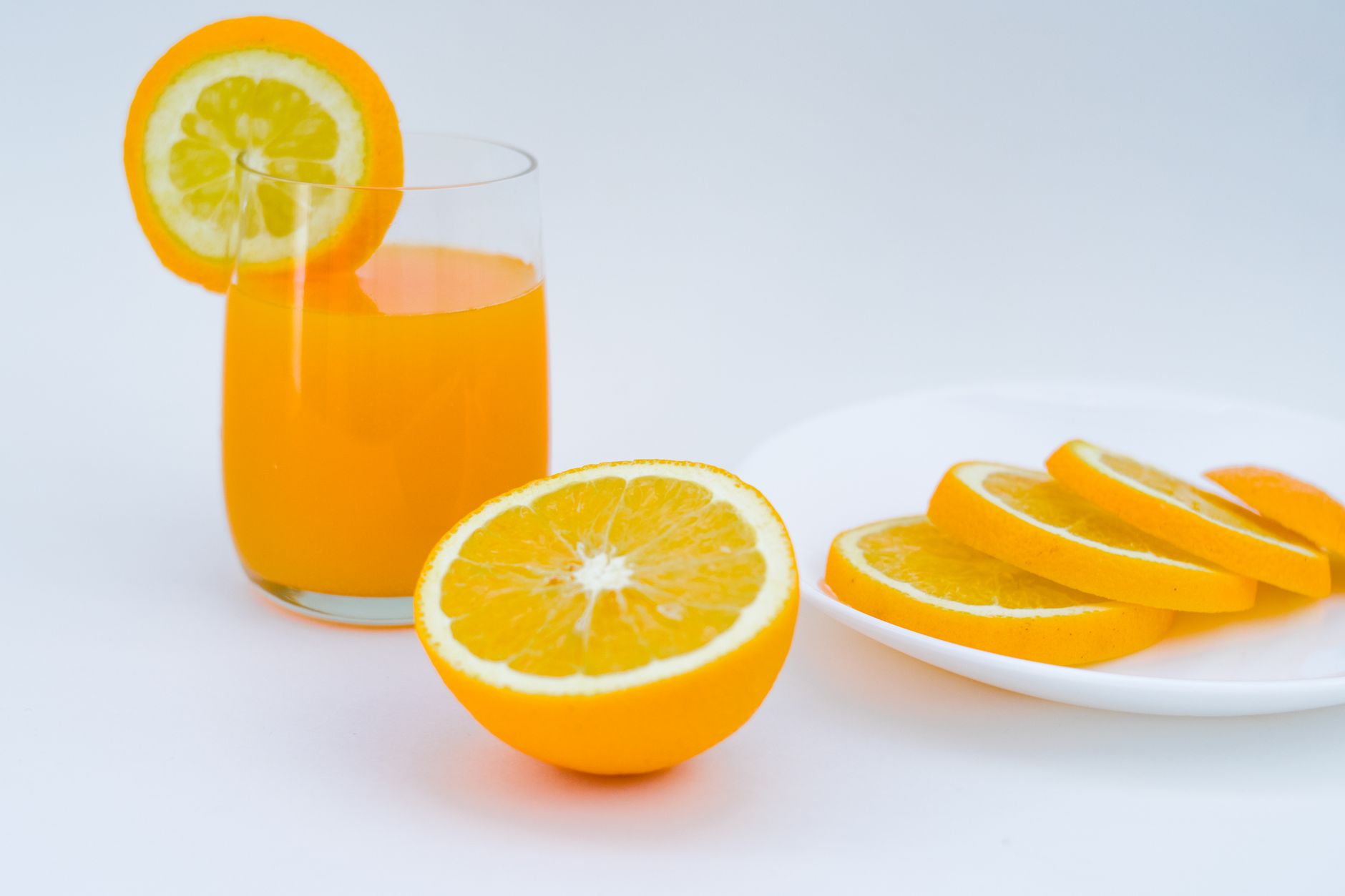

A single 8-ounce glass of the beverage delivers about 110 calories, 21 grams of naturally occurring sugar, and roughly 124 mg of vitamin C, which clears the daily target for most adults. That same glass also contributes folate, potassium, thiamine, and a small dose of flavonoids, but it gives up almost all the fiber of a whole orange. The trade-off between concentrated nutrients and concentrated sugar shapes every choice you make about how often to pour a glass.
You’ll find the actual numbers behind that trade-off here, the situations where a glass helps, and the situations where it quietly works against you. The goal is to fit orange juice into your routine without letting the sugar pile up or the acid wear down your teeth.
What a Glass of Orange Juice Actually Delivers
Most of the calories in orange juice come from fructose, the natural fruit sugar left behind once juicing concentrates everything except the fiber. A single cup lands close to 5 percent of an average day’s calories, and the glycemic index of orange juice sits in the moderate range, around 50 to 60, well above a whole orange’s score. That gap is the first clue that juice and whole fruit don’t behave the same way inside your body.
Key vitamins and minerals in one serving
Vitamin C leads the nutritional profile at roughly 124 mg per 8-ounce cup, more than enough to meet the daily value and historically used to prevent scurvy on long sea voyages. Folate appears in meaningful amounts, which matters for cell growth and for anyone planning a pregnancy. Potassium, thiamine, and a trace of magnesium round out the micronutrient list, and small amounts of plant pigments called flavonoids contribute antioxidant activity alongside the vitamin C.
Why sugar concentration and fiber loss matter
When oranges get juiced, the pulp that slows sugar absorption gets strained out. Without that fiber, the natural fructose hits your bloodstream faster, and the juice feels less filling than biting into a whole orange. The sugars are still natural, but your liver processes them in a way closer to soda than to whole fruit, which is why a 12-ounce glass isn’t a free pass even though nothing was added to it.
Because that gap between marketing and reality shapes which benefits actually hold up under scrutiny, the evidence deserves a closer look.
| Nutrient (8-oz glass) | Amount | Daily Value Context |
|---|---|---|
| Calories | ~110 | ~5% of a 2,000-calorie diet |
| Natural sugars | ~21 g | Similar to a sugary soft drink |
| Vitamin C (ascorbic acid) | ~124 mg | Over 100% DV |
| Folate | ~40 mcg | ~10% DV |
| Potassium | ~450 mg | ~10% DV |
| Thiamine | ~0.1 mg | ~8% DV |
| Fiber | ~0.5 g | ~2% DV (vs 3 g in whole fruit) |
The Evidence-Based Health Benefits Worth Knowing
Behind the sugar concerns, orange juice carries a track record of small but real contributions to everyday nutrition. Reviews from groups like the Harvard T.H. Chan School of Public Health have repeatedly shown that 100 percent fruit juice, in modest amounts, fits inside healthy eating patterns without raising disease risk on its own. The benefits concentrate in a few specific areas where the nutrient mix genuinely does something useful.
Immune support and antioxidant intake
A single glass pushes vitamin C intake past the daily target, supporting the white blood cells your immune system relies on during infection. Citrus sinensis, the sweet orange, also supplies hesperidin, a flavonoid that helps blood vessels stay flexible and contributes to the antioxidant load. Some studies suggest these compounds may support vascular health, though the evidence is still evolving and shouldn’t be overstated.
Iron absorption and pregnancy nutrition
Vitamin C converts plant-based iron, the kind in spinach, lentils, and fortified cereals, into a form your gut can actually absorb. A small glass alongside a plant-heavy meal can roughly double non-heme iron uptake, which is one reason pediatricians often suggest pairing OJ with iron-rich foods for kids. Folate does similar quiet work during pregnancy, supporting neural tube development in the first weeks, a period many people don’t yet know they’re pregnant through.
Citrate, potassium, and long-term markers
Orange juice is one of the richest dietary sources of citrate, the same compound that keeps calcium from forming kidney stones. Population studies link regular citrus intake with a lower risk of forming new stones, and the American Heart Association notes that potassium-rich foods help offset sodium’s effect on blood pressure. These aren’t dramatic overnight changes, but they’re the kind of background benefits that add up over years of daily habits.
But those quiet gains sit alongside a few drawbacks that become harder to ignore the more glasses stack up.
Tip: Drink a small glass with iron-rich plant foods like lentils or spinach to boost iron absorption without overloading on sugar.
Where Orange Juice Falls Short and Poses Risks
The same concentration that delivers a full day’s vitamin C also delivers a full day’s worth of sugar in a single sitting. The World Health Organization recommends keeping free sugars below 10 percent of total calories, around 50 g for most adults, and a single 12-ounce glass can use up a large slice of that budget. Recognizing where the line falls helps you keep orange juice on the right side of helpful.
Blood sugar spikes and weight gain
Without fiber to slow digestion, the natural fructose in juice can raise blood glucose faster than whole fruit, a problem for anyone managing insulin resistance or diabetes. Liquid calories also tend to slide under your fullness radar; people routinely drink 200 to 300 calories without adjusting later meals. Over months, that pattern quietly adds pounds, particularly when a daily glass replaces water or unsweetened tea.
Drug interactions and acid-related concerns
Citrus juices can interfere with enzymes that metabolize common medications, including certain statins, some blood pressure drugs, and a few antibiotics. Compounds called furanocoumarins, found in orange peel oil, are the main culprits, and even a single glass can shift how long a drug stays in your bloodstream. The acid also wears on tooth enamel over time, especially when juice is sipped slowly throughout the day, and reflux-prone stomachs often rebel against that much citrus on an empty stomach.
- Statins: Citrus compounds can raise drug levels in the blood.
- Some antibiotics: Absorption may shift, altering effectiveness.
- Blood pressure meds: Grapefruit is the famous one, but orange can interact too.
- Tooth enamel: Acid exposure erodes the protective outer layer gradually.
- Acid reflux: Citrus triggers symptoms in many sensitive individuals.
Fresh-Squeezed, Store-Bought, and Fortified Compared
Walk down the juice aisle and the labels blur together, but the differences between fresh-squeezed, pasteurized, and fortified versions matter more than most shoppers realize. Standards from the USDA and the Florida Department of Citrus shape what ends up in the carton, and those standards explain why two glasses can taste similar while behaving very differently in your kitchen and your body.
Pasteurization, shelf life, and safety trade-offs
Pasteurized juice, including most national brands like Tropicana, Minute Maid, and Simply Orange, gets heat-treated to kill harmful bacteria. That step extends refrigerated shelf life to several weeks after opening and removes the foodborne illness risk that comes with raw juice. Fresh-squeezed juice, made at home or at a juice bar, skips that step, tastes brighter, and spoils within a few days. Commercial concentrate goes a step further, stripping water out for shipping and adding it back later, which slightly lowers vitamin C but keeps the rest of the nutrition largely intact.
What fortification adds to the glass
Some orange juices, particularly those marketed as “Plus Calcium” or “with Vitamin D,” are fortified to match the nutrient profile of dairy milk. A fortified cup can deliver 350 mg of calcium and 100 IU of vitamin D, useful for anyone avoiding dairy. Read the ingredient panel, though: fortification usually comes with added calcium compounds and may include vitamin D3, while plain juice relies on what the orange itself provided.
| Type | Shelf Life (Refrigerated) | Key Difference | Best For |
|---|---|---|---|
| Fresh-squeezed | 2–3 days | Not pasteurized, brighter flavor | Same-day drinking, low-risk households |
| Pasteurized | 1–3 weeks opened | Heat-treated, safer storage | Daily use, families, longevity |
| Frozen concentrate | Months unopened | Water removed for shipping | Budget buyers, bulk storage |
| Fortified | 1–3 weeks opened | Added calcium and vitamin D | Dairy-free diets, bone health |
Reading labels for hidden sugars
Any 100 percent juice label will list sugars near 20 g per serving, all natural, because the label separates “Includes 0 g Added Sugars” from “21 g Total Sugars.” A product labeled “juice cocktail,” “juice drink,” or “fruit beverage” usually has added sugar layered on top of the natural content, and the ingredients panel will list cane sugar, high-fructose corn syrup, or similar terms. Pulp adds back a small amount of fiber but doesn’t change the sugar count much; the main reason to choose pulp is mouthfeel and a slightly slower drinking pace.
With that comparison settled, the practical question becomes how to fit juice into a real day without letting the sugar quietly undo the benefits.
A Smarter Way to Include Orange Juice in Your Diet
The point of knowing the nutrition isn’t to avoid orange juice entirely; it’s to fit it in without letting it crowd out better choices. Used like a tool, with attention to portion, timing, and pairing, OJ can pull more weight than its calorie cost suggests. A few simple habits keep the benefits coming while the drawbacks stay quiet.
Portion sizes and pairing strategies
Four to six ounces, roughly half a standard glass, is the sweet spot for most healthy adults who want the vitamin C without the sugar spike. Pairing OJ with protein or fat, such as scrambled eggs, Greek yogurt, or nut butter on toast, slows glucose absorption and keeps you full longer. Drinking it with a meal rather than on its own also reduces the acid’s contact time with your teeth, since saliva and food particles help neutralize the pH drop.
When to choose whole oranges, smoothies, or juice
Reach for a whole orange when fullness and fiber matter, like between-meal snacks or packed lunches. A smoothie with whole fruit, leafy greens, and protein powder gives you the same vitamins plus the fiber that juicing strips away. Save the glass of juice for moments when convenience and absorption speed matter most, such as a post-workout glucose top-up, a sick day when solids are hard to eat, or a breakfast that already includes protein and fat.
When to skip the glass entirely
Several situations make orange juice a poor choice, regardless of how much you usually enjoy it. Skip it on an empty stomach if reflux is a recurring problem, during periods when you’re taking medications known to interact with citrus, and during active attempts to lose weight through calorie restriction. People managing diabetes should treat juice like any other concentrated carbohydrate source: plan for it within a measured carbohydrate budget, ideally with a healthcare professional’s guidance on timing and amount.
Warning: People on statins, certain blood pressure drugs, or specific antibiotics should check with a pharmacist before adding daily orange juice to their routine.
Clearing Up Common Misconceptions About Orange Juice
Most of the loud arguments about orange juice, pro and con, rest on claims that don’t survive a careful read of the evidence. Sorting the myths from the practical realities helps you decide based on what the drink actually does rather than what a headline says it does.
Natural sugar is not a free pass
Your liver processes fructose the same way whether it came from a fresh orange or a can of soda, and the dose is what matters. A whole orange’s fiber, water, and chewing time keep that dose small; a tall glass of juice doesn’t. Treating “no added sugar” as automatic permission to drink unlimited amounts ignores the metabolic reality of concentrated fruit sugar.
Pesticides, washing, and peel-oil compounds
Conventionally grown oranges carry pesticide residues on the peel, but the juice itself rarely does, because the peel is removed before pressing. Commercial juice makers also wash the fruit thoroughly. The bigger compound concern is furanocoumarin from the peel, the same family that makes grapefruit interact with medications, though typical servings of pure juice contain only trace amounts.
How OJ fits into diabetes, weight loss, and heart-healthy diets
Small amounts of 100 percent juice, 4 to 6 ounces, fit into most heart-healthy and weight-management plans when calories elsewhere adjust accordingly. For diabetes, the carbohydrate content needs to be counted into the meal plan just like bread or pasta would be, and pairing with protein blunts the glucose response. Whole oranges generally work better than juice in all three of these situations, but juice isn’t automatically forbidden.
Occasional drinking vs. daily dependence
A weekly glass with Sunday brunch bears no metabolic resemblance to two tall glasses every morning. Frequency, dose, and what the juice displaces in your routine are the real variables, not the food itself. Plenty of people who drink orange juice daily stay healthy, and plenty of people who avoid it struggle with other sources of excess sugar. The pattern matters more than the ingredient.
The Bottom Line
Orange juice is a nutrient-dense drink with a real upside, primarily as a vitamin C and folate source, paired with a real downside, mainly its concentrated sugar load and acid exposure. The smartest approach treats it like a daily habit for a few specific reasons, not a default beverage. Keep portions small, pair it with protein, choose pasteurized or fortified versions when shelf life or calcium matter, and skip the glass when medications or reflux say it’s not worth the trade.
FAQ
Is it healthy to drink orange juice every day?
Drinking a small 4 to 6 ounce serving of 100 percent juice daily is generally fine for most healthy adults and fits into balanced eating patterns. The key is keeping the portion modest and pairing it with protein or fat so the sugar doesn’t hit your bloodstream alone.
What are the negative effects of drinking orange juice?
The main concerns are blood sugar spikes from concentrated natural sugars, gradual weight gain from liquid calories, tooth enamel erosion from the acid, and drug interactions with statins, certain blood pressure medications, and some antibiotics. Reflux can also flare up after a glass, especially on an empty stomach.
How much sugar does a glass of orange juice contain?
An 8-ounce glass of pure orange juice contains roughly 21 grams of naturally occurring sugar, similar to a typical soft drink. The difference is that juice also delivers vitamin C, folate, and potassium, while soda delivers very little beyond the sugar itself.
Is fresh-squeezed orange juice better than store-bought?
Fresh-squeezed juice tastes brighter and skips the heat treatment, but it also spoils within a few days and carries a small foodborne illness risk that pasteurized juice eliminates. Nutritionally, the two are very similar, so the choice usually comes down to convenience, safety, and taste preference.
Does orange juice count as a serving of fruit?
A 4 to 6 ounce glass of 100 percent juice counts as one serving of fruit under most dietary guidelines, even though it lacks the fiber of a whole orange. Larger portions still count as one serving, which is why portion control matters when juice is your main fruit source.
Can orange juice raise blood sugar levels?
The natural sugars in juice can raise blood glucose within 15 to 30 minutes of drinking, faster than a whole orange because the fiber has been removed. People managing diabetes or insulin resistance should treat juice as a measured carbohydrate source and pair it with protein whenever possible.