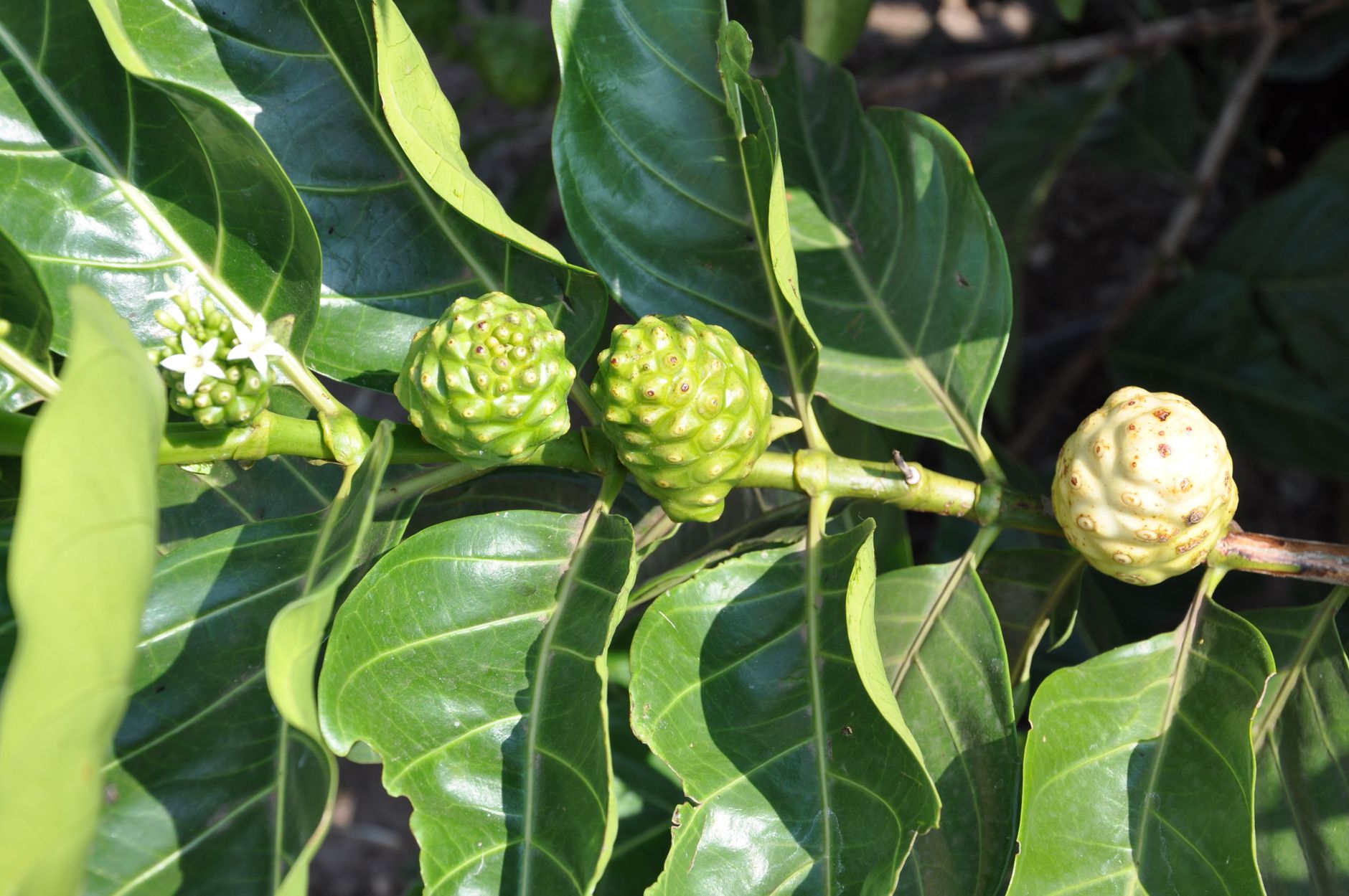

A small, knobbly tropical fruit called Morinda citrifolia has supplied Pacific Island communities with food and folk medicine for centuries, and modern research is now cataloguing its potential advantages. Modern research confirms real amounts of vitamin C, potassium, and unusual plant compounds like scopoletin and damnacanthal, though most health claims still rest on small or preliminary studies. A 30 mL shot of fermented noni juice delivers a measurable antioxidant dose and a pungent, cheese-like aroma from caproic acid.
Below, we walk through what noni actually is, the nutrients and odd compounds that set it apart, the research-backed effects, safe ways to try it, and who should steer clear.
Noni and Its Place in Traditional Polynesian Medicine
Morinda citrifolia is a small evergreen tree that thrives across Southeast Asia, Australasia, and the Pacific islands. Healers in Hawaii, Tahiti, and Samoa used nearly every part of it: leaves as poultices, bark as dye, and the ripe fruit as a tonic during illness or convalescence. Samoan families traditionally wrapped ripe noni in ti leaves and left it to ferment in the sun, producing a pungent liquid older generations drank for fatigue, skin infections, and joint pain.
How Noni Spread Beyond the Pacific
Maritime trade and 20th-century migration carried the fruit to India, the Caribbean, and eventually the U.S. supplement market. By the 1990s, brands like Tahitian Noni International and Hawaiian Noni had turned a folk remedy into a global juice category. Indian Noni, a related cultivar, is now cultivated commercially in Tamil Nadu and parts of Southeast Asia, supplying much of the bulk powder sold in capsules today.
That cultural backstory shapes the claims you see on shelves. When a label mentions traditional Polynesian immune support, it usually traces back to those same ferment-and-drink rituals rather than to modern clinical trials. Knowing the origin helps you read modern marketing with a clearer eye.
The Nutritional and Phytochemical Profile of Noni Fruit
About 90% of a fresh noni fruit’s weight is water, and its macronutrient makeup lines up more closely with a vegetable than with a typical sweet fruit. A 100 g serving of raw noni delivers modest calories, small amounts of protein, and a surprisingly high potassium load for a fruit. The bigger story, though, sits in the phytochemicals: plant-made compounds that don’t appear on a standard nutrition panel.
| Nutrient / Compound | Approx. Amount per 100 g (raw fruit or 30 mL juice) | Why It Matters |
|---|---|---|
| Vitamin C | ~30–40 mg (raw fruit) | Immune function, collagen synthesis, antioxidant recycling |
| Vitamin A (beta-carotene) | Small but measurable | Vision, skin integrity, mucosal immunity |
| Potassium | ~200–250 mg | Blood pressure regulation, muscle function |
| Scopoletin | Trace to 0.5 mg in fermented juice | Coumarin linked to anti-inflammatory signaling |
| Damnacanthal | Detectable in fruit and root | Anthraquinone studied for immune and cellular effects |
| Iridoid glycosides | Present in fruit and leaves | Bitter-tasting antioxidants common in herbal medicine |
| Caproic acid (hexanoic acid) | ~0.1–0.5% of volatile compounds | Short-chain fatty acid behind noni’s pungent, cheese-like odor |
Why Noni Juice Smells the Way It Does
Caproic acid is the same fatty acid found in aged cheese and rancid butter. It forms as the fruit ferments, and it’s the main reason unblended noni juice repels first-time drinkers. Most commercial brands blend noni with grape, blueberry, or apple juice to mask it, which is why reading the ingredient list matters more than trusting the front label.
Evidence-Based Health Benefits Worth Noting
Researchers have published a few dozen human and animal studies on noni, with most focused on its antioxidant activity and immune modulation. The strongest signals come from small pilot trials, not large randomized controlled trials, so the tone here stays cautious.
Anti-Inflammatory and Antioxidant Effects
A 30-person study published in 2012 found that 30 mL of fermented noni juice daily for 30 days raised antioxidant capacity in the blood and lowered a marker of oxidative stress called malondialdehyde. Animal studies in rodents have shown similar shifts, with noni extracts reducing swelling in induced inflammation models. These results suggest a real, measurable antioxidant effect, though they don’t yet prove that drinking noni prevents disease.
Immune Modulation and Post-Exercise Recovery
Some research points to noni stimulating certain immune cells, including macrophages and natural killer cells, in test-tube and animal settings. A small study on distance runners reported less post-exercise soreness after two weeks of noni juice, though the placebo effect in that design was hard to rule out. What the evidence supports is a modest effect, not a clinical-grade immune boost.
Blood Sugar and Lipid Balance
Early work in diabetic mice and a handful of human case series suggests noni may modestly lower fasting blood glucose and triglycerides, possibly through scopoletin and damnacanthal acting on liver enzymes. None of these findings are strong enough to recommend noni as a treatment. They do, however, explain why people with metabolic concerns keep trying it, and why monitoring blood sugar while using noni is wise.
Forms, Dosage, and Practical Ways to Use Noni
Noni shows up in more shapes than almost any other tropical supplement, and each form carries different trade-offs in potency, convenience, and cost.
| Form | Typical Daily Serving | Pros | Watch For |
|---|---|---|---|
| Fermented juice (liquid) | 30 mL (about 2 tbsp) | Closest to traditional use; fastest absorption | Strong taste; added sugars in blends |
| Freeze-dried capsules | 500–1000 mg, 1–2x daily | No taste; standardized doses | Higher cost per gram of fruit |
| Powder (bulk) | 1–3 g mixed into drinks | Flexible; long shelf life | Earthy flavor; variable potency |
| Topical oil or cream | Applied to skin as needed | Targets joint or scalp use | Limited evidence for skin penetration |
Reading Labels Without Getting Burned
Look for the words “100% noni juice” or “single-origin Morinda citrifolia” near the top of the ingredient list. If grape or apple juice appears before noni on the panel, you’re paying for sweetener, not the fruit. Fermented, cold-pressed, and glass-bottled options tend to preserve more of the volatile compounds than high-heat pasteurization, though the clinical relevance of that difference is still debated.
Tip: Start with half the recommended serving for the first week. If your digestion and energy feel steady, scale up to the full dose. If you notice bloating, headache, or skin changes, stop and reassess.
Blending a small amount into a tropical smoothie with pineapple, mango, and ginger masks the pungency without burying the active compounds under sugar. That’s a more reliable way to make noni part of a daily routine than chasing straight shots of fermented juice.
Side Effects, Drug Interactions, and Safety Boundaries
Noni is generally well-tolerated in healthy adults at typical doses, but it carries a few real safety flags worth understanding before you start.
Rare Hepatotoxicity Reports
Case reports in Europe and the U.S. have linked noni juice consumption to acute liver injury in susceptible individuals, including a documented hepatitis case reviewed by EFSA. Most cases involved daily use for several weeks in people with pre-existing liver vulnerability. The mechanism is still unclear, though anthraquinones and coumarins in noni remain the leading suspects.
Drug Interactions Worth Taking Seriously
Noni may amplify the effect of blood thinners like warfarin because of its coumarin content. It can also interact with antihypertensive drugs, since the potassium load may shift electrolyte balance, and with medications metabolized by the CYP450 system in the liver, where scopoletin and damnacanthal can alter drug clearance. Anyone on prescription medication should flag noni to a pharmacist or clinician before starting.
Pregnancy, Breastfeeding, and Kidney Concerns
Safety data during pregnancy and lactation is thin, which is why most guidance errs on the side of avoidance. People with chronic kidney disease should also be cautious, because the potassium content in a daily dose can add up fast on a renal-restricted diet. When in doubt, treat noni like any other concentrated botanical: respect it, don’t stack it with other unknowns, and pull back at the first sign of anything off.
With the safety floor established, the practical question becomes how to source and use noni without stumbling into those very risks.
Smart Guidelines for Choosing and Using Noni Wisely
Noni works best as a complement to a balanced diet, not a substitute for medical care. The checklist below gives you a quick filter for products and a routine for tracking how your body responds.
- Look for third-party testing: Independent lab verification reduces the risk of adulteration and heavy-metal contamination.
- Prefer single-origin fruit: Pure noni from Tahiti, Hawaii, or India is easier to trace than mystery blend juices.
- Skip added sugar bombs: If noni is the third or fourth ingredient behind grape and apple juice, the dose you’re getting is mostly fruit-flavored sugar water.
- Track your baseline: Note energy, digestion, sleep, and any skin changes for two weeks before and after starting, so you can tell what’s working.
- Cycle your use: Many herbalists recommend 4–6 weeks on, 2 weeks off, to reduce cumulative exposure to anthraquinones.
- Loop in a clinician: Bring the bottle to your next appointment if you’re on medication, pregnant, or managing a chronic condition.
Red flags to watch for include yellowing skin or eyes, dark urine, unusual fatigue, or sudden skin rashes. Those are signals to stop immediately and seek medical evaluation, because the rare hepatotoxicity cases associated with noni tend to surface through exactly these symptoms.
The Bottom Line
Noni is a nutrient-dense tropical fruit with a real cultural history and a modest, early-stage research base. It can add variety to a wellness routine when you choose a clean, well-sourced product, start low, and pay attention to how your body responds. Skip the cure-all claims, respect the drug interaction warnings, and let a qualified clinician guide you if you have any underlying condition.
FAQ
What does noni juice taste like, and how do you take it?
Pure fermented noni juice tastes bitter, earthy, and slightly cheesy because of caproic acid, a short-chain fatty acid also found in aged cheese. Most people blend a 30 mL serving into smoothies with tropical fruit, ginger, or citrus to mask the flavor, or take capsules for a tasteless option.
Is noni juice safe to drink every day?
For most healthy adults, a daily 30 mL serving is well-tolerated, but daily long-term use has been linked to rare cases of liver injury. Cycling on and off, avoiding use during pregnancy, and checking with a clinician if you take prescription drugs are the safest moves.
Can noni juice interact with medications?
Yes. Noni may interact with blood thinners, blood pressure medications, and drugs processed by the liver’s CYP450 enzyme system. Compounds like scopoletin and damnacanthal can shift how quickly your body clears certain prescriptions, so always flag noni use to your prescriber or pharmacist.
Does noni fruit help with inflammation or immunity?
Small human and animal studies suggest noni can raise antioxidant capacity and modestly influence immune cell activity, which may translate to reduced oxidative stress. The evidence is preliminary, though, and not strong enough to treat any specific inflammatory or immune condition.
What are the proven health benefits of noni fruit?
The most consistent finding is an antioxidant effect in the blood after a few weeks of regular consumption. Beyond that, research on blood sugar, lipid balance, and post-exercise recovery is encouraging but limited in scale, and no health authority has approved noni to treat any disease.
How do I pick a high-quality noni product?
Look for a short ingredient list with noni as the first item, third-party testing certification, single-origin sourcing, and dark glass or opaque packaging to protect volatile compounds. Avoid products where noni sits behind cheaper fruit juices in the ingredient list.