


AAC devices can make daily communication feel less like a guessing game and more like a steady exchange. You may be comparing options for a classroom, a therapy routine, a home setup, or travel, and the right pick depends on button count, volume control, portability, and how much message recording matters. This roundup keeps the focus on practical fit, so you can match the device to the person, the setting, and the level of support needed.
The Shortlist At A Glance
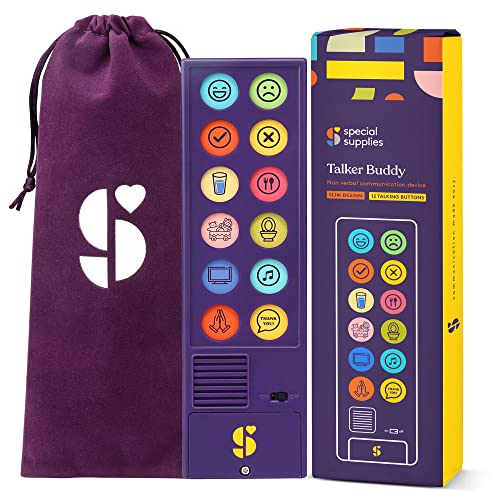
Special Supplies Talker Buddy AAC Communication Device

Joyreal AAC Device for Autism Communication Tablet 8 Buttons

Joyreal AAC Device for Autism Communication Board 5 Buttons

LoveHugs AAC Device for Autism Programmable Communication Tool

Special Supplies Talker Buddy Pro AAC Communication Device

Tiny Talker Tool AAC Communication Device 12 Buttons

Special Supplies Talker Buddy AAC Communication Device Recording

BRIFUTR AAC Device for Autism Communication Device 5 Buttons

KCNVLCK AAC Device for Autism Touch-Sensitive Buttons
More Details On Our Top Picks
Talker Buddy leans into a practical, grab-and-go shape for home, school, and travel. That makes it a sensible fit for busy routines where the device needs to move as often as the person using it does, and the included travel bag helps with that handoff.
Compared with the more button-heavy Joyreal options, this one reads as easier to introduce without a long learning curve. The honest read is that it suits straightforward daily messaging more than deep customization, which is fine for many family setups.
What We Like
- Travel bag support makes daily carry less awkward.
- Works across home and school settings with little fuss.
- Simple enough for newer communication routines.
- Useful for quick handoffs between caregivers.
Points To Note
- It looks better suited to basic communication than layered programming.
- The simpler layout may feel limited for more advanced message sets.
Core Details
Who It Suits Best
Children and adults who need a portable, straightforward communication helper for everyday routines get the most out of it.
A Better Fit Elsewhere
Joyreal AAC Device for Autism Communication Tablet 8 Buttons suits you better for more structured message practice and a little more control.
The eight programmable buttons give this Joyreal tablet more room for repeatable phrases and structured communication practice. Adjustable volume matters in real rooms, too, since a therapy space, a quiet home, and a louder classroom rarely ask for the same sound level.
Compared with Talker Buddy, this option feels more tuned to planned message use than pure portability. You may find it especially helpful in speech therapy or rehab routines where consistency counts and the device needs to hold a stable role day after day.
Reasons To Buy
- Eight programmable buttons support a broader set of messages.
- Adjustable volume helps match different room sizes.
- Well suited to therapy routines with repeated practice.
- Offers more structure than the simpler four- or five-button options.
Room For Improvement
- The added control can feel like more to manage for newcomers.
- It looks less travel-light than the Tiny Talker Tool.
- Programming takes a little setup before it feels natural.
Feature Rundown
Who Will Love This
You get the most from this pick in therapy settings, classroom practice, or any routine that benefits from repeatable, pre-set phrases.
Skip It When
Special Supplies Talker Buddy is the easier fit for you if portability matters more than having extra programmable space.
The five-button layout keeps this Joyreal board lean, which helps when you want a simpler first step than the eight-button tablet. Adjustable volume is still there, so the device can work in quieter spaces without feeling underpowered.
That lighter layout makes sense for beginners or families who want to start with a smaller set of common phrases. Compared with LoveHugs, this one feels less focused on the bridge from cards to device and more on direct, simple communication.
Positives
- Five programmable buttons keep the layout approachable.
- Adjustable volume helps in different environments.
- Easy to picture as a first AAC device.
- Less crowded than the eight-button Joyreal tablet.
Small Caveats
- Five buttons may feel limiting once message needs expand.
- Less room for varied phrases than the 8-button Joyreal model.
Spec Overview
Right Fit For
Beginners, younger children, and families who want a less crowded button layout tend to get the most value from it.
Another Choice May Suit
Joyreal AAC Device for Autism Communication Tablet 8 Buttons fits better for you once you want a wider set of stored phrases.
LoveHugs stands out because it sits between picture-card style support and a more direct programmable device. That middle ground can feel useful in a home where different helpers need a communication tool that is flexible without becoming complicated.
For families moving away from PECS-style cards, this kind of transitional setup makes sense. The trade-off is that it may not offer the same simplicity as Tiny Talker or the same button depth as the Joyreal tablet, so the fit depends on how much structure you want.
Strong Points
- Programmable format gives you room to shape common messages.
- Good bridge from card-based communication.
- Works for kids and adults in mixed household use.
- More flexible than a very basic button board.
Worth Noting
- Programming takes some setup and patience.
- It may feel less immediate than the Tiny Talker Tool.
Details At A Glance
Whose Shelf It Belongs On
You benefit most here when you want a communication device that sits between simple cards and fuller electronic options.
Where A Sibling Pick Shines
Special Supplies Talker Buddy Pro suits you better for a carry-friendly setup with a more travel-ready feel.
Talker Buddy Pro follows the same portable path as the earlier Special Supplies model, but it feels aimed at a more polished carry routine. That makes it a smart thought for school bags, therapy kits, and homes where one device gets passed between helpers.
The step up matters most for organization rather than flashy features. Compared with the plain Talker Buddy, this version reads as the one to choose when you want the brand’s familiar format with a little more presence in daily use.
Upsides
- Portable format suits movement between settings.
- Good fit for school and therapy carry.
- Feels more polished than the basic Talker Buddy.
- Useful for shared use across family members.
Areas To Watch
- The upgrade feels practical rather than dramatic.
- Portability still matters, so careful storage helps keep it tidy.
Technical Sheet
The Right Fit
You get the most value here when you want a portable AAC device that can move from school to therapy to home without feeling out of place.
Reach For A Different Pick When
Joyreal AAC Device for Autism Communication Tablet 8 Buttons is the better fit for you if message depth matters more than portability.
Tiny Talker is the simplest shape in this group, and that simplicity is part of its appeal. Twelve large buttons, recordable sound, and pocket-friendly sizing make it easy to picture in a home, a classroom, or a caregiver’s bag.
The record mode lets you store up to two seconds of audio, which keeps the device focused on short, practical cues instead of long phrases. Compared with the more programmable Joyreal units, this one is the lighter lift for families who want a starter tool without a lot of setup.
Best Bits
- Large 3/4-inch buttons are easier to press.
- Record mode supports repeated reprogramming.
- Runs on two small batteries, so no charging routine is needed.
- Small size makes it easy to move between rooms.
Minor Gripes
- Two seconds of recorded audio keeps messages short.
- Basic layout suits simple commands more than complex phrasing.
At A Glance
Made For
You benefit most here as a starter option for children, adults, or caregivers who need a compact, easy-to-press communication aid.
Look Elsewhere When
Joyreal AAC Device for Autism Communication Tablet 8 Buttons suits you better once you want more programmable space and finer control.
This Talker Buddy version keeps the brand’s familiar portability, but the recording option gives it a clearer edge for repeated home routines. That matters in families where different helpers need the same messages to sound consistent across the day.
It sits nicely between the very simple Tiny Talker Tool and the more button-heavy Joyreal tablet. The trade-off is that the usefulness here depends on how much you value recording support over a broader layout, and for many homes that balance feels right.
Highlights
- Recording option supports repeated messages.
- Portable shape works well in shared households.
- Useful for school, home, and caregiver handoffs.
- Feels less plain than a basic button board.
Softer Spots
- Recording support helps most when you plan to use it often.
- It may still feel simple next to the more programmable Joyreal picks.
Feature Card
Built With In Mind
You get the most from this pick when you want a compact communication device that can be shared by family members or caregivers.
Swap It Out When
Special Supplies Talker Buddy Pro is the better match for you if you want the same portable idea with a slightly more polished carry setup.
BRIFUTR keeps things straightforward with five programmable buttons and adjustable volume, which is a sensible combination for mixed-age use. The layout gives you enough room for basic phrases without turning the device into a heavy setup project.
That balance makes it a decent middle path between the Tiny Talker Tool and the larger Joyreal tablet. One thing worth considering is that the simpler button count works best when your message set stays focused, not sprawling.
Bright Spots
- Five buttons keep the design approachable.
- Adjustable volume supports different room needs.
- Good match for families sharing one device.
- Feels easier to start with than many larger layouts.
Trade Offs
- Five buttons can feel tight as communication needs grow.
- Less room for expansion than the 8-button Joyreal model.
Core Details
Best Suited To
You get the best fit here when you want a manageable, no-fuss AAC device for a home or mixed-use setting.
Where Shoppers Go Wrong
Joyreal AAC Device for Autism Communication Tablet 8 Buttons is the smarter move if you know you’ll want more programmable space.
The touch-sensitive button design gives this KCNVLCK model a different feel from the press-to-activate boards above it. That can help in routines where a lighter touch is easier to manage, especially for kids or adults who struggle with firmer button pressure.
Five-level volume control adds another practical layer, since sound needs can change from room to room. Compared with the BRIFUTR five-button model, this one looks a bit more refined in how the buttons respond, though the fit still depends on your comfort with touch-style control.
Reasons To Buy
- Touch-sensitive controls create a lighter interaction feel.
- Five volume levels help tune sound output.
- Works for both kids and adults.
- Good choice for users who dislike stiff button presses.
Honest Caveats
- Touch-style buttons can feel unfamiliar at first.
- Button sensitivity may take a little adjustment in daily use.
- The layout stays compact, so phrase space remains focused.
Feature Snapshot
Who Should Grab It
You benefit most from this pick if touch response feels easier than a firmer press and you want flexible sound control.
Consider Something Else When
BRIFUTR AAC Device for Autism Communication Device 5 Buttons is the simpler route if you want a more traditional button feel.
How To Choose The Right Aac Devices
Button Layout And Message Depth
Button count shapes the whole experience. Fewer buttons, like the Tiny Talker Tool’s 12-button layout or the Joyreal five-button board, keep the first steps simple, while the 8-button Joyreal tablet gives you more room for stored phrases and repeated routines.
The right number depends on how much language the user needs today and how much room you want for growth. For a starter setup, smaller layouts usually feel less overwhelming, but a more expressive home routine may justify the extra control.
Portability Versus Staying Put
Some AAC devices are easier to carry from room to room, school to home, or therapy to car. The Special Supplies Talker Buddy models and Tiny Talker Tool fit that pattern better than more structured tablet-style options.
Portability matters most for shared use and daily movement, while a steadier, more feature-dense unit makes sense for a fixed workspace. You’re really choosing between convenience and a more deliberate setup.
Recording, Programming, And Volume
Recording features and programmable buttons do different jobs. Recording helps you store familiar phrases or sounds, while programming creates a cleaner system for repeat communication, and adjustable volume keeps the device usable across quiet homes and louder classrooms.
One family may want quick setup and short phrases, while another needs more control for therapy practice. The better match is the one that fits the amount of daily repetition you expect, not just the longest feature list.
Who Will Use It Most Often
Consistency matters when several people handle the same device. Caregivers, teachers, and therapists usually benefit from simple controls, clear labeling, and a format that does not need a fresh explanation every time it changes hands.
For children just starting out, a smaller board often feels easier to learn. For older users or mixed-age households, a more programmable device can save you from outgrowing the setup too quickly.
What To Weigh Before You Commit
Wrong Turns To Avoid
Many shoppers focus on button count and forget the rest of the picture. A crowded layout can slow things down, but a layout that’s too small can leave you short on useful phrases after the first few weeks.
Another common miss is overlooking portability. A device that stays in one drawer rarely helps much during school, therapy, or travel days.
What The Higher Tier Buys
Higher-tier AAC devices usually pay for more programmable space, more careful control of sound levels, or a more polished body style. That matters most when the device will be used every day and passed between several people.
Spending more makes sense when you want the tool to last through a broader routine rather than serve as a short-term starter. For a lighter use case, a simpler option often feels easier to live with.
Frequently Asked Questions
What does AAC mean?
AAC stands for augmentative and alternative communication. It covers tools that support speech or provide another way to communicate.
Are programmable buttons useful?
Yes, programmable buttons help you store repeated messages for regular routines. They make more sense when the same phrases come up often.
Which AAC devices suit travel better?
Portable models like the Tiny Talker Tool and the Special Supplies Talker Buddy line fit travel more naturally. Their smaller footprints are easier to move between settings.
Do volume controls matter much?
They matter a lot in mixed settings like classrooms, therapy rooms, and homes with different noise levels. Adjustable sound keeps the device more comfortable to use.
Is a simple layout better for beginners?
Often, yes, because fewer buttons reduce the learning curve. A simple board can be easier to introduce before moving to a more complex device.
Final Thoughts
You have several solid AAC device paths here, and the right one depends on how much structure you want, how often the device moves, and how many messages need to live on it. Tiny Talker Tool keeps things light for starters, the Joyreal models add more control, and the Special Supplies options sit in a comfortable middle ground for daily routines. A simpler board is usually easier to begin with, but a more programmable unit can make better sense once communication needs expand. Choose the format that fits the day you actually live, not the one that only looks impressive on paper.