


Hearing loss tends to creep up slowly, and most people put off getting help because the devices they remember were bulky, whistling, and obviously medical. The new wave of mini-hearing aids flips that script: small in-ear shells, rechargeable cases, and digital processing that quietly lifts speech out of noisy rooms without the stigma of older designs. I put together this roundup for anyone shopping for a compact hearing aid, whether you’re a first-time OTC buyer, a senior looking for all-day comfort, or someone upgrading from basic earbuds-style amplifiers to a more capable model. Each pick below leans on its own specific strength, from invisible-fit form factors to dual-microphone noise handling, so you can match a device to the way you actually live.
A Side-By-Side Look

Oticon Replacement Domes for MiniRite Hearing Aids (10mm Power)

Ceretone Luma OTC Invisible Hearing Aids (Beige)

Ceretone OTC Hearing Aids (Earbuds-Style)

Oction Rechargeable Hearing Aids for Seniors

Flaygo Rechargeable Hearing Aid for Seniors

Ceretone Horizon OTC Hearing Aids (Black)
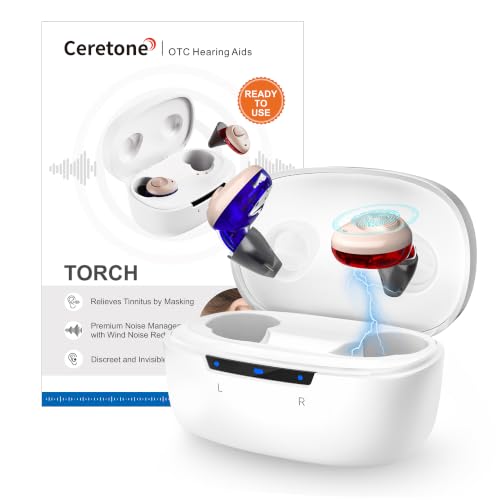
Ceretone OTC ITE Hearing Aids (White)
A Closer Look At Each Pick
If you already wear an Oticon MiniRite (the slim receiver-in-canal style with the thin wire over the ear), the dome on the end of that receiver is the part that actually sits in your ear canal. Over weeks of daily wear, those silicone tips collect wax, lose their grip, and slowly turn yellow. The 10mm Power Minifit dome here is a genuine OEM replacement built specifically for the newer Mini receiver speakers, so the fit and acoustic seal match what the device was originally tuned for.
This isn’t a hearing aid on its own; it’s a wear part. Owners commonly rotate a fresh pair every few months to keep sound quality from going muffled, and keeping a spare pack in a bedside drawer is a small habit that prevents the panic of a torn dome right before a dinner out. If you’re new to the Oticon Mini platform, double-check your receiver size against the product listing before you commit, since the wrong dome diameter throws off the whole sound profile.
The Case For It
- Original Oticon part, not a third-party substitute that may distort sound.
- 10mm Power size gives a tighter seal for users with moderate-to-severe loss.
- Multi-pack value if you swap domes every 2-3 months as recommended.
- Specifically matched to the newer Mini receiver wire, which differs from older Oticon receivers.
Worth Noting
- Only fits Oticon’s newer Mini speaker platform, not older receiver wires.
- No cleaning tools or wax filters included, so you’ll want a separate care kit.
- Domes degrade faster than people expect; budget for replacements every few months.
Whose Drawer It Belongs In
Current Oticon MiniRite wearers who need a genuine replacement dome and already know their receiver size.
Look Elsewhere When
You’re shopping for an actual hearing aid, not a wear part. The Ceretone Luma OTC Invisible Hearing Aids is a better starting point for a first device.
The Luma is the pick most people shopping for an OTC hearing aid are actually picturing in their head: a beige shell that sits deep in the ear canal and barely peeks out, even when someone looks at you head-on. Powered by Intricon’s digital sound processing chip (a brand long associated with hearing-grade electronics), it claims distortion as low as 2% and runs four preset programs you toggle through with a long press on the multi-function button.
What stands out is the 80-hour battery claim when paired with the portable charging case. For most wearers, that translates to roughly a week of typical daily use between wall charges, which is a real lifestyle upgrade over the constant micro-USB ritual older aids required. Six volume steps let you nudge things up or down without launching an app, which keeps the experience simple for someone who just wants to put them in and go.
Standout Benefits
- Nearly invisible canal fit avoids the “hearing aid look” that puts off first-time wearers.
- Four program presets handle quiet rooms, restaurants, outdoor walks, and TV watching.
- 80-hour case runtime means less time tethered to an outlet.
- Onboard button controls keep the experience app-free.
Honest Caveats
- Deep-fit designs feel plugged-up to some wearers during the first week of use.
- Small shells are easier to drop during cleaning, so a soft mat helps.
Who It Suits Best
Self-conscious first-time wearers and active adults who want a discreet canal-style fit and don’t want to fuss with a smartphone app.
A Better Fit Elsewhere
Seniors who struggle with tiny buttons should look at the Ceretone Horizon OTC Hearing Aids, which pairs a more traditional RIC shape with auto on/off.
This Ceretone model leans hard into the “looks like earbuds” angle, which is a real consideration for anyone who doesn’t love the medical-device silhouette. It’s classified as a true in-the-ear hearing aid (not a basic amplifier), built around an Intricon digital chip and a Knowles-branded speaker, with environmental noise reduction layered on top to keep restaurant chatter from drowning out the person across from you.
In everyday use, the form factor is friendly: pop them out of the case, twist them into your ears, and nobody at the coffee shop gives them a second look. The rechargeable battery means no fumbling with #312 zinc-air cells, and the included charging case tucks into a jacket pocket. The trade-off is that earbud-style shells are slightly larger than a deep-canal fit, so people with very small ear canals may want to size up carefully.
Notable Gains
- Modern earbud aesthetic reduces self-consciousness in social settings.
- Knowles speaker paired with Intricon processing gives a balanced, clean sound.
- Rechargeable case eliminates ongoing battery purchases.
Things To Consider
- Slightly larger shell than the Luma, which can bother wearers with narrow ear canals.
- Wax buildup on the speaker mesh is a common issue that needs weekly wiping.
- Lower-secretion fit may let in more wind noise during outdoor walks.
Made For
Style-conscious adults with mild-to-moderate loss who want a hearing aid that blends in with consumer earbuds.
Skip It When
You need the smallest possible canal fit. The Ceretone Luma OTC Invisible Hearing Aids sits deeper and disappears more completely.
The Oction sits in that sweet spot where you get serious speech-processing tech without paying the Ceretone premium. It uses Oction’s own adaptive noise cancellation algorithm to separate human voice frequencies from background clatter, and it runs on a rechargeable cell with smart charging logic that the company claims extends battery lifespan over time.
For someone whose main frustration is following conversation at family dinners, this is the pick I’d point them toward. The digital chip is tuned to lift speech frequencies specifically, which matters more than raw amplification in real-world environments. Owners commonly report the device takes a few days of fine-tuning to find the right volume, so patience during the first week pays off.
What Makes Sense
- Speech-frequency targeting cuts through the kitchen-noise problem most seniors complain about.
- Adaptive noise cancellation adjusts on the fly as you move between rooms.
- Smart charging algorithms are designed to preserve long-term battery health.
Trade Offs
- Less brand recognition than Ceretone, so replacement tips and accessories may be harder to source.
- Initial fit may require several volume adjustments in the first week.
- Fewer published program options than higher-tier competitors.
Best Suited To
Seniors and adults whose primary hearing complaint is struggling to follow speech in group conversations.
Another Choice May Suit
Shoppers wanting dual-microphone pickup for very noisy environments should consider the Ceretone Horizon OTC Hearing Aids instead.
The Flaygo is the kind of straightforward, no-frills rechargeable hearing aid that makes sense for someone who wants to try amplification without committing to a premium device. It runs a dedicated noise-reduction chip module and applies adaptive filtering to suppress ambient hum before amplifying the sounds that matter, which is more processing than you usually find at the entry tier.
For most seniors on a fixed budget, this is a sensible first step. The rechargeable cell removes the cost of replacement batteries, and the basic one-button operation means there’s almost no learning curve. Compared to the Ceretone Luma two spots above, the Flaygo is bigger in the ear and lacks the multiple-program flexibility, but it covers the core job: making speech clearer around the house and at the grocery store.
Real Benefits
- Entry-level price lowers the barrier for first-time OTC buyers.
- Adaptive filtering noticeably reduces steady-state hum like fans and refrigerators.
- Rechargeable design avoids the ongoing cost of button-cell batteries.
Points To Keep In Mind
- Larger shell than canal-fit options, which may catch on glasses or masks.
- Fewer program presets for switching between quiet and noisy environments.
- Documentation and customer support tend to be lighter than the bigger brands.
The Right Fit
Budget-conscious first-time buyers who want rechargeable convenience without paying for advanced program presets.
Reach For A Different Pick When
You spend a lot of time in restaurants or large gatherings. The Ceretone Horizon OTC Hearing Aids handles noise better with dual microphones.
The Horizon earns its premium slot by doing two things most budget OTC aids skip: dual microphones and an auto on/off feature. The dual-mic array pulls in sound from two directions, which helps your brain localize where a voice is coming from in a crowded room, and the Intricon chip keeps distortion at roughly 2%. It’s a RIC (receiver-in-canal) design with the speaker housed in the ear tip, which tends to feel lighter than all-in-one in-ear shells.
In real-world use, the auto on/off is a small detail that ends up mattering more than you’d expect: pull them out of the case and they wake up, dock them and they shut down, no fiddling with tiny power buttons. The 64-hour case runtime lands a step behind the Luma’s 80 hours, and the four included eartip sizes help you dial in the seal. For noisy environments specifically, this is the strongest performer in the roundup.
A Favorable Mix
- Dual-microphone pickup improves speech clarity in noisy environments.
- RIC design keeps the behind-the-ear portion slim and lightweight.
- Auto on/off removes a step seniors commonly forget.
- Four eartip sizes included for dialing in the right canal seal.
Some Limits To Know
- Case runtime is shorter than the Luma at 64 hours.
- RIC style has a thin wire over the ear, which may bother glasses wearers at first.
- Higher feature set commands a higher price tier.
Who Should Grab It
Active adults who eat out often, attend family gatherings, or work in open offices and need the cleanest speech pickup available in this roundup.
Swap It Out When
You want the most discreet possible fit. The Ceretone Luma OTC Invisible Hearing Aids disappears deeper into the canal.
The white Ceretone ITE rounds out the lineup with an emphasis on comfort and clean sound. It uses an Intricon 16-channel digital chip (more frequency bands than typical budget aids, which usually run 4-8 channels), paired with a Knowles speaker and wind-noise suppression tuned for outdoor conversations. Feedback suppression is built in to keep that high-pitched whistling at bay when you hug someone or rest your hand near your ear.
The white finish is a small detail but a deliberate one: people who wear glasses and don’t want a beige blob on the side of their head sometimes prefer the cleaner look. It’s classified as an in-the-ear hearing aid designed for mild to moderate loss, and the multiple channels help the device separate voices from environmental noise more granularly than simpler chips allow.
Everyday Advantages
- 16-channel processing gives finer separation of speech versus noise.
- Wind-noise suppression makes outdoor walks more pleasant.
- White shell option offers a clean, non-medical aesthetic.
- Feedback suppression reduces whistling during hugs and hat use.
Potential Drawbacks
- 16-channel tuning is best suited for mild to moderate loss, not severe cases.
- White color shows wax and skin oils more than beige shells.
- More channels can mean more sound-shaping choices to learn.
Perfect Match For
Wearers with mild-to-moderate loss who want granular sound shaping, spend time outdoors, and prefer a clean white finish.
Where Another Pick Shines
People with more severe loss need the Oticon Replacement Domes for MiniRite Hearing Aids to upgrade seal and amplification on a clinical-grade device.
What To Weigh Before Picking Mini-Hearing Aids
Style And Fit Come First
The single biggest predictor of whether someone actually wears their hearing aid is how it feels in the ear after hour three. Mini comes in three rough flavors: deep-canal invisible shells (most discreet, can feel plugged), earbud-style ITE (largest, easiest to handle), and RIC designs with a thin wire over the ear (lightweight, slimmer in the canal). Pick the shape you’d actually put in every morning, not the one that looks best on paper.
Processing Power Beats Raw Volume
A higher-quality digital chip with multiple channels and noise reduction will outperform a louder, simpler amplifier in the places hearing matters most: restaurants, family dinners, and TV rooms. Look for specs like distortion percentage, channel count, and noise reduction algorithms; these tell you more about real-world performance than max decibels.
Battery Life And Charging Routine
Rechargeable cases range from about 64 to 80 hours of total runtime in this roundup. That difference decides whether you charge the case weekly or every few days. For frequent travelers or anyone without a convenient outlet, longer case runtime removes one more thing to think about.
Loss Severity Sets The Ceiling
OTC hearing aids work best for mild to moderate hearing loss. If your audiogram shows severe loss, an OTC mini will likely underperform a fitted medical device regardless of chip quality. Get a baseline hearing test before buying, even if you plan to skip the audiologist fitting process.
Key Considerations Across These Picks
Pitfalls Shoppers Hit
First-time OTC buyers often skip the hearing test and grab whatever fits their budget, only to find the device under-amplifies their specific loss pattern. Another common miss is ignoring the eartip sizing: a poor seal turns even a great hearing aid into a whistle machine. Owners commonly report the first week feels weird as your brain recalibrates to amplified sound, so give any new device a real trial before deciding it doesn’t work.
What The Higher Tier Buys
The jump from budget to premium in this category buys dual microphones, more processing channels, and longer case battery life. Those upgrades show up most in noisy environments, where a basic amplifier just makes everything louder while a premium device separates the voice you want from the noise around it. For someone living mostly in quiet homes, the budget tier is plenty. For someone eating out twice a week, the premium tier earns its keep.