


Sore arches, aching heels, and that throbbing ball-of-foot sting can quietly wreck a workday. I’ve spent enough hours on concrete floors and standing-desk shifts to know how a good insole can turn a brutal shift into a tolerable one, and how the wrong one just makes things worse. This lineup pulls together inserts for foot pain across different needs: heavy-duty support, soft memory-foam cushioning, and customizable fits for tricky foot shapes. A few are workhorse orthotics, others are comfort-first cushions, and one or two are surprisingly versatile for casual shoes.
A Closer Look At The Lineup

IWELA WATER High Arch Support Insoles for Plantar Fasciitis

FLYSTORY 4D Cloud Insoles for Men and Women
PLERE Arch Support Insoles for Plantar Fasciitis
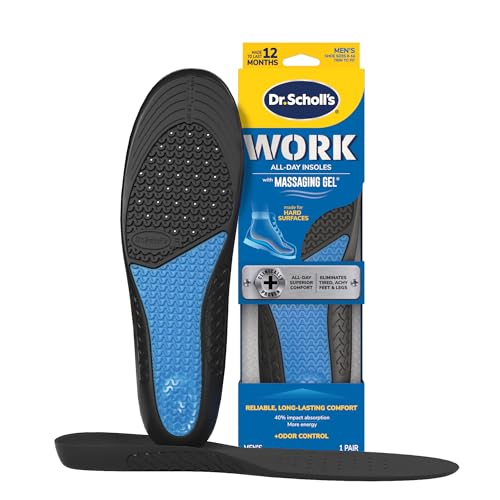
Dr. Scholl’s Work All-Day Comfort Insoles with Massaging Gel

Dr. Scholl’s Heavy Duty Support Insole Orthotics for Big & Tall

Dr. Scholl’s Advanced Pain Relief Insoles for Heavy Duty Work

ENLOPQ 4D Cloud-Like Comfort Soles for Women
A Closer Look At Each Pick
If your arches feel like they’re collapsing by lunchtime, a rigid, structured insert like this one tends to feel more supportive than a soft foam pad. The TPU arch cradle, which is a firm thermoplastic piece shaped to cup the underside of the arch, follows the contour of a higher arch and stays put rather than squishing flat under weight. For shoppers over 220 pounds or anyone wearing thick-soled work boots, the firmness prevents that “bottoming out” feeling you get from cheaper gel inserts.
Compared to the softer picks later in this list, this one feels clinical in a good way: less plush, more orthopedic. You’ll want a shoe with a removable insole and enough depth to accommodate the height, otherwise it can crowd your toes in shallow sneakers.
Where It Delivers
- Firm arch cradle supports high arches during long standing shifts
- Heavy-duty construction holds up under 220+ lb loads
- Structured heel cup, a raised edge around the heel that cradles and stabilizes it, reduces wobble and fatigue
- Trimmable design lets you dial in the fit across work boots and casual shoes
Things To Consider
- Firm feel takes adjustment if you’re used to soft foam insoles
- Heel and arch height may crowd shallow, low-volume shoes
Whose Shoe Bag It Belongs In
Heavier folks, warehouse workers, and anyone with pronounced high arches who want real structural support rather than cushioning alone.
Consider Something Else When
Shoppers wanting plush, all-day cushioning should look at the FLYSTORY 4D Cloud Insoles, which feel softer underfoot.
For a softer ride, these 4D cloud-style insoles lean into memory foam and PU cushioning, which is a lightweight, springy foam commonly used in athletic insoles, with an ergonomic arch lift. The two-pair pack is a quiet bonus if you rotate between work shoes and weekend sneakers. The arch shape isn’t as rigid as the IWELA WATER pick above, so they feel less corrective and more like a padded hug.
In my view, this is the sort of insert that suits retail workers, teachers, and parents chasing toddlers across playgrounds more than it suits someone needing structural correction. The cushioning absorbs shock well on hard floors but won’t reposition a collapsing arch.
The Value In It
- Memory foam padding softens hard concrete and tile floors
- Two-pair bundle spreads across multiple shoes
- Lightweight PU construction doesn’t weigh shoes down
- Universal trim lines adapt to most sneaker and casual shapes
Points To Note
- Soft foam compresses faster than rigid orthotics under heavy daily use
- Arch height sits in the moderate range, so severe flat feet may want more lift
Feature Snapshot
Right Fit For
Anyone standing on hard floors who wants plush cushioning more than corrective structure, especially in casual or athletic shoes.
A Better Fit Elsewhere
Heavier shoppers or those with severe overpronation should try the Dr. Scholl’s Heavy Duty Support Insole Orthotics, which offers more rigid support.
Customization is the headline here. With three arch heights (low, medium, high) and five trimmable sizes, these adapt to narrow feet, wide feet, flat arches, and high arches in a way most off-the-shelf inserts don’t. The trade-off is that finding your match takes a few minutes with scissors and the sizing chart, so this isn’t a grab-and-go purchase.
Compared to the IWELA WATER pick earlier, the arch feels less aggressive. It’s more of a guided cradle than a corrective splint, which makes it a friendlier starting point for beginners unsure how much support they actually need.
Features That Help
- Three arch profiles cover flat, neutral, and high-arched feet
- Trim-to-fit sizing reduces the gamble of online insole shopping
- Works across work boots, sneakers, and casual shoes
- Mid-range firmness balances comfort and structure
Worth Bearing In Mind
- Picking the right arch height requires reading the chart carefully before cutting
- Once trimmed, you can’t go back up a size
Key Product Details
Best Suited To
First-time insole shoppers and anyone with an unusual foot shape who needs a more tailored fit than generic sizing offers.
Look Elsewhere When
Shoppers wanting set-and-forget rigidity should consider the Dr. Scholl’s Heavy Duty Support Insole Orthotics, which comes pre-shaped for heavier loads.
This is the classic drugstore-shelf work insole, and there’s a reason it’s been around for years. The massaging gel core, which is a soft silicone-like pod that flexes under pressure to absorb impact, distributes pressure across the forefoot and heel rather than letting hot spots build up. For waitstaff, nurses, and warehouse pickers who don’t need aggressive correction, it’s a sensible middle path between soft cushion and rigid orthotic.
The trim-to-fit format means you’ll spend a minute cutting along the marked lines, but the sizing is forgiving enough to land in most work shoes without frustration. Owners commonly report the gel pods feeling slightly firm out of the box, then softening within a few days of wear.
What Works In Its Favor
- Gel pods absorb shock across heel and forefoot during long shifts
- Pressure distribution reduces the “hot spot” sting under the ball of the foot
- Trim-to-fit sizing covers most men’s work shoe sizes
Small Caveats
- Less corrective than a true orthotic, so severe plantar fasciitis may need more lift
- Gel pods can feel firm for the first few wears before breaking in
Quick Facts
Who Should Grab It
Men working long shifts on hard floors who want all-day pressure relief without the bulk of a heavy-duty orthotic.
Skip It When
Women shoppers or anyone under 200 lbs wanting similar gel comfort should try the ENLOPQ 4D Cloud-Like Comfort Soles, which target a different fit range.
Built specifically for men over 200 pounds or those with wider feet, this orthotic pairs a rigid arch with extra-supportive heel cushioning. The wider platform is the key difference from standard men’s inserts, because standard sizes often pinch at the forefoot for wider feet. You get a noticeable cradle under the arch without the feeling of standing on a hard ramp.
Compared to the PLERE pick earlier, this one arrives pre-shaped rather than trim-to-customize, which makes it faster to install but less adaptable to unusual arches. Owners commonly report it holding its shape longer than foam-only insoles after months of daily wear.
Useful Strengths
- Wide platform suits men with broad or swollen feet
- Rigid arch cradle supports 200+ lb loads without bottoming out
- Reinforced heel absorbs impact and eases lower-back fatigue
- Trim-to-fit sizing covers men’s 8-14
Some Limits To Know
- Men’s sizing only, so women shoppers will need to look elsewhere
- Heel cushioning adds bulk, which can crowd snug-fitting dress shoes
Feature Rundown
Perfect Match For
Big and tall men, wide-footed shoppers, and anyone needing reinforced arch support for daily work boot wear.
Reach For A Different Pick When
Women or shoppers under 200 lbs wanting heavy-duty relief should consider the Dr. Scholl’s Advanced Pain Relief Insoles, which fit a wider size range.
This is the most clinically framed pick in the lineup, designed around a multi-zone pain relief concept that targets the heel, arch, ball of foot, knees, and lower back through distinct cushioning zones. The full-length shape covers toe to heel rather than stopping short, and the heavy-duty build supports up to 340 pounds. For chronic pain sufferers juggling multiple problem spots, that full-foot coverage is the main attraction.
It’s also the most size-flexible Dr. Scholl’s option here, with ranges spanning both men’s and women’s sizes. You may find it slightly taller than standard inserts, so shallow loafers and ballet flats won’t work, but work boots and running shoes handle the height fine.
What Helps Most
- Multi-zone cushioning targets heel, arch, ball of foot, knees, and lower back
- Reinforced build supports up to 340 lb loads
- Full-length design covers the entire footbed
- Size options cover both men and women
Room For Improvement
- Heel and arch height may not fit shallow dress shoes
- Premium positioning means a thicker profile than casual inserts
Who It Suits Best
Chronic pain sufferers, heavier shoppers, and anyone whose foot pain radiates beyond just the heel or arch.
Where A Sibling Pick Shines
Shoppers wanting a lighter, softer feel for casual shoes should look at the FLYSTORY 4D Cloud Insoles, which trade correction for cushioning.
Built specifically for women’s feet rather than shrunk-down men’s inserts, this ENLOPQ pair combines high-elasticity PU (a flexible, rebound-friendly foam) with a memory foam top layer and a thickened heel pad. The narrower heel and shorter arch match women’s shoe geometry, which matters more than people think for insoles that get pulled in and out of multiple pairs.
The trim-to-fit format lands somewhere between the rigid PLERE and the soft FLYSTORY 4D Cloud. It’s friendlier to casual sneakers than to steel-toe work boots, and the focus stays on cushioning rather than aggressive correction.
Key Advantages
- Women’s-specific geometry fits narrower heels and shorter arches
- Memory foam top layer cushions under the ball of the foot
- Thickened heel pad absorbs impact during long standing days
- Trim-to-fit lines adapt across women’s US 6.5-9
Honest Caveats
- Not built for heavy industrial work boots or very high arches
- Soft foam loses rebound faster than rigid orthotics under daily use
Made For
Women on their feet all day, whether that’s a retail shift, a teaching day, or a long travel itinerary with lots of walking.
Swap It Out When
Women needing heavy-duty structural support should consider the Dr. Scholl’s Advanced Pain Relief Insoles, which offers reinforced correction in women’s sizes.
What to Weigh Before Picking Inserts for Foot Pain
Arch Height and Foot Shape
The biggest decision isn’t brand, it’s how much lift your arch actually needs. Flat feet typically want a higher, more structured cradle, while neutral arches often do fine with moderate cushioning. High arches tend to feel best with a contoured piece that fills the gap rather than letting the foot collapse downward. If you’re unsure, the PLERE pick with three arch profiles is the lowest-commitment way to find out.
Cushioning vs. Correction
Cushioning absorbs shock, while correction repositions the foot. Soft memory-foam insoles like the FLYSTORY or ENLOPQ picks feel great underfoot but won’t fix a collapsing arch. Rigid orthotics like the IWELA WATER or Dr. Scholl’s Heavy Duty Support reshape how the foot lands but feel clinical. For mixed pain, the Dr. Scholl’s Advanced Pain Relief Insoles try to bridge both goals in one full-length build.
Shoe Compatibility
An insole that doesn’t fit your shoes isn’t useful. Work boots and trail shoes handle bulky inserts easily, while dress shoes, loafers, and ballet flats often can’t accommodate thick orthotics. Always check the volume of your shoe before committing to a heavy-duty design, and remember that trim-to-fit doesn’t mean trim-to-any-size.
Weight and Durability
Heavier shoppers compress foam faster than lighter ones, so what feels supportive in week one can flatten by month three. Reinforced orthotics (TPU bases, rigid arches, gel pods) tend to outlast pure foam under heavier loads. If you’re over 200 lbs, prioritize heavy-duty construction over plush cushioning to avoid replacing insoles every few months.
Key Considerations Across These Picks
Pitfalls Shoppers Hit
The most common mistake I see is grabbing a “one size fits all” gel insert and expecting it to fix plantar fasciitis. Cushioning alone doesn’t address the underlying arch collapse, so the pain returns within weeks. Another trap is ignoring shoe volume, because an insole that physically fits your foot but doesn’t fit your shoe just gets abandoned in the box. Trim-to-fit helps, but measure your shoe’s removable insole first if you can.
Where the Extra Money Goes
Premium picks like the Dr. Scholl’s Advanced Pain Relief Insoles add multi-zone cushioning and heavier-duty materials, which costs more but spreads pressure across more problem areas. The price difference usually reflects denser foams, broader size ranges, and reinforced arches that hold shape longer under load. For shoppers with chronic pain or heavier builds, that upgrade tends to pay for itself in fewer replacements and less daily discomfort.
Frequently Asked Questions
How long do insoles for foot pain typically last?
Most foam-based insoles lose their supportive feel within three to six months of daily wear, while rigid orthotics often hold their shape for a year or more depending on body weight and use intensity. Rotating between two pairs can extend the life of each.
Can I move insoles between different pairs of shoes?
Yes, as long as the shoes share similar volume and the insole isn’t trimmed to a single shoe’s exact shape. Swapping foam inserts daily is normal, but trimmed orthotics are usually committed to one pair.
Are rigid orthotics uncomfortable at first?
Some shoppers feel a “breaking in” period of a few days as their feet adjust to structured support. Starting with shorter wear windows and gradually increasing daily use helps the foot adapt without soreness.
Do these insoles work for plantar fasciitis specifically?
Insoles with firm arch cradles tend to help most with plantar fasciitis because they reduce overstretch of the plantar fascia, the thick band of tissue running along the bottom of the foot. Soft-only cushioning may ease symptoms but rarely addresses the root cause.
Should I size up when buying insoles?
Most trim-to-fit insoles are designed to be cut down to your exact shoe size, so start with the size that matches or slightly exceeds your shoe. Cutting too small leaves gaps under the arch, while leaving them too tall bunches up inside the shoe.