


I’ve spent enough time on my feet to know that the difference between a good day and a wrecked one often comes down to what’s sitting under your arch. Foot support insoles can take pressure off the plantar fascia, soften hard concrete under nurses and warehouse workers, and keep a long run from punishing your knees the next morning. The trick is matching the insole to the person, the shoe, and the hours logged on hard floors.
I pulled together seven options that span work boots, casual sneakers, athletic shoes, and recovery setups. Each one fits a different foot and a different routine, and the picks below are organized by use case rather than price tier.
The Choices Worth Comparing

IWELA WATER Plantar Fasciitis High Arch Support Insoles XL

FLYSTORY 4D Cloud Insoles 2-Pack XL
PLERE Arch Support Insoles Plantar Fasciitis
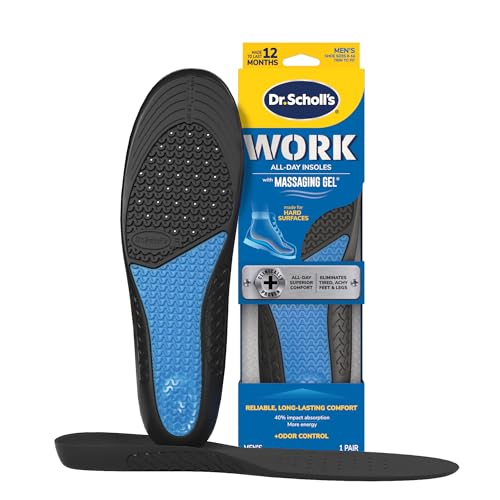
Dr. Scholl’s Work All-Day Insoles with Massaging Gel

Dr. Scholl’s Heavy Duty Support Insoles 200lbs+ Wide Feet

Dr. Scholl’s Advanced Pain Relief Insoles Men Women

EASYFEET Running & Sport Insoles
Anyone logging twelve-hour days on concrete will recognize the dull burn that settles across the arch by mid-afternoon. The IWELA WATER Plantar Fasciitis High Arch Support Insoles in XL tackle that with a firm TPU (thermoplastic polyurethane) cradle that holds the arch in a neutral position instead of letting it collapse inward. The geometry feels structured rather than pillowy, which matters once body weight climbs past the 220 lb mark, where softer foam insoles tend to flatten out within a season.
Unlike the softer FLYSTORY pair reviewed below, these lean toward corrective support. That makes them a sensible pick for people who prefer a noticeable lift under the arch rather than a squishy memory-foam feel, especially inside lace-up work boots that already have a stable midsole.
Where It Delivers
- Contoured TPU arch shape stays firm under heavier body weight, so the support doesn’t pancake out over months of daily wear.
- Rigid cradle reduces overstretch of the plantar fascia, the thick band of tissue running along the bottom of the foot.
- Sized XL to fit larger boots, including most steel-toe and logger styles where volume is limited.
- Works well for people with flat feet who want real lift, not just a thin foam pad.
Worth Noting
- The firm arch takes a week of break-in for unconditioned feet, and you may feel a slight hot spot near the heel on day one.
- Not the best match for tight dress shoes, since the cradle eats up interior volume.
- Reportedly less effective in soft, low-volume sneakers where the rigid structure has nowhere to settle.
Who It Suits Best
Heavier folks in laced work boots who want noticeable arch correction rather than a soft cushioned ride.
Where Another Pick Suits Better
Shoppers chasing pillowy softness for retail shifts should consider the FLYSTORY 4D Cloud Insoles reviewed next.
Standing on a tile floor for eight hours feels very different depending on what’s under your sock. The FLYSTORY 4D Cloud Insoles arrive as a two-pack and lean hard into cushion, using PU (polyurethane) foam molded into an ergonomic arch shape. The feel is closer to a recovery slipper than a corrective orthotic, which makes them a logical fit for people whose feet ache more than they ache in any one specific spot.
Compared to the rigid IWELA WATER pair above, these favor shock absorption over posture correction. For retail workers, hospitality staff, and anyone whose job involves more standing than lifting, the trade-off usually reads as a win.
Positive Points
- Memory-foam-style top layer softens impact during long shifts on hard floors.
- Two pairs in the box means one for sneakers and one for work shoes, or a backup when the first wears through.
- Sizing spans both men’s and women’s XL, useful when multiple people in a household share a closet.
Trade Offs
- Soft cushion compresses faster under heavier body weight than the firmer TPU designs, so the comfortable feel may fade within a few months of daily wear.
- Arch height is moderate, meaning shoppers with severe flat feet may want something more structured like the IWELA WATER option.
- Memory foam can hold body heat on hot days, a commonly reported issue with PU-blend insoles.
Right Fit For
Hospitality and retail workers logging long standing shifts who want a softer ride over a corrective orthotic.
Consider Something Else When
Runners chasing impact control on pavement should look at the EASYFEET Running & Sport Insoles later in this list.
One of the most common complaints about off-the-shelf orthotics is that they fit almost right. The PLERE Arch Support Insoles try to close that gap by offering three arch heights and five trimmable sizes in the same package, so shoppers can dial the curve to their foot instead of settling for a generic curve. For people with genuinely unusual arches or foot widths, that flexibility is the selling point.
Where the FLYSTORY 4D Cloud Insoles offer a soft, one-size-foam approach, PLERE asks for a few minutes of trimming and arch selection in exchange for a more tailored fit. It’s a fair trade if the buyer knows their arch profile.
The Value In It
- Three distinct arch heights let flat-footed shoppers and high-arch shoppers share the same product.
- Five trimmable sizes cover everything from narrow dress shoes to wide work boots.
- Unisex geometry fits work boots, sneakers, and casual shoes.
Room For Improvement
- Trimming takes trial and error, and overcutting the toe is a common first-timer mistake.
- Picking the right arch height requires a rough idea of your profile; guessing can leave the support feeling misplaced.
Quick Facts
Best Suited To
Shoppers who already know their arch profile and want a trimmable, multi-height fit instead of a one-shape foam pad.
Skip It When
Anyone who just wants to drop an insole in and walk out the door should grab the Dr. Scholl’s Work All-Day pair instead.
Dr. Scholl’s has built its name on the kind of insole a cashier can grab without thinking too hard. The Work All-Day Superior Comfort Insoles lean into that reputation with massaging gel pods across the heel and ball of the foot, plus a trim-to-fit blank that suits most work shoes. The feel underfoot is closer to a shock absorber than a posture device.
Compared to the rigid IWELA WATER pair, this is a softer, more forgiving ride. The trade-off shows up in how much arch correction you get, which is less, but for most shift workers the comfort-on-contact is what matters.
The Good Stuff
- Gel pods in the heel spread pressure during long periods of standing.
- Trim-to-fit blank allows the insole to match multiple shoe shapes in the same household.
- Lower arch profile fits into oxfords and slip-on work shoes without crowding the toebox.
Points To Keep In Mind
- Less corrective arch lift than the IWELA WATER or PLERE designs, so it’s a weaker match for pronounced flat feet.
- Gel cushioning can lose rebound over a long year of daily wear.
Who Will Love This
Men in service or retail roles who want a familiar brand name and a soft, gel-cushioned ride through eight-hour shifts.
Not Your Match When
Heavier shoppers needing a wider, firmer build will be better served by the Dr. Scholl’s Heavy Duty Support Insoles reviewed next.
Wide-foot shoppers and anyone north of 200 lbs know the drill: standard insoles pinch the sides and bottom out in a few months. The Dr. Scholl’s Heavy Duty Support Insoles are built specifically for that group, with a wider platform, reinforced heel cushioning, and a sturdy arch that resists compression. The design is less about soft cushion and more about holding shape under load.
Where the Work All-Day pair leans soft and gel-driven, this one trades softness for durability. For tradespeople and warehouse workers in steel-toe boots, that trade is usually the right one.
The Upside
- Extra-supportive heel cup is built to handle heavier body weight through long shifts.
- Wide sizing fits properly inside wide work boots without cramming the forefoot.
- Durable construction is rated for daily industrial wear rather than occasional use.
Softer Spots
- Heel padding can feel stiff during the first week, which is normal for reinforced designs.
- Less flexible than the lighter Dr. Scholl’s Work All-Day pair, and not a great match for dress shoes.
Made For
Big-and-tall men in wide work boots who need an insole that won’t bottom out under load.
Look Elsewhere When
Shoppers needing broad pain relief across the foot and knee will find more coverage in the Dr. Scholl’s Advanced Pain Relief Insoles reviewed below.
The Dr. Scholl’s Advanced Pain Relief Insoles target a wide spread of complaints, with a heavy-duty shell rated up to 340 lbs, full-foot coverage, and arch geometry that addresses plantar fasciitis along with pain in the knees, hips, and lower back. For shoppers whose discomfort isn’t isolated to the heel, the broader targeting is the draw.
Versus the Heavy Duty Support Insoles, this design leans more toward shock absorption and full-length energy return. Versus the IWELA WATER pair, it offers a more cushioned top layer over a still-sturdy base.
Notable Gains
- Targets ten common lower-body pain points, from heel to lower back, in one insole.
- Heavy-duty build supports up to 340 lbs without losing structure.
- Energy-return midsole helps long shifts feel less draining by the eighth hour.
Honest Caveats
- Full-length design is thicker than average and may not fit snug casual shoes.
- Wider footprint works best in work boots and athletic sneakers rather than narrow oxfords.
Feature Snapshot
Whose Shelf It Belongs On
Men and women whose foot pain radiates into the knees or lower back and want one insole that addresses the whole chain.
Reach For A Different Pick When
Runners chasing pure athletic energy return should consider the EASYFEET Running & Sport Insoles that close out this list.
The repetitive pounding of running puts a different kind of stress on the foot than standing still does, and the EASYFEET Running & Sport Insoles are shaped for that. The arch geometry is taller than a work insole, the heel cup wraps deeper, and the foam stack is tuned for high-impact landings. Anyone logging real miles will feel the difference within the first run.
Where the FLYSTORY pair focuses on soft recovery and the Dr. Scholl’s Work All-Day leans on gel, EASYFEET is built for forward motion. The honest read is that this is the right pick for runners rather than retail clerks.
Benefits That Matter
- High-impact geometry cushions heel strike during distance runs and court sports.
- Deeper heel cup stabilizes the rear foot through push-off, which helps runners whose ankles roll inward.
- Unisex sizing fits most men’s and women’s athletic sneakers without trimming.
A Few Limitations
- Sport-specific shape is overkill for casual shoes and feels bulky inside dress footwear.
- Not built for the heavy-load work use cases the Dr. Scholl’s Heavy Duty or IWELA WATER pairs handle.
Built With In Mind
Runners, CrossFit athletes, and court-sport players who need impact control rather than posture correction.
Swap It Out When
Anyone spending the day on a tile floor rather than a treadmill will be happier with the FLYSTORY 4D Cloud Insoles reviewed earlier.
Factors To Consider When Choosing Foot Support Insoles
Match the Insole to the Activity
An insole built for warehouse shifts and an insole built for road running are not interchangeable. Work-focused designs, like the Dr. Scholl’s Heavy Duty Support Insoles, prioritize a wide platform and durable arch hold, while sport designs, like EASYFEET’s, favor a deeper heel cup and a foam stack tuned for landing impact. Choosing by activity first saves the disappointment of wearing the wrong geometry.
Know Your Arch Profile
Arch height drives fit more than any other feature. Flat feet usually need a taller, firmer cradle, like the IWELA WATER or PLERE options, while neutral arches often do fine with a moderate curve. Standing in wet sand or tracing your wet footprint on a piece of cardboard gives a rough read without a trip to a specialist.
Sizing and Shoe Volume Matter
Insoles eat interior shoe space, so a thick full-length design can crowd a low-volume oxford. Trim-to-fit options help, but only if the underlying shoe has enough room. Work boots and athletic sneakers usually accommodate full-length inserts; casual slip-ons often do not.
Weight Capacity and Durability
Heavier shoppers should look past cushion claims and toward weight ratings and reinforced heels. An insole rated to 200+ or 340+ lbs, like the Dr. Scholl’s Heavy Duty or Advanced Pain Relief pairs, holds its shape longer than a generic foam pad that flattens out within a season.
Key Considerations Across These Picks
Common Shopping Slip Ups
Many shoppers grab the thickest insole they can find and wonder why their shoes feel tight. Foot support insoles should fit the shoe first and the foot second, so checking interior volume matters more than chasing the tallest arch. Another common mistake is assuming any cushioned insert addresses plantar fasciitis, when real relief usually requires a structured cradle like the one in the IWELA WATER pair.
Where The Extra Money Goes
Premium-tier insoles, like the Dr. Scholl’s Advanced Pain Relief and IWELA WATER options, spend the extra cost on reinforced shells, multi-zone targeting, and firmer materials that hold shape under load. Budget pairs cut those corners and rely on softer foam, which feels great on day one and wears through faster on heavy feet. For shoppers logging daily hours in work boots, the upgrade pays off in months of use rather than weeks.
Frequently Asked Questions
How long do foot support insoles usually last?
Most foam-based insoles last six months to a year under daily wear, while reinforced designs like the Dr. Scholl’s Heavy Duty Support Insoles often hold shape longer for heavier users.
Can one insole work in both work boots and sneakers?
A trimmable design like the PLERE Arch Support Insoles can shift between shoes, but a thin, soft pair usually fits sneakers while a thick, rigid pair belongs in boots.
Do foot support insoles help with knee or back pain?
Insoles that address full-leg alignment, such as the Dr. Scholl’s Advanced Pain Relief Insoles, can reduce strain on knees and lower back by stabilizing the foot’s foundation.
How do I know my arch height?
Stepping onto a piece of cardboard with a wet foot leaves a footprint where a heavy midfoot print suggests flat feet, a narrow band suggests high arches, and a moderate curve indicates a neutral arch.
Are rigid insoles better than soft ones?
Rigid designs excel at correcting posture and supporting heavier feet, while soft designs excel at cushioning long standing shifts. The right pick depends on which job the insole needs to do.