


Flat feet put the wrong muscles on overtime. Every step lands with an arch that collapses inward, and over a long day that small collapse compounds into tired feet, sore knees, and a tired back. The right insole can change that pattern, but the category is crowded with everything from thin foam pads to rigid corrective shells.
I put together this shortlist for adults who need real structural support, not just a cushion. Each pick below handles flat-foot mechanics differently, so the right one depends on what your feet actually do all day.
The Choices Worth Comparing

IWELA WATER High Arch Support Insoles (XL, 220+ lbs)

FLYSTORY 4D Cloud Insoles, 2 Pairs (XL)

ARIAT ATS Round Toe Gel Cushion Insole

PowerStep Pinnacle Maxx Orthotic Insoles
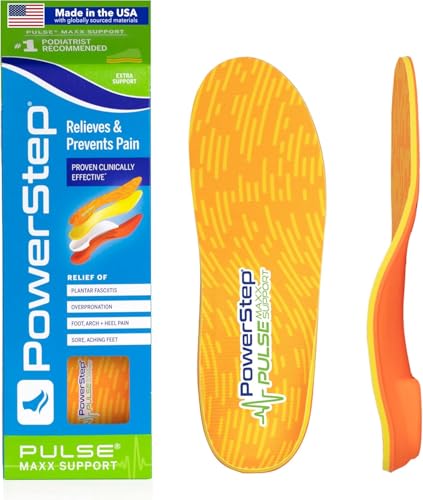
PowerStep Pulse Maxx Running Insoles

SoleAid II Plantar Fasciitis Insoles
PowerStep Pinnacle Low Insoles
Taking A Closer Look At The Options
This is the pick I lean toward when someone tells me their last insole “crushed flat” within a few months. The IWELA WATER insert uses a firm TPU shell, which is a thermoplastic polyurethane (a rigid-yet-springy plastic) shaped to mirror a high arch. That shell is the part doing the real work, not the foam on top.
For someone who stands on concrete for ten-hour shifts or carries significant weight through their feet, that rigid geometry tends to hold its shape far longer than purely cushioned inserts. The trade-off is a break-in period that can feel aggressive in soft, narrow shoes, and the depth means it really belongs inside a work boot or a roomy walking shoe rather than a dress oxford.
Key Advantages
- Rigid TPU arch shell that resists collapsing under heavier loads
- Sized to accommodate frames above 220 pounds without flattening
- Contoured heel cup helps stabilize ankles that roll inward
- Works well inside roomy work boots and orthopedic footwear
- Provides noticeable lift for collapsed arches within the first week
Things To Consider
- Break-in feels intense; expect sore arches for the first several days
- Too bulky for snug casual shoes and most dress footwear
- Heel cup depth can feel awkward at first for low-volume feet
Feature Snapshot
Whose Shelf It Belongs On
Larger-framed adults in work boots, warehouse staff, and anyone whose previous foam insoles collapsed within months.
Look Elsewhere When
The PowerStep Pinnacle Maxx Orthotic Insoles are a better match for shoppers who want clinically structured but more flexible support across everyday footwear.
Compare that approach to the FLYSTORY 4D Cloud, which goes the other direction entirely. The core here is PU memory foam (a slow-rebound polyurethane that hugs the foot) topped with a softer shell meant to cradle rather than correct. For someone whose arches have only mildly collapsed, that gentle pressure redistribution can feel more welcoming than a rigid corrective shell.
The two-pair pack matters more than it sounds. Most foam insoles lose rebound after a season of daily wear, so rotating a fresh pair into a work shoe and a casual shoe stretches the value. The honest read is that this is a comfort-first product with light arch contouring, not a clinical corrective device, so flat-footers with significant pronation may want the firmer PowerStep picks later in this list.
Strong Points
- Two-pair pack keeps a spare in rotation for the second pair of shoes
- PU memory foam top layer absorbs shock during long standing shifts
- Lower arch height suits feet that cannot tolerate rigid shells
- Slips easily into sneakers and casual lace-ups without trimming
Trade Offs
- Foam loses rebound faster than TPU or EVA alternatives
- Arch correction is gentle, not structural
Right Fit For
Shoppers wanting cushioned support across multiple pairs of shoes, including retail workers and people on their feet for casual daily errands.
A Better Fit Elsewhere
The SoleAid II Plantar Fasciitis Insoles are a more thoughtful option for someone who wants a slightly firmer orthotic shell without jumping to a clinical-grade rigid insert.
ARIAT built this insert around its Advanced Torque Stability (ATS) technology, which is a layered support system designed to stabilize the foot inside a riding or western boot. The visible feature is the round-toe shape, which mimics the wide toe box of those boots rather than the tapered profile of an athletic shoe.
For someone who spends long days on horseback or on uneven ground in pull-on boots, the gel cushion absorbs impact that would otherwise travel up the shin. The honest caveat is that flat-footers needing true pronation correction will find this more of a comfort layer than a corrective tool, and it fits best inside ARIAT-style boots rather than narrow oxfords.
Where It Delivers
- Round-toe shape matches riding and western boots precisely
- Gel pods absorb heel-strike impact on hard barn floors
- Low-profile build fits inside boot shafts without crowding
Honest Caveats
- Arch correction is light, better for mild cases than heavy overpronation
- Shape mismatch in narrow dress or athletic shoes
Who It Suits Best
Equestrians, ranch workers, and anyone living in western or pull-on boots who needs comfort rather than rigid correction.
Swap It Out When
The PowerStep Pinnacle Low Insoles are a more useful everyday pick for flat-footers whose primary footwear is sneakers or loafers instead of boots.
PowerStep has built its reputation around a simple formula: a firm polypropylene shell (a rigid plastic that springs back under load) paired with a softer EVA (ethylene-vinyl acetate, a foam that absorbs shock) top layer. The Pinnacle Maxx adds an angled heel post, which is a raised wedge built into the rear of the shell that tilts the foot to slow inward roll at heel strike.
For overpronators, that heel geometry does the heavy lifting, and the dual-layer cushion keeps the surface comfortable enough for office shoes and sneakers alike. Compared to the IWELA WATER insert above, this shell is slightly more forgiving, so it tends to feel wearable on day one rather than after a break-in week.
Bright Spots
- Angled heel post actively slows inward roll during walking
- Firm shell holds corrective geometry over months of daily wear
- EVA cushion keeps the top layer comfortable in dress and casual shoes
- Made in USA manufacturing with consistent trim lines
Worth Noting
- Heel post creates a learning curve in flats and low-profile shoes
Feature Rundown
Made For
Adults with moderate to heavy overpronation who want a clinically structured insole for everyday shoes, from oxfords to walking sneakers.
Consider Something Else When
The PowerStep Pulse Maxx Running Insoles serve runners better, since they target the same corrective geometry specifically for athletic mileage.
The Pulse Maxx is the running-specific sibling to the Pinnacle Maxx above. PowerStep built it for advanced running shoes, which means a more rigid shell, an angled heel for pronation control, and a polyester top cover that handles sweat better than raw EVA during long miles.
Runners logging heavy training volume often find everyday orthotics too cushy once they hit ten-mile efforts, so this model tightens the response underfoot. The trade-off shows up in casual wear: that rigid shell can feel busy in low-volume shoes, so most owners reserve it strictly for running shoes.
The Practical Payoff
- Rigidity tuned for repetitive impact rather than casual walking
- Moisture-managing top cover holds up during long training runs
- Angled heel actively corrects overpronation mile after mile
- Sized for narrow fits inside streamlined running shoes
Points To Keep In Mind
- Shell feels harsh in casual footwear
- Better suited to running shoes than cross-trainers or hiking boots
Best Suited To
Distance runners and overpronators building weekly mileage who need corrective geometry inside dedicated running shoes.
Reach For A Different Pick When
The PowerStep Pinnacle Maxx Orthotic Insoles are a better fit for walkers and everyday wearers who want similar correction across office and casual shoes.
SoleAid markets the SoleAid II as a middle path: more structure than a foam comfort insole, less rigidity than a clinical corrective shell. The deep heel cup is the tell, since it cups the fat pad under the heel to dampen impact during long standing shifts, which is the kind of detail that matters to retail and hospital workers.
For someone trying an orthotic for the first time, the geometry feels approachable enough to wear all day without the break-in ache that firmer shells can cause. Owners commonly report that the arch sits between a flat comfort insole and a corrective insert, which makes it a sensible entry point before stepping up to a PowerStep model.
What Works In Its Favor
- Deep heel cup cushions impact for long standing shifts
- Moderate arch height eases first-time orthotic users into correction
- Slips into sneakers, lace-ups, and casual shoes without trimming
Room For Improvement
- Less corrective force than PowerStep models for heavy overpronators
- Cushion layer compresses faster than the firmer shells above
Who Will Love This
First-time orthotic shoppers, retail and healthcare workers, and anyone wanting a comfortable introduction to arch support.
Where Another Pick Suits Better
The PowerStep Pinnacle Maxx Orthotic Insoles deliver stronger correction for shoppers whose flat feet come with noticeable inward roll.
The Pinnacle Low rounds out the PowerStep family with a lower arch profile, which means the contour sits closer to the footbed rather than rising tall. That lower silhouette is what makes this the easiest PowerStep insert to slip into a tighter shoe, whether that is a pair of loafers, casual sneakers, or a structured walking shoe.
For flat-footers who found the standard Pinnacle Maxx too bulky, the geometry here stays clinical without crowding the toe box. The dual-layer cushion keeps the underfoot feel familiar to anyone who has worn a PowerStep product before, and the deep heel cradle continues to do the corrective work. The honest read is that shoppers with very high arches may find the contour too subtle, but for true flat feet the lower profile often feels just right.
Notable Upsides
- Low-profile arch fits inside loafers and snug sneakers
- Deep heel cradle continues to slow inward roll during walking
- Dual-layer cushion feels familiar across the PowerStep lineup
- Made in USA build quality with consistent sizing
Small Caveats
- Arch height may feel subtle for shoppers with higher natural arches
- Less structural lift than the Pinnacle Maxx for heavy correction
Quick Technical Notes
Perfect Match For
Flat-footed adults who wear casual sneakers, loafers, or office shoes with snug toe boxes and want real corrective support without bulk.
Not Your Match When
The IWELA WATER High Arch Support Insoles suit shoppers in work boots or anyone needing a more pronounced lift under heavier loads.
What Matters Most Before Choosing Foot Orthotics For Flat Feet
Understanding Arch Height and Correction Style
Flat feet vary more than people think. Some have a flexible arch that collapses under weight but recovers when sitting, while others are rigidly flat from birth. A flexible flat foot usually responds well to a structured shell like the PowerStep Pinnacle line because the corrective geometry can do its work dynamically. A rigid flat foot often benefits from cushioning first, then a gradual introduction to arch support. Pick the correction style that matches the foot you actually have, not the label on the box.
Matching the Insole to the Shoe
Most orthotic failures I see trace back to a shoe fit problem, not the insole itself. A rigid TPU shell like the IWELA WATER model needs room, so it belongs in work boots, hiking boots, and roomy walking shoes. A low-profile pick like the PowerStep Pinnacle Low fits where bulk is unwelcome, including loafers and casual sneakers. Pull the factory insole out before installing an orthotic to recover vertical space.
Daily Habits and Activity Profile
Stand on concrete for ten hours and the right answer is a deep heel cup and a firm shell, since cushioning alone will compress by lunch. Walk a few miles and sit at a desk for the rest of the day and a moderate arch with dual-layer cushion is enough. Run four days a week and the running-specific Pulse Maxx is worth the upgrade, because the shell geometry is tuned for repetitive impact rather than casual steps.
Break-In and Replacement Realities
Orthotic shells feel aggressive in the first week, especially rigid TPU and polypropylene designs. Wear them for an hour or two on day one, then add time gradually. Most foam components lose meaningful rebound within six to twelve months of daily wear, so a reasonable replacement rhythm is one to two pairs per year depending on mileage. Keeping a second pair of cushioned insoles like the FLYSTORY 4D Cloud as a rotation spare extends the working life of the corrective pair.
Key Considerations Across These Picks
Pitfalls Shoppers Hit
A common mistake is buying by cushion thickness alone. Thick foam feels great in the store and collapses within months, leaving the same collapsed arch it was meant to support. Another slip is ignoring shoe volume, since even the right orthotic creates pressure points inside a shoe that is already snug. Trim and fit before committing, and expect a week of adjustment.
What The Higher Tier Buys
Spending up on a clinical-grade orthotic typically means a real shell, an angled heel, and a deeper heel cup. That engineering is what controls pronation over months of wear, while cheaper inserts rely on foam that compresses quickly. For overpronators with daily pain, the upgrade pays back in fewer flare-ups and a longer replacement cycle, which is the real value of stepping up from a foam comfort insole.
Frequently Asked Questions
How long does it take to adjust to a new orthotic insole?
Most structured insoles need one to two weeks of gradual wear before they feel natural, and rigid TPU shells can take even longer. Start with an hour a day and add time as the arch adapts.
Can one insole work across all of my shoes?
Only if the shoes share a similar volume and heel shape. In practice, most flat-footed shoppers end up with a bulkier pair for boots and a low-profile pair for casual or dress shoes.
Do orthotics actually fix flat feet?
Orthotics do not permanently change foot structure, but they do redirect load and reduce the inward roll that causes most flat-foot pain. The benefit comes from daily wear, not from wearing them occasionally.
When should I replace an orthotic insole?
Foam insoles usually lose rebound within six to twelve months, while firmer shells can last longer if the top layer is replaced. A simple test is comparing the worn insole against a fresh pair: if the arch looks flattened, it is time.
Are orthotics safe to use in running shoes?
Yes, but the insole should match the activity. Running-specific models like the PowerStep Pulse Maxx use a more rigid shell tuned for repetitive impact, while walking or standing models feel softer under mile after mile of training.