


Standing on hard floors for eight hours takes a real toll on the feet, knees, and lower back. I spend a lot of time thinking about which inserts actually hold up under that kind of punishment, and which ones flatten out after a few weeks.
The seven picks below cover the main scenarios I hear about most: heavy-duty support for larger bodies, soft cushioned feel for runners and standing-desk workers, custom-trim fits for awkward shoe shapes, and replacement beds for specific brands like Alegria. Each one earned its spot because it solves a particular problem better than the others.
How The Shortlist Stacks Up
How The Shortlist Stacks Up

IWELA Water High Arch Support Insoles XL

Alegria Replacement Insole Grey Size 36

FLYSTORY 4D Cloud Insoles 2-Pack XL
PLERE Arch Support Insoles Trim-To-Fit
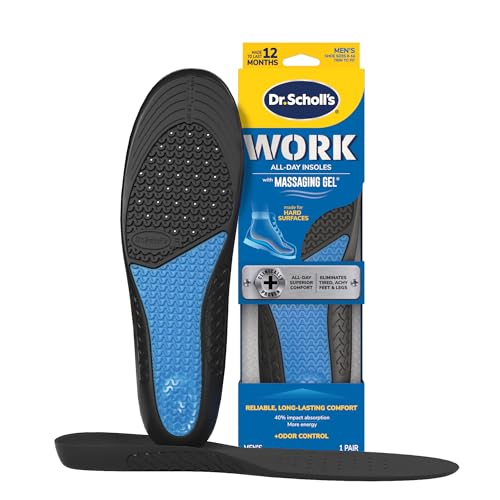
Dr. Scholl’s Work All-Day Massaging Gel Insoles

Dr. Scholl’s Heavy Duty Support Insoles Men 8-14

Dr. Scholl’s Advanced Pain Relief Insoles Men 6.5-7
A Deeper Look At The Lineup
The IWELA Water insole is built for people who feel like most inserts are too soft to actually do anything. The shell uses a firm TPU arch cup (a thermoplastic arch cradle shaped to follow the foot’s curve) that holds its shape under load, which matters a lot in steel-toe work boots or in any shoe that already eats up interior volume. Shoppers over 220 pounds are the obvious target, though anyone who prefers a structured, held-in feel will get along with it.
The high arch contour cradles the foot rather than letting it collapse inward, and the deep heel cup keeps the rearfoot centered during long shifts. Compared to the softer FLYSTORY 4D Cloud coming up later, this one trades cushion for structure, which can feel unforgiving during the first week.
The Case For It
- Firm TPU arch shell keeps its shape under repeated load, useful in heavy work boots
- Deep heel cup stabilizes the rearfoot during long standing shifts
- Available in XL sizing that fits heavier frames comfortably
- Targets plantar fascia strain directly, since rigid support limits overstretch of the band
Trade Offs
- Break-in period of a week or more is common, so first-day comfort can feel stiff
- Takes up significant interior room, making it a poor match for slim dress shoes
Built With In Mind
Heavier workers in steel-toe boots who want rigid arch support and don’t mind an adjustment week.
Skip It When
The Dr. Scholl’s Work All-Day Massaging Gel Insoles suit office and retail workers who want softer cushion and a quicker break-in.
The Alegria replacement bed is a brand-specific part, not a universal insole. It uses a cork, latex, and memory foam blend that forms to the foot over the first few wears, and it interlocks with Alegria’s patented footbed system so it sits flat inside the shoe without sliding. Anyone outside the Alegria ecosystem should move on, since the geometry simply won’t match a generic boot or sneaker.
For nurses, teachers, and hospitality workers who already wear Alegria clogs or slip-ons, this insole is the right refresh part. The footbed massages the foot with each step because the cork base rebounds slightly while the foam top conforms, a different feel from the rigid shells on the IWELA and Dr. Scholl’s heavy-duty options.
Practical Pluses
- Cork and latex base rebounds with each step, giving the footbed a subtle springy feel
- Memory foam top layer molds to the wearer’s natural arch over time
- Interlocks with the host shoe so it does not bunch or slide during walking
Some Limits To Know
- Only fits Alegria footwear, so it has zero value as a cross-brand spare
- Replacement intervals tend to run shorter than synthetic orthotics, depending on daily hours worn
Key Specs
Whose Shelf It Belongs On
Alegria clog owners who need to refresh a worn footbed without buying a whole new shoe.
Look Elsewhere When
The PLERE Arch Support Insoles Trim-To-Fit make more sense for shoppers who wear multiple brands and want one insert that moves between shoes.
The FLYSTORY 4D Cloud is the cushion-first pick on this list. The PU memory foam compresses deeply under the heel and forefoot, which makes hard concrete and tile feel less hostile during back-to-back shifts. Two pairs ship in the box, a small but useful perk for people who want a fresh insert ready when the first pair wears out.
The arch support is present but not aggressive, so this insole leans toward shoppers who want plush comfort over rigid correction. It targets fatigue more than biomechanical realignment, which is a reasonable trade-off for retail, warehouse, and hospitality workers who already own supportive shoes.
Useful Touches
- Memory foam top compresses under load, reducing perceived fatigue on hard floors
- Two-pair packaging means a backup is always ready without reordering
- Available in extended XL sizing for larger shoe volumes
- Low profile fits comfortably inside most sneakers and casual work shoes
Where It May Fall Short
- Foam compresses permanently over months of daily use, so heavy users replace more often
- Arch support is moderate, so shoppers with severe flat feet may want the PLERE or IWELA instead
The Right Fit
Service industry and retail workers who stand for hours and want soft cushion more than rigid correction.
Reach For A Different Pick When
The Dr. Scholl’s Heavy Duty Support Insoles Men 8-14 suit tall and wide workers who need a more reinforced arch under heavier loads.
The PLERE insole stands out for one reason: three distinct arch heights. Shoppers who have never been formally fitted often guess wrong, and PLERE bundles low, medium, and high profiles with trim-to-fit sizing lines. That makes it a low-risk trial for first-time orthotic shoppers who aren’t sure what their foot actually needs.
Trimming the forefoot with household scissors takes a few minutes, and the included size chart helps map shoe size to the right starting point. For work boots, sneakers, and casual shoes, the geometry adapts well as long as the trim line is followed.
Key Advantages
- Three arch height options let shoppers match their actual foot shape
- Trim-to-fit sizing covers everything from narrow dress shoes to wide work boots
- Targets plantar fascia strain with a contoured arch shell
Things To Consider
- Trim lines require careful measurement, since over-trimming cannot be undone
- Single-pair packaging means no spare during the trial-and-error fitting window
Quick Facts
Best Suited To
Shoppers who know they need arch support but have never been fitted and want a forgiving trial.
Swap It Out When
The IWELA Water High Arch Support Insoles suit shoppers who already know they need a high, rigid arch and want a single dedicated profile.
The Work All-Day Massaging Gel insole is Dr. Scholl’s most familiar workhorse. The gel pod under the heel absorbs impact at heel strike, and the trim-to-fit format adapts to most men’s work shoes and boots without a trip to a cobbler. For office workers walking between meetings and retail staff on tile floors, it lands in a useful middle ground between softness and structure.
Unlike the rigid IWELA pick above, this one is built around comfort rather than biomechanical correction, so it works better in shoes that already have reasonable support. Pressure distribution across the forefoot is the main mechanism, which is why tired-leg relief is the most commonly reported benefit.
What Pays Off
- Gel cushion under the heel softens repeated impact during long shifts
- Trim-to-fit sizing adapts to multiple shoe types in one household
- Pressure distribution reduces the heavy-leg feeling near the end of a shift
- Low profile fits inside dress-casual shoes where bulkier orthotics would crowd the toe box
Practical Considerations
- Gel pods can lose rebound over years of daily use, so heavy users may replace sooner
- Arch support is mild compared to the heavy-duty models later on this list
Who Will Love This
Office, retail, and light-industrial workers who want gel cushion and mild arch lift without bulk.
Consider Something Else When
The Dr. Scholl’s Advanced Pain Relief Insoles suit workers dealing with recurring plantar fasciitis who need heavier-duty full-length support.
The Heavy Duty Support insole is engineered for men over 200 pounds, and the difference shows up in the reinforced arch and the extra-supportive heel cushion. Tall and wide-footed shoppers often struggle with insoles that bend or compress under their frame, and this one resists that flattening effect over the work week.
Pressure distribution across the whole footbed reduces hot spots during long shifts on concrete, and the trim-to-fit format covers men’s sizes 8 through 14 from a single SKU. For warehouse, construction, and trades workers, this is the most purpose-built option on the list.
Why It Works Well
- Reinforced arch resists compression under heavier body weight
- Heel cushioning surrounds the rearfoot, which helps with lower-back and leg fatigue
- Pressure distribution cuts down on hot spots during long standing shifts
- Trim-to-fit format covers a wide men’s size range from one package
Honest Caveats
- Designed for men specifically, so women shoppers should look at the PLERE or FLYSTORY instead
- Thickness crowds slim-profile shoes, so it works best in roomy work boots
Feature Snapshot
Made For
Tall and wide trades workers over 200 pounds who need a reinforced arch that holds up under heavy daily loads.
Another Choice May Suit
The IWELA Water High Arch Support Insoles fit workers who already know they need a high rigid arch but sit below the 220-pound threshold.
The Advanced Pain Relief insole is the most specialized pick on this list. It is engineered for workers up to 340 pounds and is built to address ten common lower-body pain points, including the heels, arches, ankles, knees, hips, and lower back. Anyone with recurring plantar fasciitis pain who has tried softer insoles without success should look closely at this one.
The full-length heavy-duty shell distributes load across the entire footbed rather than concentrating support at the arch, which sets it apart from the more localized shells on the IWELA and Heavy Duty Support picks. It comes in smaller men’s and women’s sizes, so shoppers with narrow feet are not excluded.
The Good Stuff
- Full-length shell distributes pressure across the entire footbed rather than just the arch
- Targets ten lower-body pain points, including knees, hips, and lower back
- Rated for users up to 340 pounds, the highest threshold on this list
- Shock-absorbing base reduces joint impact during long shifts
Points To Keep In Mind
- Premium construction adds bulk, so it crowds slim-profile dress shoes
- Stiffer feel may require a longer adjustment week than softer inserts
Feature Rundown
Perfect Match For
Workers with recurring plantar fasciitis or multi-zone foot pain who need the most aggressive full-length support available.
Where Another Pick Suits Better
The FLYSTORY 4D Cloud Insoles fit shoppers whose main issue is end-of-shift fatigue rather than chronic pain and who prefer a softer feel.
What Actually Matters When Picking Work Insoles
Arch Height and Foot Shape
The arch height should match the foot, not fight it. A high-arched foot on a flat insert will collapse the arch over a shift, and a flat-footed person in a high arch shell will get pressure hot spots at the midfoot. PLERE’s three-profile approach solves the guesswork for shoppers who have never been fitted, and most brands publish a sizing chart on the back of the package.
Cushion Versus Structure
Softer foams like the FLYSTORY 4D Cloud absorb impact and feel plush, but they compress permanently under heavy daily use. Rigid shells like the IWELA Water hold their shape for years but require a longer break-in. The right answer depends on whether the priority is immediate comfort or long-term correction.
Shoe Volume and Trim-to-Fit
An insole that does not fit the shoe is not really an insole. Slim dress shoes need low-profile inserts like the Dr. Scholl’s Massaging Gel, while roomy work boots can handle the IWELA or Heavy Duty Support shells. Trim-to-fit sizing lines let one SKU cover multiple shoe sizes, but the trim cut should follow the chart exactly.
User Weight and Activity Length
The longer the shift and the heavier the wearer, the more important the reinforcement gets. Insoles rated for 200 pounds or more use denser foams and stiffer arch cores, which is why the Dr. Scholl’s Heavy Duty and Advanced Pain Relief models exist. Anyone over that threshold should stay within the heavy-duty category from the start.
Shopping Smarts For Work Insoles
Where Shoppers Go Wrong
Most regret starts with skipping the arch height check. Picking a generic arch height because the listing says “works for most” usually means the insole will not actually do the work. Another common slip is ignoring shoe volume, since even a great insert is useless if it crowds the toe box. Measure the trim cut carefully and check the return policy before trimming, because once the front edge is gone, it cannot be undone.
The Upgrade Payoff
The jump from a soft gel insole to a heavy-duty orthotic is not just more cushion. Premium inserts use denser foams, reinforced arches, and full-length shells that keep working when cheaper foam has gone flat. For shoppers logging forty-plus hours a week on hard floors, the upgrade usually pays for itself in fewer replacement cycles and less end-of-shift pain.
Frequently Asked Questions
How long do work insoles typically last?
Most foam-based insoles hold up for roughly six months of daily use before the cushioning flattens. Heavy-duty orthotics with reinforced arches can last a year or longer because the structural shell does not compress the way pure foam does.
Can I move one insole between multiple pairs of shoes?
Yes, as long as the trim cut matches the shoe. Trimming to fit the smallest pair means the insert will sit loose in larger shoes, so most people buy one pair per shoe rather than rotating a single insert.
Are these insoles safe to use in safety-toe boots?
Most work insoles fit inside safety-toe footwear without altering the toe protection. Inserts do not replace the boot’s safety rating, so the boot itself still has to meet the workplace standard.
Do I need to remove the existing sock liner first?
In most cases, yes. Layering two liners reduces interior volume and can shift foot position inside the shoe, which undermines the orthotic’s correction. Removing the factory liner is the standard approach for any structured insert.
How do I know if I picked the right arch height?
The arch should feel supportive without pressing painfully into the midfoot. If the insole feels invisible after a few days, the match is probably right, but if the midfoot is sore or numb, a lower arch profile is usually the fix.