


Flat feet have a way of announcing themselves by lunchtime. A long shift on concrete, a school hallway loop, or a grocery run turns into a slow burn along the arch and heel, and the wrong insole just makes the rest of the day worse. I spend a lot of time helping people match insoles to the way they actually live, not to a generic “flat feet” label.
The picks below cover the realistic range of flat-foot situations. Some focus on firm, structured arch lift for people who stand for hours. Others trade rigidity for soft cushioning or specialize in heels and dress shoes. A couple are built for heavier bodies that compress softer foams flat. I’ll walk through each one honestly, point out the trade-offs, and tell you when a different pick would serve you better.
An Overview Of The Picks

IWELA Water Heavy Duty High Arch Support Insoles (XL)

FLYSTORY 4D Cloud Insoles 2 Pairs (XL)
PLERE Arch Support Insert Plantar Fasciitis Insoles

Welnove 220+ lbs Heavy Duty Plantar Fasciitis Insoles (L)

Welnove Semi-Rigid Arch Support Inserts for Work Boots

Welnove Heel Cushion Inserts 1/2-Inch Lift (Large)
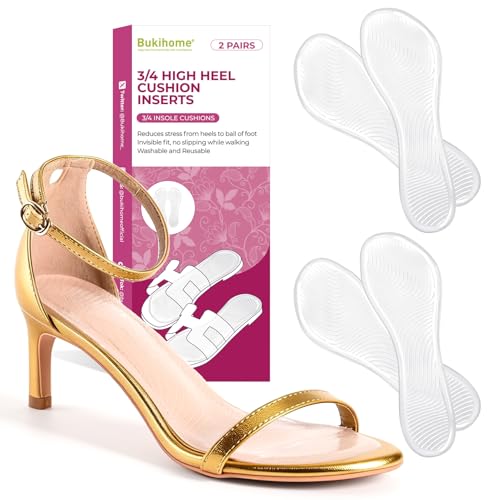
Bukihome High Heels 3/4 Gel Inserts for Women (S)
Meet The Standout Selections
If you weigh over 220 pounds or simply prefer an insole that pushes back against your arch instead of disappearing under it, this IWELA Water design earns its “heavy duty” label. The shell uses a firm, contoured TPU plate (TPU is a flexible-yet-tough plastic often used in orthotics) that follows the curve of a high arch, and that rigid cup keeps its shape through long warehouse shifts or full days on tile.
What separates it from the softer picks further down this list is how much vertical lift it delivers. For a flat-footed person who feels like the foot is collapsing inward by mid-afternoon, that structured feel can be the difference between finishing a shift and heading home early. Sizing runs from XS through XL in unisex increments, so most adults should find a workable match without much guesswork.
Standout Benefits
- Contoured TPU arch holds its shape under load, helpful for heavier bodies and long standing days
- Strong vertical lift that actively fights midfoot collapse during extended wear
- Wide unisex size range from XS to XL covers most adult feet without odd gaps
- Works inside roomy work boots and casual sneakers where depth isn’t a problem
- Transitions naturally from the lighter picks below for shoppers who want firm correction
Things To Consider
- The rigid profile needs a break-in period, often a week of gradual wear
- Won’t fit comfortably in slim or shallow shoes like loafers or fashion sneakers
- Heavier construction can feel bulky in lower-volume footwear
Who Should Grab It
Heavier adults, warehouse and trades workers, and anyone who finds foam-only insoles compress flat within an hour.
Where Another Pick Suits Better
The PLERE Arch Support Insert is a better match for shoppers who want a softer feel with trimmable sizing for mixed-foot households.
If the IWELA Water above reads like a brick to you, the FLYSTORY 4D Cloud Insoles land at the opposite end of the spectrum. They’re built around memory-foam cushioning with an ergonomic arch shape, and they ship as a two-pair pack, which makes them a low-risk entry point for someone who hasn’t worn orthotics before. Flat-footed walkers and runners who just want comfort underfoot without a clinical feel will get along with these right away.
The trade-off shows up over time. Soft PU foam (polyurethane, a bouncy synthetic foam) absorbs impact well at first, but it compresses faster than the rigid TPU plate in pick 1, especially under heavier loads. For a teacher, retail worker, or weekend hiker under 180 pounds, that’s a fair exchange: plush feel up front, replacement pairs already in the drawer.
Practical Advantages
- Memory-foam top layer softens impact for retail, hospitality, and casual walking days
- Two-pair value pack extends total lifespan and covers multiple pairs of shoes
- Trimmable sizing cuts down to most adult feet with household scissors
- Works well in roomy sneakers, slip-ons, and casual boots where extra bulk fits
Worth Noting
- Soft foam compresses faster than the rigid picks above under heavier body weight
- Less corrective lift, so severe overpronators may need a firmer option
- Adds noticeable height inside low-profile shoes
Built With In Mind
Light to mid-weight adults who stand or walk a lot but prefer plush cushioning over clinical support.
Swap It Out When
Heavier shoppers should jump to the Welnove 220+ lbs Heavy Duty Plantar Fasciitis Insoles for longer-lasting structure.
Flat feet aren’t one shape. Some people have a low, fallen arch; others sit in the middle; a third group carries a high arch that collapses under load. The PLERE design tries to serve all three with three distinct arch heights in the same insole family, plus five trimmable size cuts that you can tailor to narrow or wide feet. For a household where two people need very different correction, that flexibility is genuinely useful.
Day to day, the insole reads as a mid-range pick: more structured than the FLYSTORY memory foam but less aggressive than the IWELA Water TPU shell. It slots naturally into sneakers and casual boots and feels right for office workers who alternate between standing at a counter and sitting at a desk. The honest read is that this is the “covers the middle ground” pick of the list, useful when you don’t want to commit to one foot shape for life.
Real-World Strengths
- Three arch height options in one product family adapt to low, medium, and high profiles
- Five trimmable sizes handle narrow, standard, and broad feet with household scissors
- Balanced support suits mixed activity days, from desk work to long errands
- Works in sneakers, casual boots, and similar moderate-volume footwear
Points To Keep In Mind
- Arch height is selected at purchase, so getting it wrong means trimming again
- Less aggressive correction than the heavy-duty rigid picks for severe pronation
- Profile is mid-thick, which can crowd tight-fitting shoes
Best Suited To
Shoppers unsure of their arch type and households where multiple people will use the same product.
A Better Fit Elsewhere
Shoppers who know they want firm, clinical-level lift should choose the IWELA Water Heavy Duty High Arch Support Insoles instead.
The Welnove heavy-duty insole sits in the same weight-class zone as the IWELA Water above, but with a noticeably different feel underfoot. It leans on a firm arch cup and thicker shock-absorbing foam layers, designed specifically for bodies over 220 pounds where softer foams flatten within days. The trade-off is a slightly chunkier profile, so it pairs best with roomy boots and athletic shoes rather than slim footwear.
For a heavier flat-footed person logging long shifts or training miles, the combination of arch structure and impact cushioning tends to outperform single-density foam. Expect a brief adjustment period as the foot adapts to the new geometry, then steady relief through the workday. People with sensitive heels often notice the biggest change.
Points In Its Favor
- Firm arch cup resists compression under heavier body weight for months of use
- Thicker cushion layers absorb impact better during long shifts or walking workouts
- Designed explicitly for the 220+ pound range where most insoles fall short
- Full-length design replaces the existing factory insole cleanly in most boots
Trade Offs
- Bulky profile crowds low-volume shoes like loafers or dress sneakers
- Break-in period of several days can feel awkward at first
- Less trimming room than the PLERE pick above
Feature Snapshot
Whose Shelf It Belongs On
Heavier adults with flat feet who log long shifts on hard surfaces and need serious arch structure.
Look Elsewhere When
Lighter shoppers will do better with the FLYSTORY 4D Cloud Insoles for softer, less clinical cushioning.
Work boots are a different animal. Most full-length insoles won’t fit the toe-box of a snug logger or roofer boot, and a sloppy insole slides around under the laces. The Welnove three-quarter-length insert solves that geometry problem by leaving the toe area open, which means it slips under the arch and heel where the support actually matters without crowding the front of the boot.
The support is semi-rigid, which most people find easier to adapt to than the fully rigid IWELA Water plate above. There’s still a clear break-in period, typically three to five hours a day for the first week, but the feel is less clinical. For construction, warehouse, and service workers who can’t swap boots, this is the pick that solves the fit puzzle.
Strengths Worth Knowing
- Three-quarter length clears toe-box space in tight-fitting work boots
- Semi-rigid arch is supportive without the harsh feel of fully rigid plates
- Stays put under laces during squats, ladders, and uneven ground
- Compatible with most men’s work boots and women’s lace-up boots
Honest Caveats
- Break-in period of several days can feel uncomfortable at first
- Doesn’t cushion the forefoot the way full-length insoles do
Key Attributes
Made For
Trades workers, warehouse staff, and anyone whose boots are too snug for a full-length orthotic.
Reach For A Different Pick When
Shoppers wearing roomy athletic shoes should use the PLERE Arch Support Insert for a longer, more cushioned platform.
Not every flat-footed person has arch pain. A lot of the discomfort shows up under the heel, where the fat pad thins out and each step on concrete lands like a small hammer blow. This Welnove heel cushion focuses there, layering a half-inch lift of soft PU foam over a Poron shock-absorbing pad (Poron is a high-density urethane foam widely used for impact cushioning).
It stacks on top of an existing factory insole rather than replacing it, which makes it easy to test without committing. For shoppers whose pain lives mostly under the heel rather than along the arch, this targeted approach often delivers more relief than a full-length orthotic that spreads its cushioning too thin.
Why It Works Well
- Poron shock pad under the heel absorbs impact on hard floors better than foam alone
- Half-inch lift eases strain on the Achilles and lower back
- Sits on top of the factory insole, so it’s reversible if it doesn’t suit you
- Helpful for leg-length discrepancies where one side needs extra height
Points To Note
- Targets the heel only, so it won’t help midfoot or arch collapse
- Adds noticeable height, which can cause heel slip in low-cut shoes
Perfect Match For
Shoppers with localized heel pain or mild leg-length differences who don’t need full-foot correction.
Not Your Match When
People with arch collapse should pair this with the Welnove 220+ lbs Heavy Duty Plantar Fasciitis Insoles for full-foot support.
The other six picks solve work and casual shoe problems. This one tackles the worst offenders for flat feet: high heels, flats, and sandals, where most inserts simply won’t fit. The Bukihome 3/4 gel pad has a non-slip texture and a strong adhesive backing, so it stays put under the ball of the foot without sliding forward as you walk.
There is no real arch lift here, and that’s by design. Trying to fit a structured orthotic into a stiletto is a losing game. What you get instead is a thin gel cushion that reduces friction, absorbs shock, and keeps the foot from sliding forward into the toe-box. For weddings, conferences, and dinner shifts, that small layer often makes the difference between finishing the night and leaving early.
Good Reasons To Consider
- Low-profile gel slips into heels, flats, and sandals without changing fit
- Non-slip texture stops the foot from sliding forward into the toe-box
- Strong adhesive keeps the pad anchored through hours of walking
- Reduces friction and blistering along the ball of the foot
Some Limits To Know
- No real arch lift, so it doesn’t correct overpronation
- Adhesive can lose grip in humid weather or after multiple wears
Right Fit For
Women who wear heels, flats, or sandals for events and want to cut down on ball-of-foot pain.
Where A Sibling Pick Shines
For everyday sneakers and work shoes, the PLERE Arch Support Insert provides the actual arch correction this pad can’t.
Choosing Insoles That Match Your Feet and Your Days
The right insole for flat feet starts with where the foot hurts, not with a brand name. Heel pain points toward a cushion pad like the Welnove Heel Cushion Inserts, while midfoot collapse calls for a structured arch plate like the IWELA Water heavy duty option. Soft foam works fine under lighter body weight but flattens quickly under 220 pounds, which is why the Welnove 220+ lbs Heavy Duty Plantar Fasciitis Insoles exist as a category of their own.
Footwear geometry matters just as much as the insole itself. A rigid full-length orthotic will not fit a tight work boot, which is exactly why the Welnove Semi-Rigid Arch Support Inserts for Work Boots use a three-quarter length. Similarly, no orthotic on this list belongs inside a high heel, where the Bukihome 3/4 Gel Inserts quietly solve the friction and sliding problem instead.
Body Weight and Foam Compression
Standard memory foam compresses fast under heavier bodies, and once it goes flat, the insole is basically a thin spacer. Heavier shoppers should look for firm TPU or rigid arch cups that hold shape under load. Lighter shoppers can save money with softer cushioning and still get a full year of daily use.
Shoe Volume and Insole Profile
A bulky insole needs room to sit flat inside the shoe. Low-volume footwear like loafers, fashion sneakers, and tight work boots will fight any full-length orthotic. Three-quarter inserts solve work boots, while gel pads solve dress shoes. Always check the stack height against your shoe’s toe-box depth before trimming.
Arch Height Selection
Flat feet don’t mean low arches only. Many flat-footed people have a normal or even high arch that has collapsed under load, which is why trimmable multi-height designs like the PLERE Arch Support Insert exist. Spending ten minutes determining the right arch height at purchase saves weeks of awkward adjustment later.
Key Considerations Across These Picks
Wrong Turns To Avoid
The biggest mistake I see is buying a full-length rigid orthotic for a shoe that doesn’t have the room for it. The insole ends up bunched, the foot slides around, and the support lands in the wrong place. Measure your shoe’s removable insole before buying anything with significant stack height. A second common slip is choosing an insole based on cushion thickness alone: foam is comfortable for a week, then it’s flat.
When Paying More Pays Off
Premium-tier insoles in this category charge more for structural materials, not fluff. Rigid TPU arch cups, Poron shock pads, and strong medical-grade adhesives all cost more to produce than a slab of memory foam. The upgrade pays off when the insole keeps its shape past month three, when it stops sliding, and when the arch lift still feels supportive at the end of a long shift. Lighter shoppers rarely need that upgrade. Heavier shoppers almost always do.
Frequently Asked Questions
How long does it take to break in a new insole for flat feet?
Rigid arch inserts usually need one to two weeks of gradual wear, starting at three to five hours a day. Soft foam insoles feel comfortable right away but reach their best support after the foam molds to your foot, which typically takes a few days of regular use.
Can one insole work in multiple pairs of shoes?
Only if the shoes have the same internal volume and removable insole shape. A full-length insole can move between sneakers and casual boots, but it won’t fit a dress shoe or a tight work boot. Most shoppers end up owning two or three pairs to cover their main footwear categories.
Are rigid orthotics better than soft cushioned insoles?
Rigid orthotics correct foot alignment and hold shape under heavier loads, while soft cushioned insoles absorb shock and feel more comfortable at first. Severe pronation or heavier body weight usually benefits from rigid support, while light use on flat feet often does fine with cushioning.
Do I need different insoles for work boots and sneakers?
Often yes, because the geometry of the toe-box determines how much room an insole has. A three-quarter-length insert solves most work boots, while full-length options fit athletic and casual sneakers. Swapping insoles between very different shoes usually creates fit problems.
How do I know when to replace my insoles?
Replace cushion insoles when they no longer spring back after a day of wear, usually around six to twelve months. Replace rigid orthotics when the arch cup cracks, the cover fabric tears, or the insole permanently flattens. Visible wear at the heel or arch is the easiest early signal.