


Wearing hearing aids and ear protection at the same time used to mean choosing one or the other. Anyone who has tried to slide an over-ear muff over a behind-the-ear hearing aid knows the awkward fit, the pinched tubing, and the constant readjusting. The right muff keeps the cup shallow enough or the headband loose enough that your device stays seated and your earmold keeps its seal.
I pulled together seven pairs worth considering, from streamlined electronic muffs for range use to Bluetooth-capable workhorses for long shop sessions. The picks below are organized by NRR (Noise Reduction Rating, a measure of how many decibels a device blocks) and cup geometry, both of which decide whether your hearing aids cooperate.
The Lineup, Simplified

Walker’s Razor Slim Electronic Muff

Walker’s TACTI Grip Series

Walker’s Unisex-Adult Earmuffs
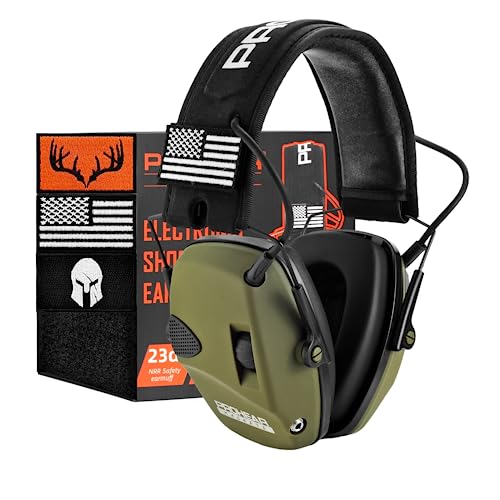
PROHEAR Electronic Ear Protection NRR 23dB (Green)
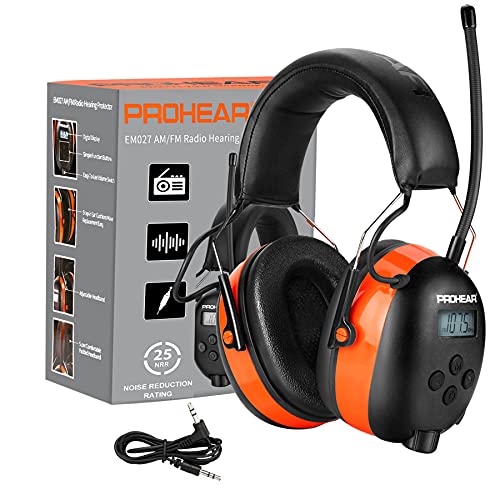
PROHEAR 027 AM FM Radio Muffs 25dB (Orange)

PROHEAR 037 Bluetooth 6.0 Muffs 30dB SNR

PROHEAR 033 Bluetooth 5.4 + FM/AM Muffs 25dB
Taking A Closer Look At The Options
The Razor Slim earned its reputation on the range, but the geometry is what matters for hearing aid users. The cup walls are noticeably thinner than standard shooting muffs, so the cavity has more room for a behind-the-ear processor without shoving it sideways.
Two omnidirectional microphones feed compressed audio into each cup, and the cutoff drops hard on sharp transients like a gunshot. You get conversation when it’s safe and silence when it isn’t.
Noteworthy Benefits
- Low-profile cup walls leave clearance for behind-the-ear processors
- Independent volume controls on each cup let you match a stronger ear
- Audio input jack supports a radio or scanner for range marshals
- Compresses sharp transients fast enough for indoor ranges
Things To Consider
- Uses AAA cells, so spares belong in your range bag
- Cushions can run warm during summer outdoor use
Feature Snapshot
Made For
Recreational shooters and range regulars who wear behind-the-ear aids and want conversation preserved between shots.
Consider Something Else When
Skip the Razor Slim for snowblowing and lawn work, where the Walker’s TACTI Grip Series offers a steadier fit during repeated head movement.
Where the Razor Slim prioritizes a slim silhouette, the TACTI Grip Series leans into staying power. The Tacti-Grip silicone composite headband is the standout feature, and it earns its name by holding the muffs in place when the shooter pivots, ducks, or rolls behind cover.
Compared to the Razor Slim above, this one trades some cup thinness for a grippier headband. The trade-off shows up in dynamic environments where movement would otherwise slide a standard muff across the top of a hearing aid.
Useful Touches
- Tacti-Grip silicone headband keeps the muff seated during movement
- Sound-dampening composite housing handles repeated impulse noise
- Durable rubber headband resists cracking from sweat and cold
Worth Noting
- Cup depth is slightly greater than the Razor Slim, which can crowd larger BTE processors
- Premium fit features typically cost more than passive alternatives
Who It Suits Best
Sport shooters, instructors, and anyone moving between positions who needs the muff to stay planted without constant readjusting.
A Better Fit Elsewhere
Pick the Walker’s Unisex-Adult Earmuffs instead for low-noise yard tasks, where grip tech is overkill and a lighter passive muff feels less bulky.
This is the uncomplicated entry in the lineup. No batteries, no Bluetooth, no radio. Just a passive muff in the Walker’s catalog, designed to slide over the head and dampen sound without any electronics in the signal path.
For hearing aid wearers who mostly need attenuation during mowing or leaf-blowing, fewer moving parts usually means less weight and a simpler fit. The trade-off is no amplification of quieter sounds, so conversational clarity drops along with the noise.
Everyday Advantages
- No batteries or charging to manage
- Lightweight frame suits shorter sessions around the house
- Simple on/off design works for users who dislike electronics
- Compatible with most BTE aid shapes thanks to standard cup geometry
Points To Note
- Provides no amplification of speech, so conversations sound muffled
- Less specialized for impulse noise compared to electronic alternatives
Key Specs
Best Suited To
Light yard work and home projects where the goal is simply reducing lawnmower and trimmer noise over hearing aids.
Skip It When
Step up to the PROHEAR 037 Bluetooth 6.0 Muffs if Bluetooth streaming or radio reception matters during long sessions.
This PROHEAR model is built around a smart suppression circuit that listens for impulse spikes and clamps down in under ten milliseconds. Quiet ambient sounds get amplified up to roughly four times, which is a real benefit for a hearing aid wearer who depends on the muff’s electronics to compensate for the device being pushed off-axis.
The cup fits deeper than the Razor Slim, so in-the-ear and slim receiver-in-canal aids sit comfortably inside, while slightly larger BTE processors may feel snug.
The Upside
- Smart compression reacts to gunshots in milliseconds, safer for exposed impulse noise
- Sound amplification helps overcome muffled speech when aids are partially displaced
- Durable ABS shell holds up to drops in field conditions
Honest Caveats
- Runs on AAA cells, so spares belong in your kit
- NRR 23dB sits below several PROHEAR siblings, so very loud environments may want more attenuation
Feature Card
Who Will Love This
Hunters and range shooters with in-ear or slim-canal hearing aids who want ambient awareness between shots.
Look Elsewhere When
Step up to the PROHEAR 027 AM FM Radio Muffs for longer yard sessions where radio entertainment matters as much as hearing protection.
Long mowing and snowblowing sessions feel shorter with a radio running, but earbuds plus hearing aids is a clumsy combination. The PROHEAR 027 solves that by putting an AM/FM tuner behind the cushions, with a digital display on the cup for quick station changes.
The 25dB NRR gives this muff more attenuation than the PROHEAR Electronic Ear Protection, while staying lighter than the Bluetooth-equipped PROHEAR 037.
What Helps Most
- Built-in AM/FM tuner eliminates the earbud plus hearing aid stack
- Digital display simplifies station changes with gloves on
- 25dB NRR handles most residential mowing and snowblowing noise
- ABS shell keeps the cups light for extended wear
Points To Keep In Mind
- Cushion wear around the sealing surface can reduce attenuation over time
- Audio isolation from aids behind the cups may slightly muffle radio for some users
Right Fit For
Homeowners with long lawn and snow-clearing routines who want entertainment and hearing protection in a single unit.
Not Your Match When
Skip the PROHEAR 027 if Bluetooth streaming from your phone is the priority, since the PROHEAR 033 Bluetooth 5.4 + FM/AM Muffs combines both.
The PROHEAR 037 is the most equipped muff on this list. Bluetooth 6.0 streams from a phone or tablet, the 1100mAh battery is rated for roughly 120 hours of playback, and the SNR (Signal-to-Noise Ratio, a European attenuation measurement similar to NRR) lands at 30dB for shop-grade noise.
Compared to the lighter Walker’s Razor Slim at the top of this list, the 037 brings more attenuation and a much longer battery window in exchange for some extra weight.
The Good Stuff
- Bluetooth 6.0 keeps phone audio stable across a longer range
- Rechargeable battery reduces ongoing battery spend
- 30dB SNR ranks among the higher attenuations in this lineup
- ABS plastic shell balances impact resistance with low weight
Practical Considerations
- Heavier than passive muffs, which can fatigue the neck over full workdays
- Cup depth may crowd larger BTE hearing aid processors
- Rechargeable battery requires downtime if it drains mid-project
Quick Facts
Built With In Mind
Woodworkers and shop owners who spend entire days around loud tools and want phone audio without juggling earbuds.
Reach For A Different Pick When
Pick the PROHEAR Electronic Ear Protection NRR 23dB for hunting, where impulse suppression matters more than Bluetooth.
The PROHEAR 033 wraps Bluetooth 5.4 and AM/FM radio into one cup, giving the most flexibility of any muff on this list. The 25dB NRR matches the PROHEAR 027 and lands OSHA-Compliant for typical workplace noise.
Battery life is rated for about 48 hours of playback, which is shorter than the 037’s 1100mAh cell but still covers a long workday between charges.
Reasons It Performs
- Bluetooth 5.4 plus AM/FM radio handles both phone audio and broadcast stations
- 25dB NRR clears OSHA guidance for typical workplace noise
- Rechargeable battery covers long weekends of workshop time
- Soft ear cushions and padded headband reduce pressure over BTE aids
Trade-Offs
- Two audio modes mean more controls to learn upfront
- Battery runtime trails the PROHEAR 037 if you’re streaming all day
Perfect Match For
DIYers and contractors who want both Bluetooth streaming and broadcast radio depending on the job.
Swap It Out When
Choose the PROHEAR 037 instead if extended battery life matters more than radio reception.
How To Choose Ear Muffs That Sit Comfortably Over Hearing Aids
Cup Depth and Clearance
The single biggest issue is cup geometry. Slim cups clear behind-the-ear processors more easily, while deeper cups tend to displace larger aids. I always check whether the manufacturer publishes a cup depth or interior dimension, since that determines whether the aid sits inside the cup or gets pushed sideways into the cushion.
NRR, SNR, and What You Actually Need
NRR and SNR measure the same idea in different ways, both describing how many decibels the muff reduces at the ear. Lower numbers (around 23dB) suit intermittent use like mowing. Higher ratings (30dB SNR or more) suit loud tools and shop work. Match the rating to the noise source, not to the highest number on the shelf.
Electronic vs. Passive
Electronic muffs amplify ambient sound and compress sudden impulses, which helps when you rely on a hearing aid. Passive muffs only block, with no amplification, so they tend to feel quieter in every direction. The trade-off is weight and complexity: electronic muffs need batteries or charging.
Headband Pressure and Long Sessions
Tighter headbands seal better but push harder on a hearing aid, which can fatigue the ear over a long day. Tactile silicone headbands grip without extra clamping force. A headband that pinches the top of the ear is rarely the right fit.
Where Shoppers Slip Up And What The Upgrade Buys
Common Shopping Slip Ups
The most frequent mistake is choosing the highest NRR on the list, then discovering the cups are too deep for a BTE processor. The next common error is picking a Bluetooth muff without checking that your phone’s volume can drive it past the cushion’s passive attenuation. I also see folks assume over-ear muffs and in-ear plugs are interchangeable for impulse noise, but they aren’t, since impulse suppression lives in the electronics, not the foam.
What The Higher Tier Buys
Higher-tier muffs earn their cost through three features: faster impulse suppression, smarter Bluetooth chipsets, and longer battery life. A budget passive muff handles the same lawn work, but a premium model keeps phone calls clear over an eight-hour shift and survives drops on a concrete shop floor. The upgrade is worth it for daily users who notice the difference in long sessions, and less compelling for occasional weekend chores.
Frequently Asked Questions
Will over-ear muffs push my behind-the-ear hearing aids out of place?
Not always, since slim-profile muffs like the Walker’s Razor Slim Electronic Muff have thinner cup walls that clear most BTE processors. Deeper cups can shift larger devices, so check cup depth before ordering.
What NRR do I need for power tools?
Most cordless drills and circular saws sit in the 90 to 100 decibel range, so an NRR or SNR of 25dB or higher is a sensible baseline. The PROHEAR 037 at 30dB SNR offers extra margin for shop-grade tools.
Can I stream music through hearing protection without removing my hearing aids?
Yes, with Bluetooth-equipped muffs like the PROHEAR 037 or PROHEAR 033. The signal reaches the speaker inside the cup, which sits outside the hearing aid, so the aids can stay in place at lower volumes.
Are electronic muffs safe for someone with a cochlear implant?
Many CI users rely on electronic muffs, but the cochlear implant’s microphone should remain uncovered. Verify with your audiologist before using compression-style muffs near a CI processor.
How long do the rechargeable batteries in Bluetooth muffs typically last?
The PROHEAR 037 rates around 120 hours per charge, while the PROHEAR 033 sits closer to 48 hours. Real-world runtime varies with volume and Bluetooth versus radio use.