


A hospital bed at home changes everything about a bedroom, especially the mattress underneath it. Standard household mattresses often sit too thick, flex poorly on adjustable frames, or fail to handle the realities of long-term bed rest. The right hospital bed mattress supports posture, manages pressure, and stays manageable for whoever is caring for the person in it.
This guide focuses on mattresses, overlays, and protectors specifically built for hospital bed dimensions and use cases. Whether you are shopping for short-term recovery or a permanent setup, the picks below cover comfort, clinical-grade pressure relief, and practical add-ons that make daily care easier.
The Choices Worth Comparing

Drive Medical 15076 Decompressing Foam Mattress 80 x 36 Inch

PEPE Mobility Orthopedic Mattress for Hospital Bed Twin

American Made 6-Inch Gel Memory Foam Hospital Bed Mattress

PayLessHere 8 Inch Queen Gel Memory Foam Mattress Fiberglass Free

Roscoe Medical Meridian Alternating Air Pressure Mattress with Pump
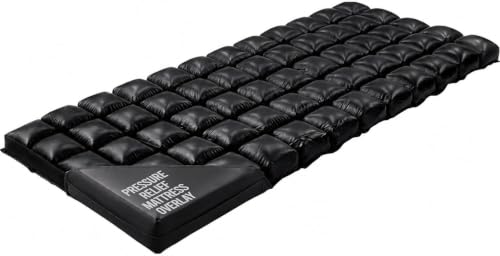
Pressure Relief Mattress Overlay Non-Powered Air Overlay

Lounsweer 2 Pcs Waterproof Mattress Protector 80 x 36 Teal

Lounsweer 2 Pcs Waterproof Mattress Protector 80 x 36 Beige

Lounsweer 2 Pcs Waterproof Mattress Protector 80 x 36 Khaki
Meet The Standout Selections
The Drive Medical 15076 is the kind of mattress that quietly disappears into the routine of caregiving. Its 80-by-36-inch footprint fits standard hospital beds without the overhang that plagues repurposed home mattresses, and a non-slip base with four corner straps keeps it planted through every position change. Inside, a decompressing foam core is wrapped in a fire-retardant barrier that meets federal flammability rules, so safety paperwork in care facilities is simpler.
Two carry handles on the side make moving the mattress manageable for one person, which matters when rotating rooms or deep-cleaning the frame. Owners commonly note that the foam softens slightly after a break-in period, which can be a bonus for those wanting a less clinical feel.
Real Benefits
- Standard hospital bed dimensions remove guesswork during installation
- Non-slip underside plus corner straps reduce shifting during transfers
- Fire-retardant inner barrier meets 16 CFR 1633 standards
- Side carry handles help one-person repositioning and cleaning
Things To Consider
- Foam-only construction may feel firmer than memory foam alternatives
- Spot-cleaning only suits most care situations, so a waterproof protector is recommended
Feature Snapshot
Built With In Mind
Caregivers running long-term home hospital setups who need a no-fuss, regulation-friendly foam core.
Where Another Pick Suits Better
The American Made 6-Inch Gel Memory Foam Hospital Bed Mattress is a friendlier choice for sleepers who run warm or want more contouring foam.
PEPE Mobility designed this orthopedic mattress for the messy realities of recovery care. The outer cover is built from a polyester and polyurethane blend that resists liquids without trapping heat, which solves the classic waterproof-versus-breathable trade-off. It works on both articulated (bending) and fixed bed bases, so the same mattress moves between home and facility without skipping a beat.
The setup process is part of the appeal: you cut the plastic wrap and let the mattress expand for 24 to 48 hours before use. That delay catches some shoppers off guard, so plan accordingly when scheduling delivery around a hospital discharge date.
What Works In Its Favor
- Waterproof, breathable cover handles spills without heat buildup
- Compatible with both articulated and fixed bed bases
- Fireproof outer layer adds an extra margin of safety
Worth Noting
- Requires 24 to 48 hours of off-gassing and expansion after unboxing
- Twin hospital sizing may run slightly differently than standard twin home mattresses
Right Fit For
Recovery patients and caregivers dealing with incontinence, spills, or frequent bedding changes.
Consider Something Else When
The Drive Medical 15076 Decompressing Foam Mattress is the better match if you prefer a traditional foam feel without the bed-in-a-box wait.
Gel memory foam has earned its reputation in regular bedrooms, and this American-made version brings those comfort benefits into hospital-bed dimensions. The 36-by-80-inch profile sits at a versatile six-inch height that flexes easily on adjustable bases, daybeds, and trundles. CertiPUR-US certified foam means the materials meet independent standards for content and emissions.
Sleepers who run hot tend to appreciate the gel layer’s ability to pull heat away from the body. Compared to the firmer Drive Medical option above, this mattress has a more contouring, medium-firm feel that suits users who want pressure relief without going soft.
Strong Points
- Six-inch profile flexes cleanly on adjustable and specialty bed frames
- Gel infusion helps regulate sleep temperature through the night
- CertiPUR-US certified foam provides independent content verification
- Medium-firm feel balances posture support and contouring comfort
Points To Keep In Mind
- Six-inch height is lower than some users expect from a “full” mattress
- Not waterproof, so pairing with a protector is wise for long-term care
Feature Snapshot
Made For
Hot sleepers on adjustable or specialty bed frames who want hospital-bed sizing with home-bed comfort.
Skip It When
The Roscoe Medical Meridian Alternating Air Pressure Mattress is worth considering instead if the user is largely bedridden and needs active pressure therapy.
The PayLessHere mattress solves a problem many shoppers overlook: a hospital bed at home sometimes needs to double as a guest bed or a partner’s sleeping surface. The queen sizing works with larger adjustable frames or a queen hospital bed, and the bed-in-a-box format simplifies delivery to second-floor rooms. Two layers of gel memory foam create a contouring surface that helps with head-to-foot comfort.
Fiberglass-free construction is a meaningful reassurance for households where mattress layers might get cut or modified. You may find the medium-firm feel slightly softer than expected, especially for users who need firm postural support.
Everyday Perks
- Queen size fits adjustable bases or partner-shared hospital setups
- Bed-in-a-box packaging simplifies delivery into tight spaces
- Fiberglass-free internal layers reduce concerns about exposed materials
- Two-layer gel foam supports temperature regulation and contouring
Trade Offs
- Queen dimensions won’t fit narrower 36-inch hospital frames
- Memory foam depth may sit too tall for some low-profile hospital rails
Feature Snapshot
Whose Shelf It Belongs On
Households that need a versatile mattress shared between a partner’s bed and an adjustable hospital frame.
A Better Fit Elsewhere
The American Made 6-Inch Gel Memory Foam Hospital Bed Mattress fits better on narrower 36-inch hospital frames where queen sizing is too wide.
When a person spends most of the day in bed, foam alone often isn’t enough. The Roscoe Medical Meridian introduces alternating air pressure through a system of inflated cells that cycle inflation and deflation, redistributing weight across the body. That movement is what helps prevent the pressure injuries that complicate long-term bed rest.
The included electric pump runs quietly enough for most bedrooms, which matters for sleep quality. Unlike the foam options above, this system requires a power outlet near the bed and some setup time to connect the pump and inflate the cells. For caregivers managing someone at high risk of skin breakdown, those trade-offs are typically worth accepting.
Reasons It Performs
- Alternating pressure cells actively redistribute body weight
- Electric pump keeps noise low enough for shared bedrooms
- Designed for pressure ulcer prevention and treatment support
- Works as a topper over an existing home or hospital mattress
Points To Note
- Requires a nearby power outlet for continuous pump operation
- Setup takes longer than a foam-only mattress swap
Feature Snapshot
Perfect Match For
Bedridden patients needing active pressure therapy, especially those at risk of developing pressure injuries.
Reach For A Different Pick When
The Pressure Relief Mattress Overlay Non-Powered Air Overlay is a smarter pick if you want clinical pressure relief without a pump or power dependency.
For caregivers who want clinical-grade pressure redistribution without the noise, cords, or maintenance of a powered system, the ROHO-style non-powered overlay offers a compelling alternative. Made from polypropylene air cells with a roughly 3.5-inch depth-of-immersion, the overlay lets the body sink in enough to prevent bottoming out, where the user’s weight rests on the bed frame instead of the cushioning surface.
The pitch here is simplicity: no pump to break, no filters to replace, no electricity to consume, and no cords for someone to trip over. You may find the unfamiliar air-cell surface takes a night or two to get used to, but for long-term care, the lack of ongoing service issues is a major practical win.
The Case For It
- Non-powered design means zero maintenance and no moving parts
- 3.5-inch immersion depth helps prevent pressure-related bottoming out
- No cords, pumps, or heat generation near the user
- Long-established pressure relief brand with decades of clinical use
Honest Caveats
- Air-cell feel is unusual compared to foam and may take adjustment
- Requires periodic manual adjustment of cell inflation
Quick Facts
Who Should Grab It
Caregivers who want clinical pressure relief without managing a pump, cords, or replacement filters.
Not Your Match When
The Roscoe Medical Meridian Alternating Air Pressure Mattress suits users better when active pressure cycling is clinically important.
A protector sounds like a small accessory, but in a hospital bed setting it becomes essential. The Lounsweer protector fits the 80-by-36-inch hospital mattress footprint with a 12-inch pocket that accommodates thicker foam layers and alternating pressure overlays. A TPU coating (a thin thermoplastic film bonded to the fabric) blocks liquid penetration while staying quiet under movement.
The two-pack format is genuinely useful: while one protector is in the wash, the other stays on the bed. The teal color helps caregivers spot fluid quickly during nighttime checks. Compared to the beige and khaki options later in this list, this one leans more visible.
Positive Takeaways
- Two-pack format guarantees a backup protector at all times
- TPU waterproof coating handles spills and incontinence cleanly
- 12-inch pocket fits thicker mattresses and overlay toppers
- Quiet fabric avoids the crinkly feel of older vinyl protectors
Room For Improvement
- Teal color may not match every bedroom’s neutral palette
- Machine washing may require gentle cycles to preserve the TPU layer
Who It Suits Best
Long-term caregivers managing incontinence or spills who need a backup protector always ready to swap in.
Look Elsewhere When
The Lounsweer Beige protector fits rooms with neutral decor better if teal feels too clinical.
This beige version of the Lounsweer protector trades the visibility of teal for a calmer aesthetic that disappears into most bedrooms. The same TPU waterproof coating and 12-inch pocket carry over, so the protective performance is identical. The neutral tone helps when a hospital bed sits in a room that also functions as a guest space or a primary bedroom for a partner.
The trade-off shows up during nighttime checks, when fluid is harder to spot against a beige background. Depending on how often you do visual inspections, that visibility difference may or may not matter to your routine.
The Upside
- Beige color blends with traditional bedroom decor
- TPU coating provides reliable waterproof protection
- Two-pack format simplifies rotation during laundry cycles
- Quiet fabric keeps sleep undisturbed by movement noise
Some Limits To Know
- Neutral color may obscure fluid during quick visual checks
Best Suited To
Households that want waterproof protection without a clinical-looking color in the bedroom.
Swap It Out When
The Lounsweer Teal protector is more practical for caregivers who rely on visual spotting during overnight checks.
The khaki variant rounds out the Lounsweer trio, sitting between teal and beige on the visibility spectrum. The waterproof TPU construction stays consistent across all three colors, so the choice comes down to aesthetic preference and how much you rely on color to spot incidents. Khaki works well in earth-toned bedrooms or rooms where warmer neutrals dominate.
Like the other two Lounsweer options, the two-pack format is the practical hero: it removes the scramble when a protector is in the laundry. In most care routines, that built-in backup translates into fewer midnight bedding emergencies.
Points In Its Favor
- Khaki color suits warm-toned bedrooms and earth-tone decor
- Same waterproof TPU coating as the other Lounsweer protectors
- Two-pack format supports continuous rotation through laundry
- 80-by-36-inch sizing fits standard hospital bed dimensions
Minor Gripes
- Less visible than teal for spotting fluid during quick checks
- Limited color choice beyond the three-pack variants
Who Will Love This
Caregivers who want a warm-toned protector that handles spills while blending with earth-tone bedrooms.
Where A Sibling Pick Shines
The Lounsweer Teal protector outperforms this one when quick nighttime visibility of fluid is a top priority.
What To Weigh Before Choosing Hospital Bed Mattresses
Match The Mattress To The Frame
Hospital bed frames come in specific widths and articulation patterns. A 36-by-80-inch mattress is the most common hospital size, but twin XL and queen dimensions exist for specialty frames. Measure the deck (the flat surface the mattress rests on) before buying, and confirm the mattress flexes smoothly across the head, foot, and knee sections of an adjustable base. Foam memory mattresses below six inches tend to flex most cleanly; thicker profiles can resist bending at the joints.
Decide How Much Pressure Relief Matters
For users who spend a few hours a day in bed, a quality foam or gel memory foam mattress is usually enough. For users who are largely bedridden or have existing skin issues, alternating pressure systems or non-powered overlays offer active protection. Bottoming out, where the user’s bony areas press through the cushioning and touch the frame, is the main risk a good pressure-relief mattress prevents.
Material Safety And Certifications
CertiPUR-US certification on foam means the materials have been independently tested for content and emissions. Fire-retardant barriers meeting 16 CFR 1633 are standard for clinical-grade mattresses. Fiberglass-free construction is worth prioritizing if the mattress might ever be cut or modified, since exposed fiberglass fibers are difficult to clean up.
Caregiver Realities And Add-Ons
Waterproof covers, machine-washable protectors, and handles for repositioning all reduce daily workload. A two-pack protector like the Lounsweer trio means one cover stays on the bed while the other is in the wash. For caregivers working solo, side handles and lighter mattress weights translate into fewer back strain moments.
Key Considerations Across These Picks
Mistakes Worth Dodging
A common slip-up is assuming any twin mattress will fit a hospital bed. Standard home twins are usually 38-by-75 inches, while hospital mattresses run 36-by-80. The dimensions look close until the mattress overhangs the deck or leaves gaps at the rails. Another trap is underestimating the value of a waterproof protector: even mattresses with waterproof covers benefit from an additional protector because the factory cover is rarely designed for repeated machine washing.
Where The Extra Money Goes
Stepping up from a basic foam mattress to a gel memory foam or alternating pressure system usually pays off in two ways: better temperature regulation and more active pressure distribution. Gel layers pull heat away from the body, which matters for users who cannot adjust their own bedding. Powered pressure systems actively cycle inflation to prevent the sustained compression that leads to skin breakdown, an upgrade that often justifies its cost for long-term bedridden users.
Frequently Asked Questions
How thick should a hospital bed mattress be?
Thickness depends on the user and frame. Six inches works for most adjustable frames and users with average weight, while eight to ten inches adds comfort for users who want a more home-bed feel. Thicker mattresses may not flex as cleanly across adjustable bed joints.
Can a regular home mattress work on a hospital bed?
It depends on the frame and the user. Many home mattresses do not match hospital bed dimensions, do not flex properly across adjustable sections, or are too thick for low side rails. A mattress sized and rated for hospital bed use typically performs better in this setting.
What is bottoming out and why does it matter?
Bottoming out happens when a user’s weight presses through the cushioning layer and rests on the bed frame underneath. It causes pressure injuries, pain, and disrupted sleep. A mattress or overlay with adequate depth and pressure redistribution helps prevent it.
Do waterproof protectors change how a mattress feels?
Most modern protectors use a thin TPU coating that has minimal effect on comfort. Older vinyl protectors sometimes feel crinkly or trap heat, but the protectors in this roundup are designed to stay quiet and breathable.
How long do hospital bed mattresses typically last?
Lifespan varies by use intensity and weight load. Foam mattresses generally last several years in home settings, while alternating pressure systems can last longer with proper pump care. Adding a waterproof protector is the easiest way to extend any mattress’s useful life.
The Takeaway
The right hospital bed mattress depends on how the bed is used, who is sleeping on it, and how involved daily care is. A foam core like the Drive Medical 15076 handles long-term setups with minimal fuss. For sleepers who want contouring and cooling, the American Made gel memory foam option delivers home-bed comfort in hospital sizing. Bedridden users benefit most from active pressure systems or non-powered overlays, and a waterproof protector trio is the simplest way to keep any setup clean and lasting.