


Spending eight to twelve hours standing on hard floors can leave the heels aching, the arches burning, and the lower back barking by the last hour of a shift. The right insole turns a punishing workday into something the legs can actually survive, especially when the boots themselves came with thin factory liners. I put together this roundup of seven options that pair well with steel-toe and leather work boots, covering everything from heavy-duty support for larger frames to lighter gel cushions for those who just want a softer ride underfoot.
A Side-By-Side Look

IWELA WATER High Arch Support Insoles (XL)
PLERE Arch Support Insoles for Standing All Day

ARIAT ATS Round Toe Gel Cushion Footbed
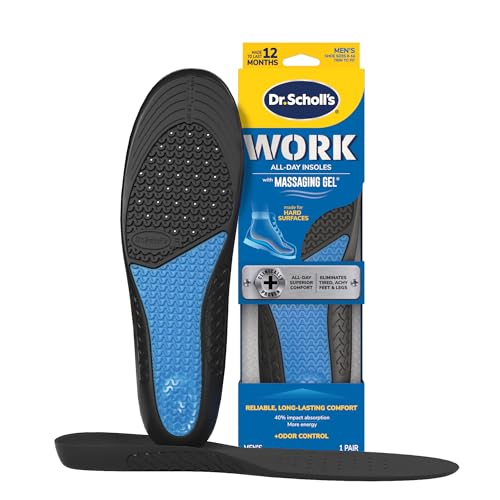
Dr. Scholl’s Work All-Day Insoles with Massaging Gel

Dr. Scholl’s Heavy Duty Support Insoles (Men 8-14)

Dr. Scholl’s Advanced Pain Relief Insoles (Heavy Duty)

CRUVHEAL 220+ lbs Plantar Fasciitis Insoles (M)
The Details Behind The Selections
The IWELA WATER insole is built around a firm TPU arch plate, a thermoplastic polyurethane piece that holds its shape under repeated load rather than collapsing after a few weeks of use. For someone who carries more weight through the midfoot, that rigidity translates into a steadier platform during long warehouse shifts or hours on a ladder. The XL size chart covers Men 8.5-9.5 and Women 10.5-11.5, which lands well for many common work-boot sizes.
Compared to lighter gel inserts, this one feels more like orthotic hardware than cushioning, which is exactly the point. Workers who prefer a noticeable push under the arch instead of a soft pillow will appreciate the contour, though anyone used to squishy foam should expect a break-in period.
Where It Excels
- Firm TPU arch holds shape under heavier body weight without flattening out
- Unisex sizing covers a useful range from Men 8.5 through Women 11.5 in the XL run
- Contoured shape supports the plantar fascia, the thick band of tissue along the bottom of the foot, which often takes the brunt of long shifts
- Corrective angle encourages a more neutral foot position during standing work
Honest Caveats
- Break-in can last a week, with some soreness in the arch during the first few shifts
- Less cushioning than gel-based options for shoppers who want a plush feel
Who Will Love This
Heavier-bodied workers in steel-toe boots who want rigid correction rather than soft cushioning on long industrial shifts.
Look Elsewhere When
The Dr. Scholl’s Work All-Day Insoles with Massaging Gel suit shoppers who want a softer, gel-driven ride rather than corrective hardware.
What sets the PLERE apart from most rigid orthotics is the trio of arch heights that ship in the box: low, medium, and high. People with flat feet, neutral arches, and high arches can each find a contour that matches their profile instead of forcing the foot into one fixed shape. The five trimmable sizes stretch the fit across narrow and wide feet alike, which matters in work boots where toe boxes vary wildly.
For households where one person has high arches and another is flat-footed, a single pack covers both without two separate orders. It is a practical fit-first design rather than a one-size-fits-all shortcut.
A Few Strong Suits
- Three interchangeable arch heights let you dial in support without buying multiple pairs
- Trim-to-fit sizing covers a wide range of boot and shoe sizes
- Works across work boots, sneakers, and casual shoes for versatile daily use
- Helpful for plantar fasciitis discomfort when paired with the high-arch insert
Points To Keep In Mind
- Switching arch heights mid-day requires carrying the unused pieces, which is awkward on a job site
- The trimmable guides take patience to size correctly the first time
Right Fit For
Multi-user households or anyone unsure of their arch height who wants one purchase that adapts to several feet.
Where Another Pick Suits Better
The IWELA WATER High Arch Support Insoles fit shoppers who already know they need a single, firm correction and do not want to fuss with interchangeable pieces.
The ARIAT footbed is the factory replacement liner for several of the brand’s round-toe work and western boots, which means the dimensions match ARIAT lasts more precisely than a generic trim-to-fit. A gel cushion sits under the heel where impact lands first during each step, softening the strike on concrete or steel grating. For ARIAT owners, slipping these in replaces the worn factory liner without reshaping the boot.
Outside the ARIAT ecosystem, the fit can run a touch short in longer steel-toe boots from other makers. It is a tidy upgrade for a specific audience rather than a universal solution.
The Helpful Details
- Gel heel insert absorbs initial impact during walking and ladder work
- Round-toe profile aligns with common ARIAT work and western lasts
- Drop-in design replaces the worn factory liner without trimming
Worth Noting
- Best fit is reserved for ARIAT boots, since the dimensions match ARIAT lasts specifically
- Minimal arch correction compared to the orthotic picks higher on this list
Built With In Mind
ARIAT boot owners who want to refresh a worn factory liner with the same fit and feel.
A Better Fit Elsewhere
The Dr. Scholl’s Heavy Duty Support Insoles serve shoppers in non-ARIAT boots who need heavier arch correction than this gel footbed offers.
Dr. Scholl’s Work All-Day is built for retail staff, warehouse pickers, nurses, and anyone whose shift is mostly standing rather than walking miles. The massaging gel under the ball of the foot spreads pressure across a wider area, which matters when most of the day happens in one spot rather than on a moving route. Trim-to-fit guides on the underside let you tailor the length to most work-boot sizes without a trip to a cobbler.
Compared to the heavy-duty Dr. Scholl’s options below, this one trades raw support for a softer feel that takes less commitment to break in.
Good Reasons To Consider
- Massaging gel layer reduces hot spots under the forefoot during stationary work
- Even pressure distribution helps reduce the heavy-leg feeling after an eight-hour shift
- Trim-to-fit design adapts to most men’s work-boot sizes without guesswork
- Minimal break-in period compared to rigid orthotic alternatives
Smaller Caveats
- Less corrective arch structure than the heavy-duty picks for shoppers with chronic foot pain
- Gel cushioning compresses faster under very heavy loads
Whose Shelf It Belongs On
Retail, hospitality, and warehouse workers who stand in one place for long stretches and want softer cushioning more than rigid correction.
Swap It Out When
The Dr. Scholl’s Heavy Duty Support Insoles make more sense for shoppers over 200 lbs or anyone needing stronger arch reinforcement than this gel design provides.
Dr. Scholl’s Heavy Duty Support is sized and reinforced for men carrying 200 lbs or more, including those with wider feet who often squeeze into standard insoles. Extra supportive cushioning wraps the heel, which matters because the heel takes the hardest impact during each step on hard surfaces. The full-length design keeps the foot stable from heel strike through toe-off rather than letting the arch collapse mid-stride.
For workers who have burned through thinner inserts in a matter of weeks, the heavier construction here tends to hold up longer under load.
Everyday Perks
- Reinforced heel cup absorbs shock and reduces lower-back fatigue after long standing shifts
- Pressure distribution across the full foot prevents hot spots under heavier body weight
- Trim-to-fit sizing adapts cleanly across the Men 8-14 range
- Wider last accommodates broader feet that struggle with standard liners
Trade Offs
- Bulkier profile crowds boots with shallow factory liners, so some toe room is sacrificed
- Noticeably firmer than gel-only options during the first few shifts
Best Suited To
Big and tall workers, wide-footed men over 200 lbs, and anyone replacing insoles that crushed flat within a few months.
Consider Something Else When
The PLERE Arch Support Insoles fit shoppers under 200 lbs who want lighter correction and the option to swap arch heights.
The Advanced Pain Relief model targets ten common lower-body pain points, including the heel, arch, ball of the foot, ankle, Achilles, knee, hip, and lower back, which makes it a versatile pick when the discomfort is not isolated to one spot. A heavy-duty shell supports up to 340 lbs, covering a wider range of body types than most orthotics on the shelf. The full-length shape keeps the foot aligned from heel to toe during long shifts.
It splits the difference between the lighter Work All-Day pick and the bulkier Heavy Duty Support above. For shoppers whose aches move around rather than staying in one zone, the broader coverage is the real draw.
What It Does Well
- Targets ten lower-body pain areas, including heel, arch, knee, and lower back
- Heavy-duty shell rated for users up to 340 lbs
- Full-length design supports the foot through the entire stride
- Suitable for work boots and shoes across multiple size ranges
Potential Compromises
- Wider coverage can feel overbuilt for shoppers with only one localized pain point
- Less cushioning than gel-forward designs under the forefoot
Made For
Workers with recurring pain in multiple areas, from the heel through the lower back, who want one insole that addresses several spots at once.
Reach For A Different Pick When
The Dr. Scholl’s Work All-Day Insoles suit shoppers whose main complaint is forefoot pressure during stationary standing rather than multi-zone pain.
CRUVHEAL builds the arch up to 1.4 inches, a tall contour that holds its geometry under sustained load from heavier frames. The insert spreads weight evenly across the footbed, which is the core idea behind easing heel pressure for people who already deal with plantar fascia discomfort. A neutral black finish keeps the look low-profile inside dark work boots.
For workers whose heels complain first thing in the morning, the targeted arch height here addresses that specific complaint without overbuilding the rest of the footbed.
Why It Works Well
- 1.4-inch arch height distributes weight and reduces direct heel pressure
- Built to handle 220+ lbs without losing structural integrity over time
- Targets plantar fascia strain that often shows up as morning heel pain
- Neutral black design looks at home inside most work boots
Smaller Caveats
- Tall arch can feel intrusive during the first week until the foot adapts
- Less forefoot cushioning than gel-based picks for shoppers with ball-of-foot pain
Perfect Match For
Workers over 220 lbs with plantar fascia pain who want a high, supportive arch rather than a low-profile gel liner.
Not Your Match When
The Dr. Scholl’s Advanced Pain Relief Insoles fit shoppers under 200 lbs who need multi-zone coverage instead of a single tall arch.
Matching The Right Insole To Your Workday
Picking an insole starts with honest accounting: how much you weigh, what kind of pain shows up at the end of a shift, and how the boots themselves fit around the toe box. A heavier frame needs a reinforced shell that resists compression, while someone under 180 lbs can usually get by with lighter gel cushioning. Arch height matters more than most people expect, since a contour that fights your natural foot shape will ache long before the cushioning wears out.
For most work boots, the existing factory liner comes out cleanly and gets replaced by a full-length insole that takes its place. Trimming along the marked guides, rather than freehand, keeps the toe profile matched to the boot’s last. A break-in of one to two weeks is normal for rigid orthotics, and the discomfort tends to fade as the foot adjusts to the new support.
Anyone with diabetes, circulation issues, or persistent foot pain should talk with a clinician before relying on an over-the-counter insert. The picks above support everyday wear, but they do not replace professional orthotic work for specific medical conditions.
What To Watch Before You Commit
Common Shopping Slip Ups
The biggest misstep is choosing an insole by boot size alone, since two people wearing the same size can have very different arch heights and widths. Matching the contour to the foot matters more than matching the label on the box.
Trimming too aggressively is another frequent mistake. Cutting ahead of the marked line can leave the insole sliding forward inside the boot, which creates blisters instead of preventing them.
When Paying More Pays Off
Heavier construction, reinforced heel cups, and rated weight limits tend to drive the cost up, and the upgrade pays back through durability. A gel insert that flattens in two months costs more over a year than a heavier orthotic that holds its shape for the long haul.
For workers logging serious hours in steel-toe boots, the upgraded shell and broader pressure distribution are usually worth the difference.
Frequently Asked Questions
How long do work boot insoles typically last before needing replacement?
Most rigid orthotics hold up for six months to a year of regular use, while gel inserts may compress in two to three months under heavier loads.
Can I move insoles between different pairs of boots?
Yes, as long as the boots share a similar last and toe-box shape, though rotating insoles between boots can shorten their lifespan slightly.
Do I need to remove the factory liner before adding a new insole?
In most work boots, yes. Layering a new insole over the factory liner crowds the toe box and reduces the support of both layers.
Will a heavier insole make my boots feel tight?
Often yes at first, especially in shallow boots. Trimming carefully and breaking the insole in over a week usually resolves the squeeze.
Are trim-to-fit guides accurate enough for most boots?
For standard work-boot sizes, the guides are close enough that minor adjustments with scissors finish the job. Very narrow or unusually shaped boots may need extra care.