


Long shifts on concrete, weekend trail loops in heavy leather, and standing commutes all hit the same place first: the soles of your feet inside a boot that never quite fits right. A good insole changes that equation in ways most people underestimate until they slide one in and feel the difference.
I’ve pulled together seven foot inserts for boots that take different approaches, from soft memory-foam comfort to heavy-duty orthotic support, so you can match the right design to your specific situation.
The Choices Worth Comparing

4D Cloud Steppers Insoles for Men and Women
Arch Support Insoles Plantar Fasciitis Standing All Day

ARIAT Men’s ATS Round Toe Insole, Gel Cushion Footbed
ARIAT Women’s ATS Round Toe Insole, Gel Cushion Footbed
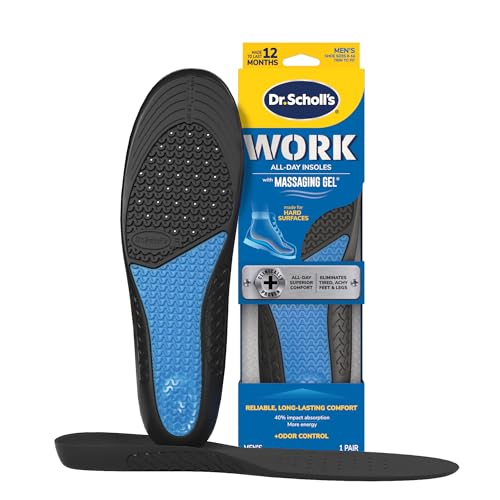
Dr. Scholl’s Work All-Day Superior Comfort Insoles Men

Dr. Scholl’s Heavy Duty Support Insole Orthotics Men 8-14

Dr. Scholl’s Advanced Pain Relief Insoles for Men and Women
Why These Options Stand Out
Memory-foam inserts tend to either feel plush for a week and then go flat, or arrive too stiff to be worth the swap. The 4D Cloud Steppers aim somewhere between those poles, using a layered foam build that rebounds through a full shift.
Compared to the heavier orthotic options later in this list, this pick leans toward cushion over correction. It’s the kind of insert you slide into a pair of work boots or casual boots when the shoe itself is fine but your feet need a softer landing.
Benefits That Matter
- Pre-marked trim lines let you cut to size without measuring, which speeds up the swap from one pair of boots to the next.
- The mesh top layer pulls moisture away from the foot, a real benefit during long shifts when sweat buildup causes blisters and slipping inside the boot.
- The foam formula recovers between steps rather than bottoming out, so the cushion feel holds up through a workday instead of disappearing by lunch.
- Lightweight enough that it doesn’t crowd the toe box of snug-fitting boots.
Worth Noting
- Soft cushioning doesn’t correct alignment, so people needing real arch support may still feel fatigue in the heel and forefoot.
- The trim guide works best when matched carefully to your boot size, since over-trimming shortens the insert and leaves the arch unsupported at the heel.
Quick Facts
Who It Suits Best
Service and retail workers on their feet for eight-plus hours who want a soft, breathable replacement for the thin factory insole that came with their boots.
Consider Something Else When
The PLERE Arch Support Insert is a stronger match for someone whose foot pain stems from flat arches or plantar fasciitis rather than simple fatigue.
Most off-the-rack insoles assume one arch height fits everyone, which is exactly why so many end up in a drawer. PLERE takes the opposite route, offering three distinct arch profiles plus a five-step trim range so you can dial in something closer to your actual foot shape.
Where the 4D Cloud Steppers go soft and forgiving, this pick goes structured and corrective. It’s aimed at the person whose boots feel fine for the first hour and then turn punishing by mid-afternoon.
Reasons It Performs
- Three arch heights let low, medium, and high arch profiles each find a more precise match, which matters for people with plantar fasciitis or flat feet.
- The trim range covers narrow to wide feet, so it adapts to boots that run slim as well as those with a roomier toe box.
- The rigid arch core distributes pressure across the midfoot instead of letting it concentrate at the heel, a real advantage on hard surfaces like warehouse floors.
- The structured build tends to hold its shape through daily wear rather than collapsing after a few weeks of use.
Things To Consider
- The correction-focused design takes a few days to break in, so expect some firmness under the arch during the first week.
- Trimming requires scissors and a steady hand, since cutting along the wrong size line throws off the arch placement.
- The structured profile takes up more volume in the boot than a flat foam insert, so snug-fitting styles may feel tighter with these installed.
Best Suited To
People with diagnosed arch issues, plantar fasciitis, or chronic heel pain who want a customizable fit rather than a generic off-the-shelf shape.
Look Elsewhere When
The Dr. Scholl’s Heavy Duty Support Insole Orthotics suits shoppers who carry more body weight or stand on truly punishing surfaces and need broader reinforcement.
The ATS (Advanced Torque Stability) platform that ARIAT builds into its boots deserves a matching insole, otherwise you’re swapping a tuned footbed for something generic. This gel-cushion replacement keeps that system intact for riders and ranch workers who rely on the brand’s fit.
Unlike the universal trimmable picks above, this is engineered specifically for ARIAT boot interiors. The shape, depth, and toe-box clearance all match the factory footbed cavity.
Everyday Wins
- The gel cushion at the heel absorbs repeated impact during dismounts, ladder climbs, and walking on hard barn or stable floors.
- Maintains the ATS stability platform inside ARIAT boots, so the engineered support the boot was designed around stays in play.
- The round-toe footprint mirrors ARIAT’s roomier lasts, so it sits flat rather than bunching at the edges.
Trade Offs
- Built for ARIAT boots specifically, so the fit may feel off in non-ARIAT footwear with different internal shapes.
- Less customizable than trimmable picks, since the shape is fixed and you work with the offered size range.
Made For
Existing ARIAT boot owners who want to refresh the factory footbed with a gel-cushion upgrade without disrupting the boot’s engineered feel.
A Better Fit Elsewhere
The Dr. Scholl’s Work All-Day Superior Comfort Insoles suit people wearing multiple boot brands who need one versatile insert that moves between pairs.
The women’s version of ARIAT’s gel-cushion footbed follows the same engineering logic as the men’s, just shaped for narrower heels and shorter arch spans typical of women’s boot lasts.
Worth highlighting: most women wearing ARIAT boots default to the men’s insole because the women’s version sometimes gets overlooked, even though the proportions make a noticeable difference.
Noteworthy Benefits
- Proportioned for women’s foot geometry rather than scaled-down men’s, so the arch lands in the right place under the foot.
- Preserves the ATS platform ARIAT engineered the boots around, keeping the brand’s stability feel intact.
- Gel heel cushioning softens the repetitive loading that comes with long days around horses, property, or ranch work.
Honest Caveats
- Specific to ARIAT women’s boots, so the geometry may not seat properly in other brands.
- Less arch correction than dedicated plantar fasciitis insoles like the PLERE Arch Support Insert.
Perfect Match For
Women who already wear ARIAT boots for riding, ranch, or country work and want a brand-matched replacement footbed.
Swap It Out When
The 4D Cloud Steppers Insoles work better for women who rotate between multiple boot brands and want one insert that travels between them.
The Dr. Scholl’s Work line targets the specific pattern of fatigue that hits warehouse workers, nurses, and anyone on hard flooring for a full shift. Massaging gel pockets under the heel and ball of the foot flex with each step rather than just sitting there.
Compared to the ARIAT gel footbed above, this one trades brand-specific tuning for universal fit, so it moves freely between work boots, sneakers, and casual shoes.
What Helps Most
- Massaging gel technology flexes with each step, distributing pressure rather than letting it concentrate at the heel.
- Trim-to-fit sizing adapts to multiple boot styles, from steel-toe work boots to service shoes.
- The Work All-Day line is built specifically for physically demanding jobs, so the cushion pattern targets the kind of footstrike hard floors create.
- Transfers easily between pairs, which means one insert purchase can serve several boots in rotation.
Where It May Fall Short
- Not engineered for arch correction in the way the PLERE pick is, so it won’t realign a foot with structural issues.
- The gel cushioning can feel warm inside non-breathable boots during summer shifts.
Feature Snapshot
Who Should Grab It
Men working on their feet all day in service, warehouse, healthcare, or retail settings who rotate through multiple pairs of footwear.
Reach For A Different Pick When
The Dr. Scholl’s Heavy Duty Support Insole Orthotics is a stronger choice for those over 200 pounds or with wider feet who need broader reinforcement.
Most insoles compress under sustained load from heavier frames, which is why big and tall shoppers often find generic inserts disappointing within weeks. This Heavy Duty model uses reinforced arch support and a sturdier heel cup specifically because standard foam bottoms out fast under higher body weight.
The design also addresses wider feet, which tend to overflow standard insole shapes and create pressure points along the outer edge.
Real-World Strengths
- Engineered for wearers over 200 pounds, so the structural materials resist the compression that flattens lighter inserts.
- The wide-foot shaping keeps the insole flat under the metatarsals instead of curling at the edges, a common issue with narrower inserts.
- Reinforced heel cupping helps absorb shock and supports alignment during long shifts on concrete.
- Distributes pressure across the full footbed rather than concentrating it at the heel or ball.
Points To Note
- The reinforced build adds noticeable volume, so it fits best in boots with a roomier toe box rather than slim profile designs.
- Heavier-duty construction means a longer break-in window during the first week of wear.
- Trim-to-fit sizing demands careful measurement to preserve the structural zones.
Spec Overview
Whose Shelf It Belongs On
Men over 200 pounds, those with wider feet, or anyone whose previous inserts collapsed too quickly under sustained load.
Skip It When
Dr. Scholl’s Work All-Day Superior Comfort Insoles fit lighter shoppers or those in narrower boots who don’t need the reinforced build.
This is the entry in the Dr. Scholl’s lineup that goes beyond general comfort and targets specific lower-body pain points, including the heel, arch, knees, and lower back. The heavy-duty construction supports up to 340 pounds, making it the broadest capacity pick on the list.
The full-length design and shock-absorbing build separate it from the lighter Work All-Day model. Where that one handles general fatigue, this one addresses recurring pain patterns.
The Practical Payoff
- Targets multiple pain zones including the heel, arch, knees, and lower back, so it helps wearers dealing with pain that radiates beyond the foot.
- The 340-pound weight capacity accommodates a wide range of body types.
- Full-length design supports the entire footbed rather than just the arch zone.
- Shock-absorbing materials reduce the repeated impact loading that worsens plantar fasciitis and heel pain over time.
Some Limits To Know
- The pain-specific design adds more bulk than a basic cushion insert, so it fits best in boots with room to spare.
- The starting size range listed covers smaller feet, so shoppers need to confirm the correct size variant for their foot.
Product Snapshot
The Right Fit
People managing plantar fasciitis, chronic heel pain, or recurring knee and lower back discomfort related to long hours on their feet in work boots.
Not Your Match When
The 4D Cloud Steppers Insoles suit shoppers without specific pain issues who simply want a softer, more breathable boot interior for daily comfort.
What Matters Most Before Choosing Foot Inserts For Boots
Arch Profile And Foot Shape
The biggest mistake is grabbing an insole off the shelf without knowing whether you have low, medium, or high arches. Arch height determines whether you need a supportive cradle under the midfoot or simply a soft landing pad. Standing barefoot on a piece of paper and tracing your wet footprint reveals the answer: nearly the whole foot shows means low arches, a thin connecting band means high arches.
Cushioning Versus Correction
These do different jobs. Memory foam and gel inserts soften each step but don’t realign anything. Structured orthotics with a firm arch core adjust how the foot sits inside the boot. People with diagnosed arch issues or plantar fasciitis usually need the second type, while folks with healthy feet who just want softer boots need the first.
Boot Volume And Insole Thickness
Thicker insoles crowd the toe box of snug boots. Always check how much room the boot has after the factory insole comes out. A structured orthotic in a low-volume boot creates pressure on the sides of the foot and defeats the purpose.
Weight Capacity And Construction
Insoles rated for heavier wearers use denser foams and reinforced heel cups that resist bottoming out under sustained load. Lighter shoppers often overbuy on heavy-duty builds when a standard insert would serve them just as well.
Key Considerations Across These Picks
Common Shopping Slip Ups
Treating the first insole you try as the final answer is the trap. Feet adapt, boots break in, and pain patterns shift. Most people benefit from trimming a test pair, wearing them for a full week, and reassessing before committing that insert to daily rotation. Also, assuming the most expensive option solves the problem: a heavy-duty orthotic in a lightweight boot often creates more issues than it resolves.
What The Higher Tier Buys
The jump from a basic gel insert to a heavy-duty orthotic pays off in two places: structural materials that hold their shape under repeated load, and engineered zones that target specific pain patterns rather than spreading generic cushion everywhere. For shoppers dealing with chronic foot pain, the upgrade typically delivers real results. For someone just adding comfort to an already well-fitted boot, a mid-tier gel insert usually does the job at a friendlier price.
Frequently Asked Questions
How long do foot inserts for boots typically last?
Most gel and memory-foam inserts hold up for about six months of daily wear before compression sets in. Structured orthotic designs often outlast that, sometimes a full year, depending on body weight and how many hours per day they spend inside the boot.
Can I move the same insert between different boots?
Yes, as long as the trim size matches and the boot has enough internal volume. Trimmable inserts adapt most easily. Brand-specific designs like the ARIAT footbeds fit best in the matching boot family.
Do I need to remove the factory insole first?
Almost always yes. Stacking two insoles crowds the boot and changes how the foot sits. The original insole comes out, and the new one takes its place against the midsole.
Will inserts help with plantar fasciitis?
A structured insert with arch support can reduce the strain on the plantar fascia, though persistent pain may need more than an insole change alone. Cushion-only inserts soften impact but don’t address the structural cause.
Are trim-to-fit inserts hard to size?
Not really. Most come with size guides printed on the back, and you cut along the line that matches your boot size. A steady hand and regular scissors are all you need.