


I spend most of my workday on my feet, so I know the dull ache that creeps into the heels by 3 p.m. The right pair of foot inserts can turn a brutal shift into a manageable one, and the wrong pair just adds bulk without help. This roundup focuses on inserts that actually shift pressure, support the arch, and survive months of real use. I weighed each option against the kind of shoes people wear daily: work boots, sneakers, and casual flats, with attention to fit, cushioning, and how the design holds up after weeks of wear.
The Picks In Brief

2 Pairs 4D Cloud Insoles for Men Women (XL)
Arch Support Insoles for Plantar Fasciitis Relief

ARIAT Men’s ATS Round Toe Gel Cushion Footbed
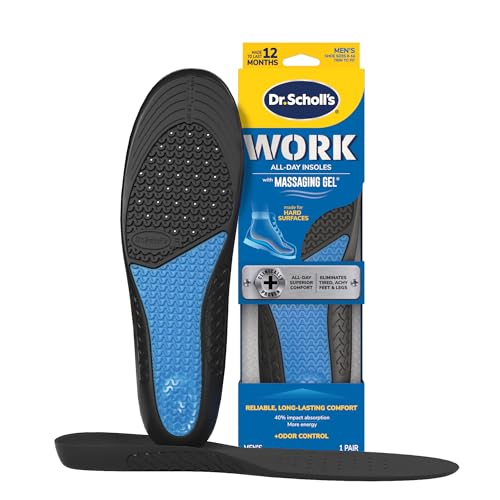
Dr. Scholl’s Work All-Day Comfort Insoles with Gel

Dr. Scholl’s Heavy Duty Support Insole Orthotics

Dr. Scholl’s Advanced Pain Relief Insoles (Smaller Sizes)
Dr. Scholl’s Advanced Pain Relief Insoles (Larger Sizes)
More On The Choices That Made The List
The FLYSTORY 4D Cloud insoles lean hard into plush cushioning rather than rigid orthopedic correction. The PU foam top layer (a soft, synthetic polymer commonly used in cushy midsoles) compresses under weight and rebounds when pressure lifts, which gives that floating-on-clouds sensation people describe in casual reviews.
What I appreciate here is the two-pair value: most picks in this list ship as one pair, so rotating between work shoes and weekend sneakers costs nothing extra. The XL sizing window covers men’s 10.5-13 and women’s 11.5-14, putting it in the larger-foot bracket.
Standout Benefits
- Memory-foam top layer softens impact on concrete and tile floors
- Two pairs in the box means swapping shoes without a waiting period
- Ergonomic arch shape reduces the strain that builds during retail or warehouse shifts
- Lightweight construction doesn’t weigh down casual sneakers
- Trimmable sizing lets you fine-tune the fit inside tighter footwear
Honest Caveats
- The cushioning compresses faster than dense foam or gel, so heavy users may see the loft flatten within a few months
- Limited arch height options mean flat-footed shoppers with severe pronation (the inward roll of the foot during walking) may find the support mild
At A Glance
Who It Suits Best
People on their feet for 6-plus hours on hard surfaces who want a noticeable cushion upgrade without a rigid orthopedic feel.
Where Another Pick Suits Better
Shoppers needing firm arch correction for plantar fasciitis should consider the Dr. Scholl’s Heavy Duty Support Insole Orthotics instead.
What sets the PLERE inserts apart is the customization system: three distinct arch heights (low, medium, high) and five trimmable sizes in one design. That kind of modular fit is rare at this price point, where most picks offer a single arch curve.
For people who bounce between flat-footed mornings and high-arch afternoons, or households where two people share a closet, the flexibility pays off. The build targets work boots, sneakers, and casual shoes, with a structured cradle meant to redistribute pressure across the heel and forefoot.
What Pays Off
- Three arch heights cover the spectrum from flat feet to high arches in a single purchase
- Trimmable sizing means a closer fit across narrow and wide feet
- Rigid arch cradle reduces the strain that aggravates plantar fasciitis (inflammation of the thick band of tissue running along the bottom of the foot)
- Versatile across work boots, sneakers, and casual footwear
Trade Offs
- Initial break-in period, often a few days, before the foam settles into shape
- Stiffer build takes up more shoe volume than foam-only picks like the FLYSTORY
Quick Facts
Made For
Anyone with non-standard arches or recurring heel pain who needs a fit dialed in beyond off-the-shelf curves.
Look Elsewhere When
Shoppers wanting the soft, sink-into-it feel of memory foam should pick the FLYSTORY 4D Cloud Insoles over this firmer build.
This ARIAT replacement footbed is built around the brand’s ATS technology, which stands for Advanced Torque Stability, a stability platform designed to reduce foot fatigue and provide cushioning and support. The gel cushion at the heel absorbs the repeated impact of walking on hard surfaces.
It’s a direct-fit upgrade for ARIAT boots, so it slips in without trimming or reshaping. For someone already invested in the ARIAT ecosystem, this is the cleanest path to a fresh footbed.
Practical Advantages
- Gel heel pod absorbs repeated impact during long walks
- Designed as a direct replacement for worn ARIAT insoles
- ATS stability platform reduces twisting strain on uneven ground
- Round-toe shape suits standard western and work boot lasts (the foot-shaped molds around which boots are built)
Points To Note
- Best fit comes from ARIAT boots; other brands may leave gaps at the toe or arch
- Single-pair offering, so replacing worn inserts in multiple shoes means buying more than one set
Best Suited To
ARIAT boot owners who want a factory-matched refresh rather than an aftermarket guess.
Another Choice May Suit
Shoppers wearing mixed boot brands should consider the Dr. Scholl’s Work All-Day Comfort Insoles with Gel, which trims to fit multiple lasts.
Dr. Scholl’s Work All-Day leans on a massaging gel forefoot, a soft polymer pad that bounces back with each step, plus a firm arch support built to redistribute pressure across the foot. Compared with the foam-heavy FLYSTORY pick above, this one trades plushness for structure.
It’s marketed toward people with physically demanding jobs and active, on-your-feet lifestyles: nurses, retail workers, warehouse crews, construction trades. The trim-to-fit format lets one size range cover most men’s footwear, so the insole can move between pairs of work shoes without a separate purchase.
Practical Pluses
- Massaging gel forefoot reduces the burning sensation under the ball of the foot
- Pressure distribution design limits the joint strain that builds over an 8-hour shift
- Trimmable format fits a wide range of men’s shoe sizes from one product
- Durable layered construction outlasts basic foam-only inserts
Soft Spots
- Men’s-specific last may not suit shoppers with narrower, differently shaped feet
- Trim-to-fit requires a careful first cut: too aggressive and the arch support shifts out of place
Feature Snapshot
Perfect Match For
Men in active jobs who spend their shifts moving between standing, walking, and climbing rather than sitting at a desk.
Skip It When
Shoppers needing a women’s-specific fit should reach for the PLERE Arch Support Insoles instead.
This Dr. Scholl’s design targets a specific group most inserts overlook: men over 200 pounds, those who wear wide-width shoes, and taller frames that need more surface area. The supportive heel cup cradles the back of the foot rather than letting it collapse inward.
It’s built for work boots and shoes that take real abuse. The reinforced arch and wider platform keep the insole from bottoming out under heavier loads, and the trim-to-fit format works across men’s sizes 8-14.
Real-World Strengths
- Wider platform matches big and tall foot shapes without crowding the toe box
- Supportive heel cushioning targets the lower back pain that develops from heel impact
- Reinforced arch holds shape under repeated heavy loading
- Distributes pressure across the full foot to reduce fatigue
Small Caveats
- Bulkier build fills more shoe volume, which can crowd slimmer casual sneakers
- Only available in men’s sizing, so women with similar width needs must look elsewhere
Feature Rundown
Whose Shelf It Belongs On
Men carrying extra weight or wearing wide work boots who have found standard insoles too flimsy or too narrow.
Consider Something Else When
Smaller-footed shoppers under 200 pounds will get more value from the Dr. Scholl’s Advanced Pain Relief Insoles in the smaller size range.
This Dr. Scholl’s Advanced Pain Relief insole is the smaller-foot sibling of the heavy-duty pain relief design. It targets plantar fasciitis and arch pain across ten zones in the lower body, from the lower back through the ankles, and it’s built for work boots and shoes that take daily punishment.
For shoppers in the men’s 6.5-7 or women’s 7.5-8 range who need serious pain relief without graduating to the heaviest-duty options, this lands in a useful middle ground. The shock-absorbing build suits jobs that combine long standing with heavy lifting.
A Favorable Mix
- Multi-zone pain relief targets arch, heel, knees, hips, and lower back together
- Full-length support with energy-return design returns some spring to each step
- Heavy-duty construction holds up to work boot environments
- Available in unisex sizing for smaller-foot wearers
Worth Noting
- Smaller sizing limits availability: shoppers outside this band need the larger-foot version
- Thicker profile means breaking in over a few days before the foam settles
The Right Fit
Smaller-footed shoppers (men’s 6.5-7, women’s 7.5-8) dealing with multi-zone foot or lower body pain who want heavy-duty relief in a scaled-down size.
A Better Fit Elsewhere
People in larger sizes with similar pain profiles should grab the Dr. Scholl’s Advanced Pain Relief Insoles in the larger size range (pick 7).
This larger-foot version of the Advanced Pain Relief insole covers men’s 11.5-12 and women’s 12.5-13, filling a bracket that often gets ignored between the standard men’s range and specialty big-and-tall designs. The build mirrors the smaller-size sibling: full-length support, multi-zone pain targeting, and energy-return cushioning.
For someone tall with broad feet who has trouble finding inserts that actually fit the footbed of their work boots without bunching at the toe, this version lands in a useful spot.
The Good Stuff
- Reinforced arch support sized for larger frames up to 340 pounds
- Shock-absorbing heel eases the impact that travels up to knees and hips
- Targets ten lower-body pain zones from heel through lower back
- Works inside work shoes and boots where most casual inserts fall short
A Few Limitations
- Larger-foot sizing only: outside men’s 11.5-12 or women’s 12.5-13 the insole won’t sit correctly
- Full-length support takes up more shoe volume than shorter foam designs
Built With In Mind
Taller, heavier shoppers in the men’s 11.5-12 or women’s 12.5-13 bracket who want heavy-duty pain relief in a properly scaled size.
Reach For A Different Pick When
Smaller-footed wearers with similar pain goals should consider pick 6, the smaller-size version of the same design.
How To Match Foot Inserts To Your Workday
Arch Type Comes First
The arch height built into an insert determines whether it actually helps or just adds bulk. Flat-footed shoppers need structured support that lifts the collapsed arch; high-arched feet need cushioning that fills the gap under the instep. The PLERE design covers this with three arch options, which is why it earns a spot for households with mixed foot types. Most single-curve inserts assume a “normal” arch, so anyone off-center will feel the mismatch within an hour of standing.
Cushioning Material And How It Ages
Memory foam (used in the FLYSTORY pick) feels pillowy at first but compresses within months under heavy loads. Gel (in the ARIAT and Dr. Scholl’s Work All-Day picks) bounces back longer but can feel cold in winter and slippery in dress shoes. Dense foam and reinforced builds (Dr. Scholl’s Heavy Duty, Advanced Pain Relief) last longer under heavier weights but take up more shoe volume. The honest read is that lighter users get more mileage from foam, while heavier users benefit from denser construction.
Weight And Width Considerations
Standard inserts assume a medium frame and medium-width foot, which leaves big and tall shoppers in a gap. Reinforced designs rated for 200+ pounds (Dr. Scholl’s Heavy Duty Support) or 340 pounds (Advanced Pain Relief) solve this with thicker platforms and broader arches. Wide feet need inserts that don’t crowd the toe box, or the foot ends up jammed against the front of the shoe by midday.
Work Boot vs Sneaker Compatibility
Work boots have deeper footbeds than casual sneakers, which means a thicker insert fits without cramping. Slimmer shoes need thinner foam designs (like the FLYSTORY) to avoid pushing the foot upward into the laces. The wrong combination usually shows up as heel slippage or numbing at the ball of the foot after a few hours.
Key Considerations Across These Picks
Common Buying Traps
The biggest mistake is buying for cushion alone. A pillowy top layer feels great in the store but doesn’t address arch collapse or pressure points, so the original ache returns by hour four. A second trap: choosing an insert that’s too thick for the shoe, which forces the foot forward and creates new pressure points at the toes. Always match the insert depth to the shoe’s existing footbed.
What The Higher Tier Buys
Premium designs earn their cost with multi-zone pain targeting, broader platforms for wider feet, and reinforced arches that hold shape under heavier loads. For shoppers under 180 pounds with no chronic pain, a mid-tier foam insert does the job. For anyone over 200 pounds, dealing with plantar fasciitis, or working 10-hour shifts on concrete, the heavier-duty designs pay back the upgrade within weeks of daily use.
Frequently Asked Questions
How long do foot inserts typically last?
Most foam-based inserts last 6 to 12 months with daily use before the cushioning compresses permanently. Gel and reinforced designs can stretch to a year or longer, especially with rotating use between pairs of shoes.
Can I move inserts between different pairs of shoes?
Yes, as long as the shoes share the same size and the insert is trimmed to fit each one. Many people keep two pairs of inserts so they can rotate rather than pulling them out every morning.
Are trim-to-fit inserts hard to size correctly?
The first cut takes a few minutes of care. Most designs print a size guide on the bottom of the insole, and cutting just outside your actual size leaves room for fine adjustments without losing arch support.
Will inserts fix plantar fasciitis on their own?
Inserts relieve the strain that aggravates plantar fasciitis, but they don’t replace stretching, rest, or professional care. Most people with persistent heel pain get the best results by combining inserts with daily calf and plantar stretches.
Do heavy-duty inserts feel too firm for casual shoes?
Usually yes. Designs built for work boots take up more volume than casual sneakers can spare, which creates pressure at the toes. Save the heavy-duty pairs for boots and use thinner foam inserts in sneakers.