


Moving a toddler out of a crib and onto a real bed is a milestone, and a quiet one for parents who dread the midnight tumble. The right bed guard rail turns that first big-kid bed into a softer landing zone without turning the bedroom into a padded cell. This roundup looks at seven toddler-friendly barriers that balance safety, ease of setup, and the daily reality of small children who treat beds like trampolines.
An Overview Of The Picks

Little Sleepy Head Soft Foam Toddler Bed Bumper Guard

Kincongi 47 Inch Swing Down Toddler Bed Rail

JUNLLY Foldable Toddler Bed Rail Safety Guard Grey 47 Inch
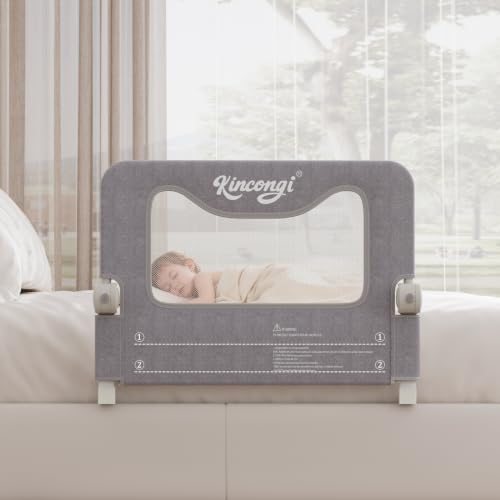
Kincongi 32 Inch Swing Down Toddler Bed Rail
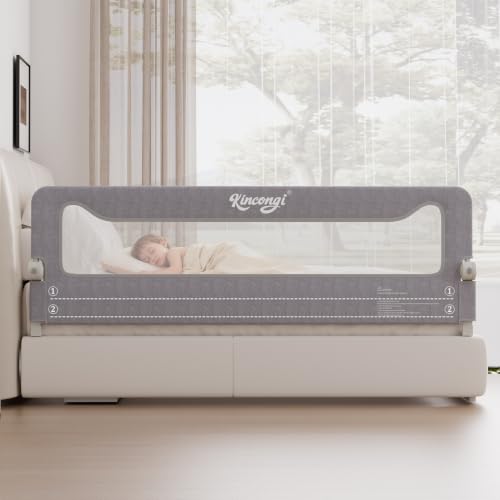
Kincongi 71 Inch Swing Down Toddler Bed Rail
TodiNest 71 Inch Foldable Toddler Bed Rail
TodiNest 59 Inch Foldable Toddler Bed Rail
More Details On Our Top Picks
Most rails on this list lean on metal frames or rigid mesh, but the Little Sleepy Head bumper goes the other direction with a foam-filled barrier that sits flush against the mattress. It works on toddler, twin, full, queen, and king sizes, which makes it useful when a kiddo graduates up to a bigger bed or sleeps over at grandparents’ house.
The non-slip cover keeps the guard from sliding as a restless sleeper shimmies along the edge. Because the whole thing is foam and fabric, there are no hard bars for tiny knees or elbows to meet in the dark.
Everyday Advantages
- Padded foam build absorbs bumps instead of deflecting them, which helps anxious parents who worry about midnight collisions.
- Fits a wide range of mattress sizes, so it can move with your child from a toddler bed to a full or queen.
- Washable cover pulls off for laundering, useful during potty-training accidents or stomach bugs.
- No metal frame means fewer pinch points during sheet changes and bed-making.
Things To Consider
- Foam offers less rigid containment than a steel frame, so very active sleepers may push through it over time.
- Single-pack design covers only one side, leaving the foot of the bed open on larger mattresses.
- The non-slip base depends on a flat mattress surface; plush pillow-tops can let it drift.
Who It Suits Best
Parents who want a cushioned, low-profile barrier for a younger toddler on a standard mattress and value easy laundering over rigid steel containment.
Where Another Pick Suits Better
Households with a child who treats the bed like a wrestling mat will get firmer protection from the JUNLLY Foldable Toddler Bed Rail Safety Guard Grey 47 Inch.
Where the Little Sleepy Head bumper trades rigidity for softness, the Kincongi 47 Inch Swing Down rail leans on a wide U-shaped base that slides under the mattress to anchor the barrier from below. That geometry keeps the rail pressed tight against the sleeping surface, which matters when a kiddo rolls toward the edge mid-nap.
At 47 inches long, it covers a meaningful chunk of a twin or full bed without overhanging awkwardly. The swing-down hinge is the practical headline, because parents usually climb in and out of toddler beds more often than toddlers do.
Strong Points
- The U-shaped base spreads weight across a wider footprint, reducing wobble on standard twin mattresses.
- Swing-down action folds the rail out of the way for bed-making, sheet swaps, and cuddles without removing the whole unit.
- Anchor straps and ties cinch the rail against the mattress, closing the gap that lets little arms drift off the side.
Worth Noting
- The U-base works best with thinner or medium mattresses; very deep pillow-tops can limit how far the base slides underneath.
- Only covers one side, so foot-of-bed exits remain unguarded on full or larger frames.
Quick Facts
Made For
Parents outfitting a standard twin bed for a toddler who climbs in and out on their own and need a rail that disappears when not needed.
Look Elsewhere When
Families with a queen mattress and a restless sleeper should consider the Kincongi 71 Inch Swing Down Toddler Bed Rail for longer coverage.
The JUNLLY rail swaps the under-mattress base for an all-in-one rigid frame, and that structural choice changes the personality of the product. Rather than relying on mattress weight to hold the barrier in place, the integrated framework stands on its own along the side of the bed.
With a 47-inch length and a 25-inch height, it sits noticeably taller than shorter rails, which helps on deeper mattresses where a low barrier disappears into the bedding. The grey fabric cover keeps the look understated in a shared bedroom.
Everyday Wins
- The steel core and rigid frame stay planted when kids lean or push against them during the night.
- 25-inch height covers more of the mattress side, useful when fitted sheets and mattress toppers shorten visible barrier height.
- Foldable hinge lets the rail fold down for storage or transport between rooms.
- Neutral grey fabric blends with most bedroom palettes.
Trade Offs
- A taller fixed frame can make it harder for shorter toddlers to climb out independently, so parents should expect to lift them out at first.
- The rigid frame takes up more floor real estate than foam-style bumpers, worth measuring if the bed sits in a tight corner.
Best Suited To
Active sleepers and pushers whose parents want a barrier that does not lean or shift, especially on heavier mattresses where under-bed bases can compress over time.
Skip It When
Younger toddlers learning to climb out on their own will find the swing-down Kincongi 47 Inch Swing Down Toddler Bed Rail easier to navigate.
The shorter sibling in the Kincongi lineup trades span for compactness. At 32 inches, it guards a smaller section of the mattress, which works well for younger toddlers who mostly roll one direction during the night.
The triple-reinforcement design follows the same playbook as the longer Kincongi model: wider U-shaped base under the mattress, anchor straps, and a swing-down hinge. The shorter length just makes the whole package easier to maneuver in a small bedroom or a toddler-bed setup.
Positive Points
- Compact 32-inch length fits toddler beds and narrow twin frames without dominating the room.
- Swing-down hinge keeps the rail out of the way when parents sit on the edge for bedtime stories.
- Same U-base anchoring system as the longer Kincongi rails, just in a smaller footprint.
Points To Note
- 32 inches covers only a portion of even a toddler bed, so older sleepers who roam will outgrow it fast.
- Same pillow-top limitation as the longer Kincongi model: very deep mattresses may not give the U-base enough bite.
Feature Snapshot
Right Fit For
Parents setting up a first toddler bed in a small room and want a low-profile barrier that disappears when not needed.
A Better Fit Elsewhere
Toddlers who scoot toward the foot of the bed during sleep need the longer TodiNest 59 Inch Foldable Toddler Bed Rail for extended coverage.
When a toddler graduates to a queen or king mattress, a 47-inch rail starts to look like a band-aid. The 71-inch version stretches across the full side of most adult beds, keeping active sleepers from sliding off either shoulder.
The longer span uses the same U-shaped base and reinforced anchor system as the shorter Kincongi rails. The swing-down hinge still folds a portion of the rail out of the way, but parents should note that the fold point sits at one end rather than the middle.
Well-Handled Touches
- 71-inch length covers nearly the full side of a queen mattress, reducing the open gap at either shoulder.
- Reinforced anchor straps and ties handle the wider span without flexing inward when pressed.
- Swing-down operation works one-handed, which matters when you are holding a sleepy toddler in the other arm.
A Few Limitations
- The longer rail requires more mattress weight to anchor properly, so it works less well on very light toddler mattresses.
- Single fold point at the end means partial swing-down rather than a full flat fold for storage.
Technical Sheet
Whose Shelf It Belongs On
Parents moving a toddler into a queen bed who want one continuous barrier instead of two shorter rails taped together.
Swap It Out When
Travelers who need the rail to flatten small should consider the TodiNest 71 Inch Foldable Toddler Bed Rail instead.
Long rails usually come with long storage headaches, but the TodiNest 71 Inch Foldable Toddler Bed Rail collapses flat, which solves the closet problem when it is not in use. That fold-down shape makes it a strong candidate for grandparents’ houses, vacation rentals, and guest beds that occasionally host a toddler.
At 21.6 inches tall, it sits a bit lower than the JUNLLY rail, which trades some height for a slimmer profile when folded. Reinforced anchor straps help the rail sit tight against the mattress.
Positive Takeaways
- Folds flat for storage under a bed or in a closet between visits, ideal for occasional-use rooms.
- 71-inch length covers most of a queen mattress side in one piece.
- Anchor straps keep the rail flush against the mattress to close off the rollover gap.
Honest Caveats
- At 21.6 inches tall, it is shorter than the JUNLLY rail, so very deep mattresses will leave less visible barrier above the sheet line.
- Foldable frames sometimes develop a slight wobble at the hinges after repeated folding, worth checking periodically.
At A Glance
Who Should Grab It
Families who rotate the same toddler between two homes and want one rail that travels and stores easily.
Reach For A Different Pick When
Parents who need rigid steel containment for a strong, pushing sleeper should look at the JUNLLY Foldable Toddler Bed Rail Safety Guard Grey 47 Inch.
The 59-inch TodiNest splits the difference between the 47-inch and 71-inch options in the same family. It gives full and queen mattresses more shoulder coverage than the shortest rails, without the storage footprint of the longest model.
The fold-flat design and 21.6-inch height match the longer TodiNest rail, so the trade-off is really about how much mattress side you need to cover. For many families, this middle length is the sweet spot.
What Pays Off
- 59-inch span covers a meaningful portion of full or smaller queen mattresses without overhanging.
- Folds flat for travel and storage, easier to pack than the 71-inch version.
- Reinforced anchor straps hold the rail close to the mattress, reducing rollover gaps.
Possible Compromises
- On a true king mattress, 59 inches still leaves substantial open ends to address.
- Same hinge-wobble watchpoint as the longer TodiNest model after repeated folding.
Perfect Match For
Parents with a full or queen mattress who want more coverage than a 47-inch rail without committing to a 71-inch span.
Consider Something Else When
Parents outfitting a king bed should consider the longer Kincongi 71 Inch Swing Down Toddler Bed Rail for side-to-side coverage.
What To Weigh Before Choosing A Toddler Bed Rail
The first decision is the mattress itself. Measure its thickness, because rail anchoring systems rely on mattress weight and depth to stay put. A thin toddler mattress gives an under-bed base very little to bite, while a thick pillow-top can swallow a shallow base entirely.
Next, think about how the bed is used day to day. A swing-down hinge matters when parents climb onto the mattress for story time or nighttime comfort, and a foldable frame helps when the rail lives in a guest room that is not always toddler territory. For restless sleepers who push and lean, a rigid steel core holds its shape better than foam over time.
Length and height both deserve attention. A 32-inch rail guards the upper third of a twin mattress, while a 71-inch span covers the full side of a queen. Height above the sheet line is what actually stops a rollover, so factor in mattress toppers before committing. Younger toddlers learning to climb out benefit from lower rails they can manage themselves, while deep sleepers on plush beds need taller barriers.
Spotting The Right Fit Among These Picks
Pitfalls Shoppers Hit
The most common trap is buying a rail sized for a twin without measuring the actual mattress. A queen with a 3-inch topper behaves very differently than a flat twin, and the wrong size creates either a wobble or a gap. Another slip is ignoring the anchoring style: under-bed U-bases need mattress weight, while free-standing frames need floor clearance and a flat surface. Skipping the height check leaves parents with a barrier that disappears below the topper, defeating the purpose.
Where The Extra Money Goes
Higher-tier rails in this category typically add reinforced anchor systems, taller frames, and fold-flat storage hardware. The upgrade shows up in stability under pushing, longevity of the hinge mechanism, and how discreetly the rail sits in a real bedroom. For households that move the rail between rooms or travel with it, foldable construction earns its keep. For stationary setups on heavy mattresses, a rigid steel frame tends to outlast lighter alternatives.
Frequently Asked Questions
How Do I Know My Mattress Is Compatible With An Under-Bed Base?
Check the mattress thickness first. Most U-shape bases work with mattresses between 5 and 12 inches deep, since thinner mattresses give the base less to grip and thicker pillow-tops can block the base from sliding in fully.
When Can A Toddler Safely Use A Bed Rail?
Most pediatric sleep guidelines suggest introducing a bed rail once a child transitions to a toddler or twin bed and can sit up and climb independently. The rail is meant to prevent rolling off, not to contain a child who cannot yet reposition themselves.
Should I Get A Mesh Or Fabric Rail?
Mesh panels breathe better and show less staining, while padded fabric covers feel softer against little faces during a tumble. Both work; the choice usually comes down to aesthetics and how often you want to launder the cover.
How Long Will A Bed Rail Typically Last?
In daily use, a well-built metal or steel-core rail often lasts through one or two children and can pass to a sibling. Foam bumpers compress sooner and may need replacing once the foam loses its spring.
Can A Bed Rail Damage The Mattress Or Frame?
Under-bed bases sit between the mattress and the foundation, and over years they can leave mild indentations on soft mattresses. Free-standing frames avoid that entirely but need clearance on the floor beside the bed.
Closing Remarks
The right bed guard rail comes down to matching your mattress, your room, and your child’s sleep style, not chasing the longest or most padded option on the page. A short, soft bumper makes sense for a quiet sleeper on a small bed, while a wide steel frame earns its keep on a queen mattress with a restless kiddo. Measure first, then pick the rail that lines up with how the bed actually gets used.