


Low-frequency hearing loss makes quiet sounds, men’s voices, and the rumble of appliances fade into mush. People who struggle with these tones often miss doorbell chimes, traffic noise, or the low end of music. A well-chosen hearing aid can lift those sounds back into the conversation without making everything else harsh. The picks below lean on digital signal processing, rechargeable batteries, and simple controls that fit daily routines without a learning curve.
The Picks In Brief

Karthus OTC Hearing Aids Rechargeable 16-Channel

TrueEQ Analog Hearing Aids by The Analog Hearing Aid Company

Ceretone Luma OTC Invisible Hearing Aids with Intricon Chip

Ceretone OTC Hearing Aids Seniors Rechargeable Earbud-Style

Hearing Aids with Automatic UV Cleaning Rechargeable

Ceretone Horizon OTC Hearing Aids Dual-Mic RIC Rechargeable
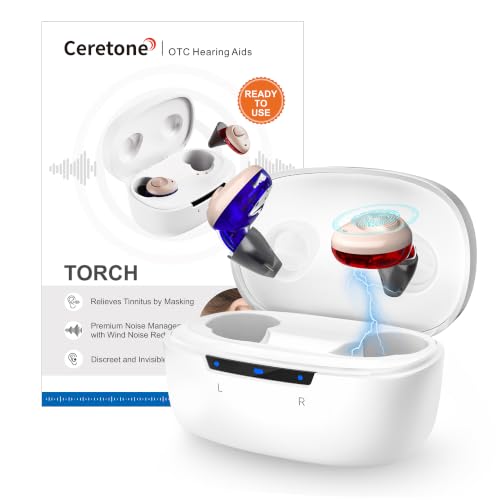
Ceretone OTC ITE Hearing Aid for Seniors Noise Reduction
More On The Choices That Made The List
The Karthus pair sits firmly in the plug-and-play lane, the kind of device you charge overnight and forget about until dinner. A 16-channel digital DSP (digital signal processor, basically the brain that shapes incoming sound) splits audio into frequency bands, so low-frequency loss gets its own dedicated lift while sharper sounds stay controlled. The result, in everyday scenes like a kitchen conversation, is voices that feel grounded instead of tinny.
Two environment modes let wearers flip between quieter and busier rooms without diving into a smartphone app. Compared with the analog option below, this model trades simplicity for clarity. People who want rechargeable convenience and don’t need deep customization tend to land here naturally.
A Few Strong Suits
- 80-plus hours of runtime means a week between charges for light users
- Smart feedback control cuts down on the whistle that plagues entry-level aids
- Noise reduction focuses on speech in everyday rooms, which helps low-frequency users catch vowels
- Lightweight shell stays comfortable through long dinners or TV nights
Worth Noting
- Only two environment settings, so fine-tuning in very specific venues is limited
- Ear tip sizing depends on the included domes; some users may need third-party tips for a snug seal
Feature Snapshot
Made For
First-time wearers and older adults who want rechargeable simplicity without managing apps or complex settings.
Consider Something Else When
People who need richer program options should look at the Ceretone Luma, which offers four programs and similar rechargeability.
The TrueEQ analog set goes the opposite direction from the Karthus: no chips shaping sound, no programs to scroll through, no Bluetooth to pair. It simply turns on, adjusts volume via a wheel, and amplifies whatever reaches the microphone. For users who feel overwhelmed by digital menus, this stripped-down approach can be a relief.
Analog amplification sounds warmer and less processed, which some wearers describe as more natural for low-frequency tones. The catch shows up in noisy restaurants, where analog circuits amplify everything equally. Compared with the rechargeable digital picks, this model trades modern polish for honest simplicity.
What Works In Its Favor
- Faithful sound reproduction without digital artifacts
- Volume wheel operation requires almost no learning curve
- Works straight out of the box, no charging cradle or app setup
- Lower replacement cost for users prone to losing devices
Trade Offs
- No noise reduction, so loud venues can feel overwhelming
- Typically battery-powered rather than rechargeable, adding ongoing cell costs
- Lacks frequency-specific tuning that helps mild-to-moderate loss profiles
Who It Suits Best
Older adults with mild loss and limited patience for digital menus, especially those who live in quieter households.
A Better Fit Elsewhere
People who eat out often or watch TV in busy rooms will find the Ceretone Horizon’s dual-microphone design more manageable.
The Luma shrinks everything Ceretone builds into its larger RIC (receiver-in-canal) models into a near-invisible in-ear shell. A tiny Intricon digital chip handles distortion control (keeping the signal clean rather than fuzzy) and four preset programs that adapt to restaurants, outdoor walks, or TV sessions. Voice-guided volume levels walk users through adjustments with spoken prompts, which helps anyone who forgets which button does what.
For low-frequency loss, the Luma’s natural sound profile leans warm without bloating bass. The trade-off is battery life versus size: 80 hours per charge sounds generous, but the buds themselves are small enough to misplace if dropped on carpet. Compared with the earbud-style Ceretone below, this one disappears visually but asks for more careful handling.
Standout Benefits
- Distortion held to around 2%, keeping speech crisp without harshness
- Four programs cover common daily environments without app juggling
- Voice prompts reduce guesswork during setup and adjustments
- Portable charging case fits a pocket for travel or weekends away
Honest Caveats
- Small size makes the units easier to drop or lose during cleaning
- Program switching relies on a multi-function button that takes practice to learn
Quick Facts
Best Suited To
Wearers who want a barely-there profile and appreciate preset programs over manual fine-tuning.
Not Your Match When
Anyone with dexterity challenges may prefer the larger Ceretone Horizon, which uses a more traditional RIC shell.
This Ceretone model ditches the medical-aid look entirely, instead mimicking wireless earbuds that you’d see on any commuter. Inside that familiar shell sits an in-the-ear hearing aid with an Intricon digital chip and a Knowles speaker, which is a brand long associated with balanced audio drivers. The result looks like a gadget and behaves like a medical device.
For low-frequency loss, the chip’s environmental noise reduction helps speech cut through café chatter and TV mixes. The earbud-style fit means people who already wear earbuds for music feel immediately at home. Where the Luma goes invisible, this one goes casual.
Practical Advantages
- Familiar earbud styling removes the stigma some wearers associate with hearing aids
- Intricon processing and Knowles speaker pairing deliver balanced, low-distortion sound
- Rechargeable battery simplifies the daily routine for travelers and commuters
- Environmental noise reduction keeps conversations clear without aggressive filtering
Points To Keep In Mind
- Visible design may not suit wearers who want truly invisible aids
- Earbud-style fit varies more across ear shapes than custom-molded options
Who Should Grab It
Active adults who want a hearing device that blends in with their everyday earbuds and tech setup.
Look Elsewhere When
Wearers prioritizing a hidden profile should consider the Ceretone Luma, which sits deeper in the ear canal.
The Aimsumy pair tackles a problem most hearing aid marketing ignores: hygiene. Each time the units return to the charging case, a UV cycle runs automatically, which helps reduce bacteria and earwax buildup on the domes and shells. For seniors who handle their devices with shaky fingers, that hands-off cleaning is more useful than it sounds.
Audio-wise, the digital sound processing leans toward everyday conversations and TV, with noise reduction aimed at steady background hum like fans or traffic. The fit favors over-the-ear comfort, which spreads weight across a larger surface than in-ear shells. Where the Luma goes small, this one goes comfortable and self-cleaning.
Real Benefits
- Automatic UV cleaning in the dock reduces daily maintenance
- Speech-focused processing helps low-frequency users track dialogue in family settings
- Over-the-ear shell distributes weight for all-day comfort
- Rechargeable design removes the cost and hassle of button cells
Minor Gripes
- Larger form factor sits visibly behind the ear, which some wearers dislike
- Fewer program presets than competing Ceretone models, limiting fine adjustments
Whose Shelf It Belongs On
Seniors who prioritize clean devices, easy charging, and steady comfort over compact invisibility.
Swap It Out When
Wearers wanting multiple program presets should consider the Ceretone Horizon, which offers dual mics and four programs.
The Horizon is the busiest social butterfly in Ceretone’s lineup. Dual microphones (one focused forward, one capturing ambient sound) help the chip separate voices from room noise, which is the hardest job for any hearing aid. An Intricon digital processor holds distortion around 2%, and four programs cover restaurants, TV, outdoors, and general conversation.
The RIC form factor tucks the speaker into the ear canal while the body sits behind the ear, balancing discretion with battery capacity. Auto on/off saves power when wearers forget to switch off after a long day. For low-frequency loss, the directional pickup tends to help more than omnidirectional designs.
Everyday Wins
- Dual-microphone setup improves speech clarity in busy restaurants and gatherings
- Four programs plus 64 hours of runtime cover a full week of varied use
- Auto on/off preserves battery for wearers who forget to power down
- Four eartip sizes included for a better in-canal seal and reduced feedback
Practical Considerations
- Behind-the-ear body is more visible than the in-ear Luma
- Program changes via onboard button require a brief learning period
Feature Card
Perfect Match For
Frequent restaurant-goers and family-event hosts who need directional clarity in loud rooms.
Where A Sibling Pick Shines
Users who prefer invisible-in-canal designs will appreciate the Ceretone Luma’s smaller shell.
This final Ceretone entry focuses on processing depth. The 16-channel Intricon chip divides sound into more frequency bands than simpler models, which helps a low-frequency hearing profile where specific ranges need targeted boosts rather than uniform amplification. A Knowles speaker rounds out the audio chain, paired with wind noise suppression for outdoor walks.
The ITE (in-the-ear) shell sits in the outer ear rather than deep in the canal, which makes insertion and removal easier for users with limited dexterity. White color blends with many skin tones and hair colors. The trade-off is visibility: this isn’t the invisible choice.
What Pays Off
- 16-channel chip allows finer targeting of low-frequency ranges
- Wind noise suppression keeps outdoor conversations clearer
- Knowles speaker supports balanced, natural sound reproduction
- ITE form factor is easier to handle than deep-canal options
Soft Spots
- Outer-ear placement is more visible than IIC (invisible-in-canal) alternatives
- Larger shell may feel bulky for users transitioning from eyeglass-style BTE (behind-the-ear) aids
Right Fit For
Wearers who want detailed frequency shaping for low-frequency loss and easier handling than deep-canal aids offer.
Reach For A Different Pick When
People wanting minimal visibility should choose the Ceretone Luma, which hides deeper in the canal.
What To Weigh Before Choosing Hearing Aids For Low Frequency Loss
Matching The Chip To Your Hearing Profile
Low-frequency loss typically means soft consonant sounds, low voices, and bass tones feel muted rather than missing entirely. A device with multiple channels can selectively boost the affected ranges without over-amplifying higher pitches. Single-channel or analog designs lift everything equally, which can make background noise louder without solving the real problem. Checking whether the aid offers multiple frequency bands helps match the device to the specific loss pattern.
Form Factor And Daily Handling
In-ear, RIC, and behind-the-ear designs each come with trade-offs. In-ear and IIC styles hide the device but require smaller batteries and finer motor control. RIC and BTE (behind-the-ear) styles offer longer runtime, larger buttons, and easier cleaning, at the cost of visibility. For wearers with arthritis or shaky hands, a larger shell and tactile controls matter more than disappearing into the ear.
Rechargeable Versus Replaceable Batteries
Rechargeable aids simplify nightly routines but assume the wearer remembers to dock the units. Replaceable-battery aids keep working during power outages or travel, but require a steady supply of cells. For most households, rechargeable wins on convenience; for travelers and backup-conscious users, replaceable cells stay relevant.
Real-World Listening Environments
A device that performs in a quiet living room may stumble in a busy restaurant. Dual-microphone designs and multiple program presets help adapt to those shifts. Considering where the wearer spends the most time, from quiet reading to loud dining, helps narrow the field before comparing brands.
Key Considerations Across These Picks
Wrong Turns To Avoid
The biggest trap in this category is choosing based on appearance alone. Tiny in-canal shells look appealing, but a poor seal lets low frequencies leak out and feedback (that high-pitched whistle) creep back in. A larger shell with the right tip size often performs better than a smaller one that doesn’t seal. Skipping the included ear tip sizing experiment also leads to disappointment. Another common mistake is assuming all OTC (over-the-counter) devices handle severe loss the same way; these picks target mild to moderate profiles, which is where they shine.
Where The Extra Money Goes
Higher-tier aids in this category usually add directional microphones, more channels, and better noise reduction algorithms. The Horizon’s dual-mic setup, for instance, helps separate speech from a busy room in ways single-mic designs can’t. The 16-channel Ceretone ITE model offers finer frequency targeting for wearers whose audiograms show uneven loss. Those upgrades matter most for people who spend time in varied environments: family gatherings, restaurants, outdoor walks, and group conversations. For quieter households, a simpler two-mode device may deliver everything needed without the premium.